
Rail Guided Vehicle — Railway track inspection RGV
Our Rail Guided Vehicle (RGV) is a robust, rail-mounted automated transport platform designed for high-load, high-precision material handling and inspection operations. Built on a rigid box-type welded frame and guided by dedicated steel rails, it combines the advantages of heavy-duty capacity, stable performance, and intelligent control, making it ideal for both industrial logistics and railway maintenance applications.
| Suitable Gauge |
1435 mm (Standard Railway Gauge) |
| Running Speed |
0–5 km/h (Adjustable) |
| Control Mode |
Automatic Cruise + Remote Control |
| Protection Class |
IP54 |
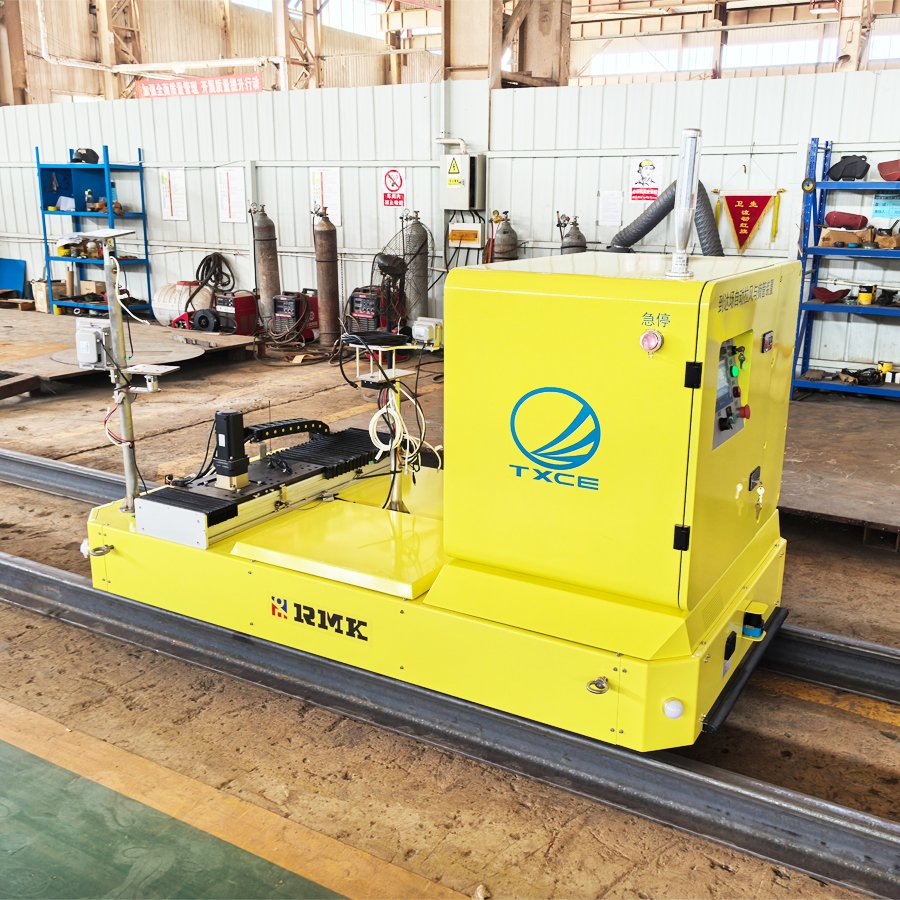
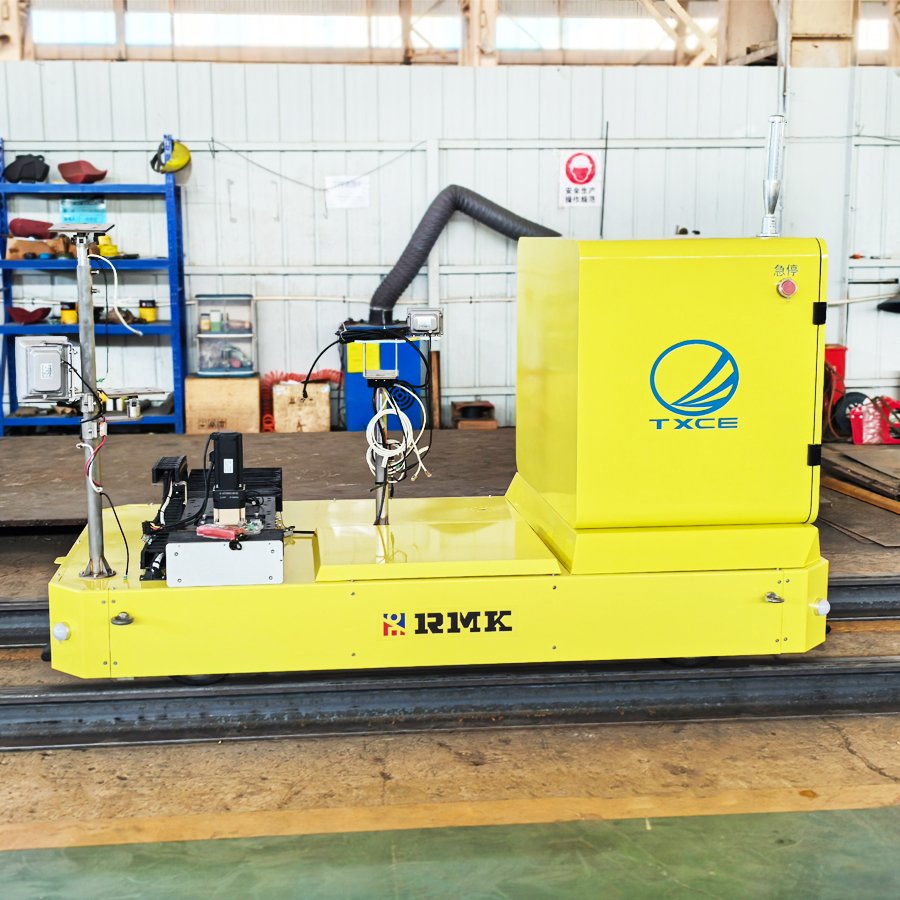
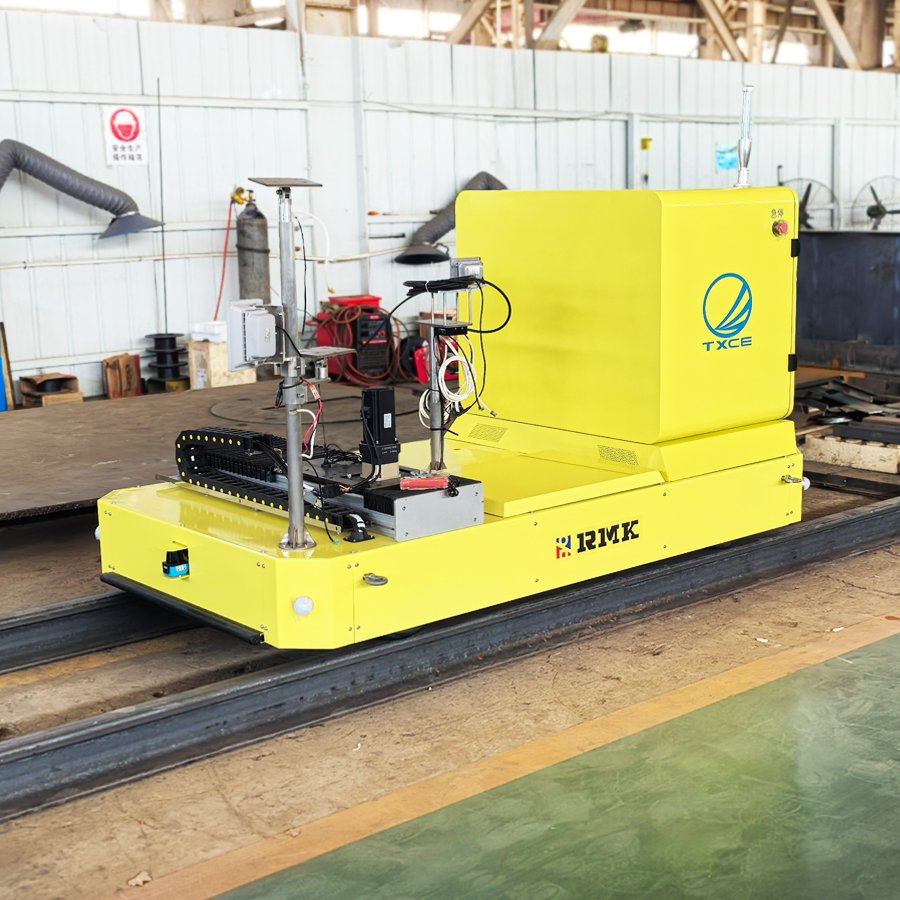
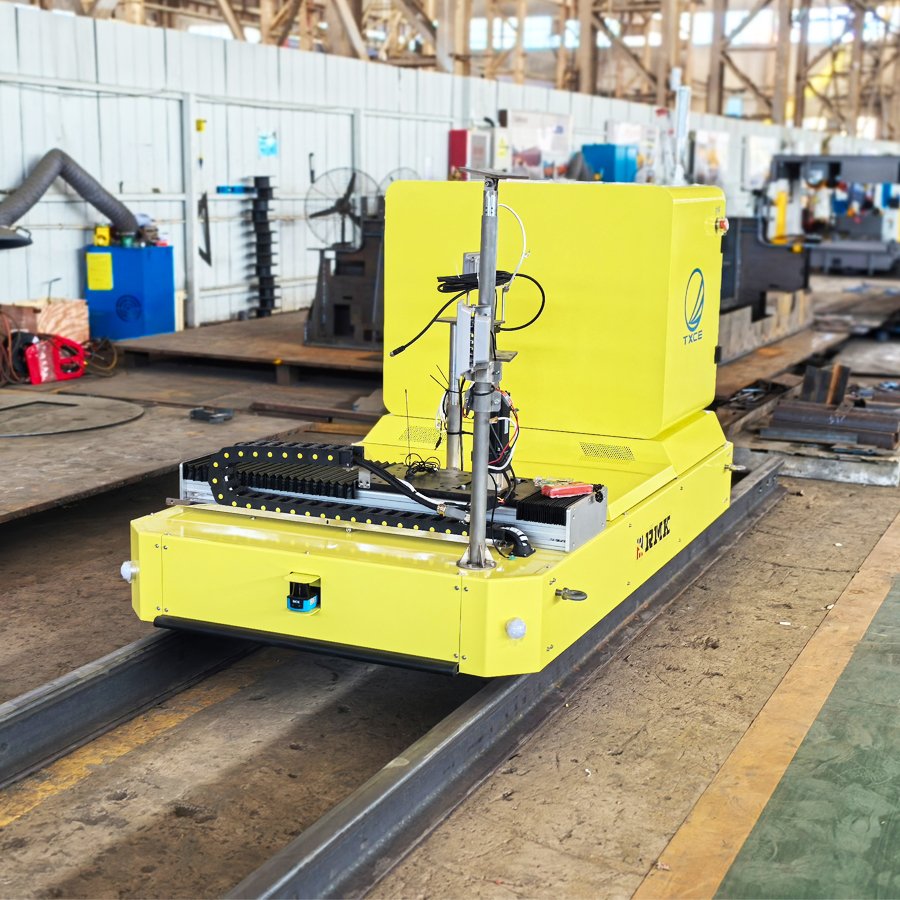
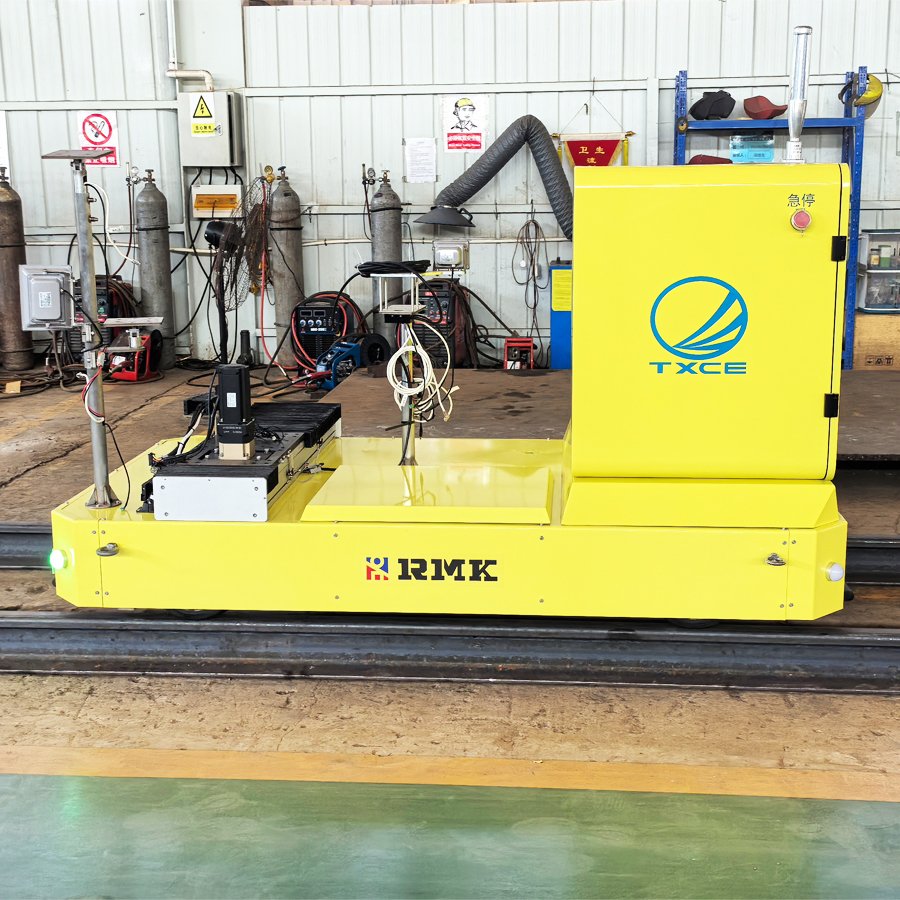
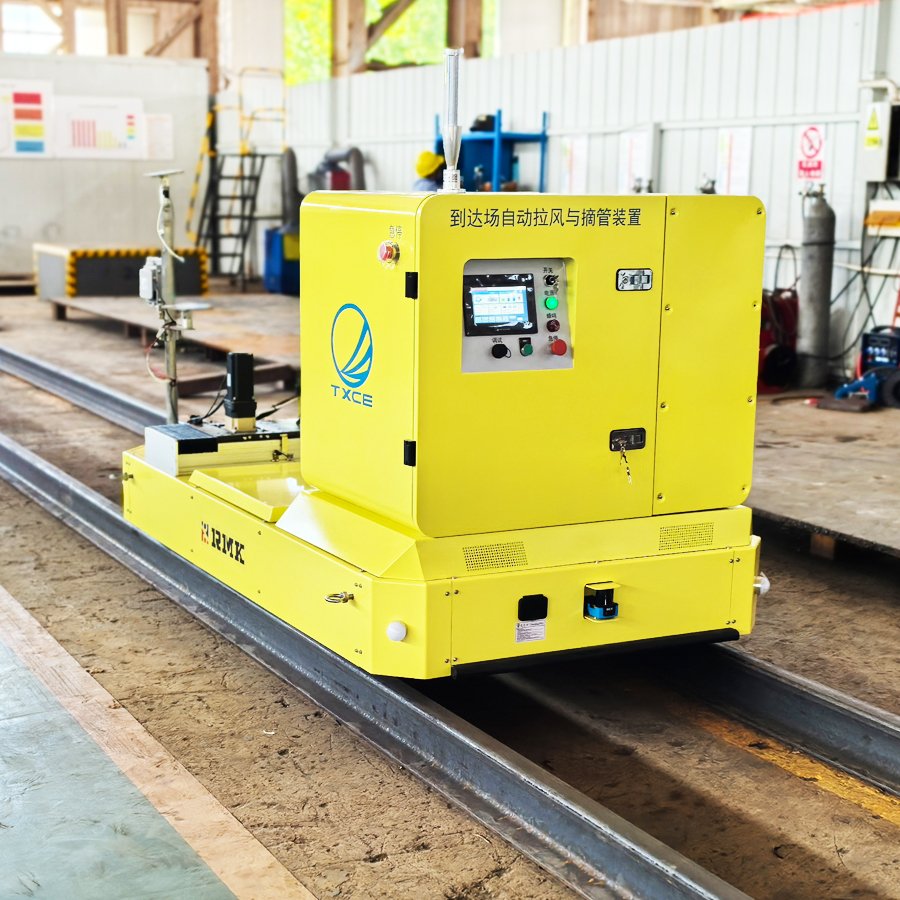
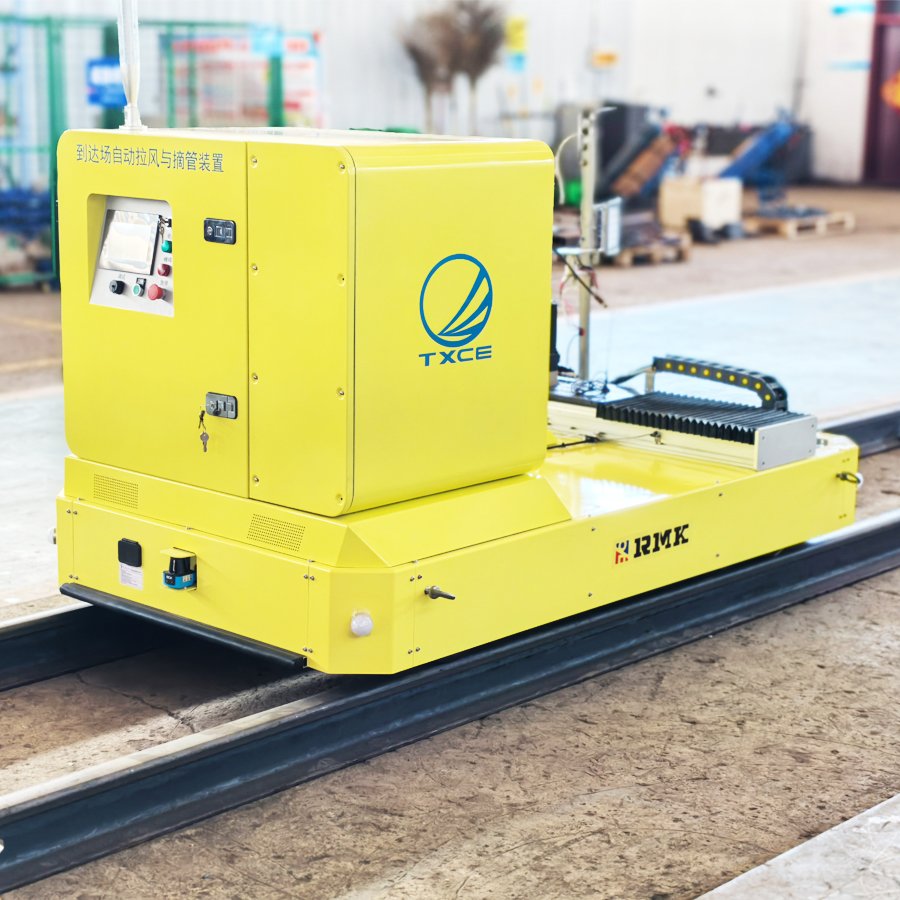
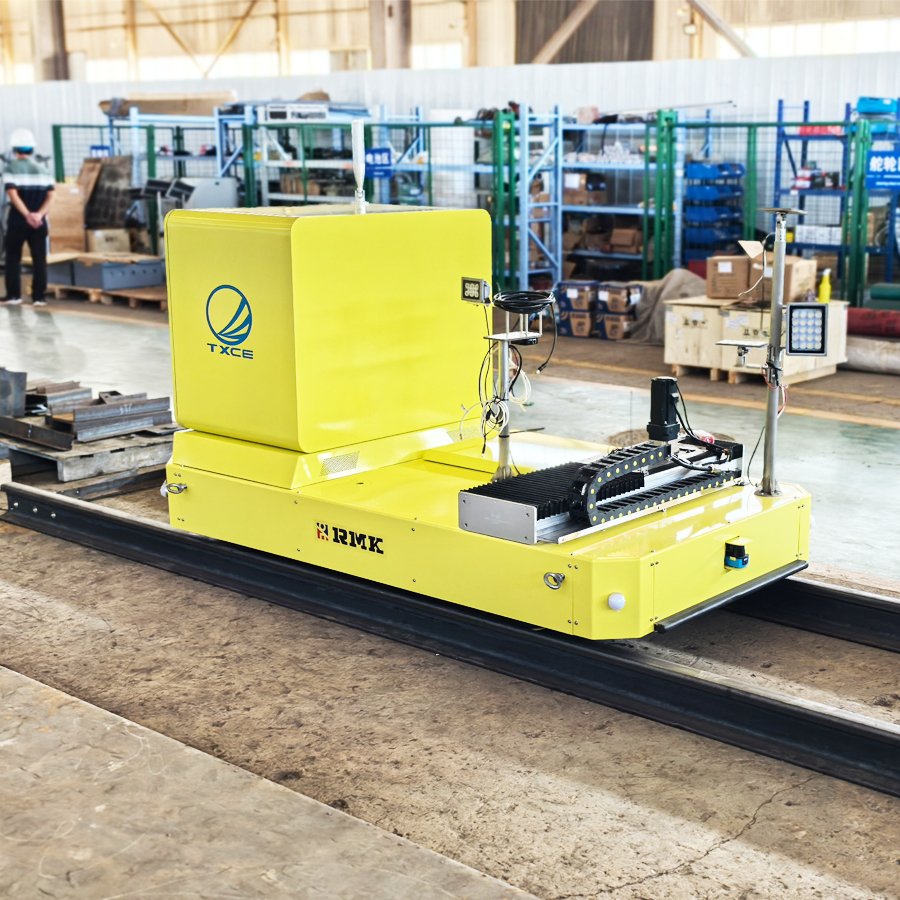
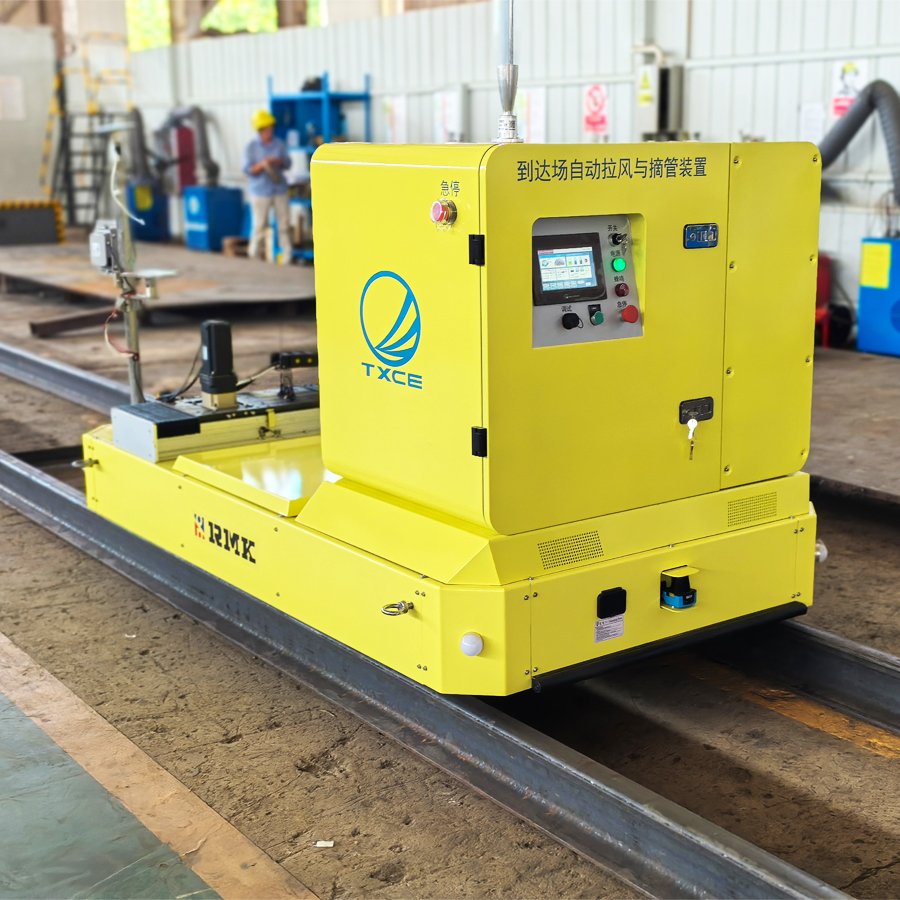
Rail Guided Vehicle — Railway track inspection RGV
Our Rail Guided Vehicle (RGV) is a robust, rail-mounted automated transport platform designed for high-load, high-precision material handling and inspection operations. Built on a rigid box-type welded frame and guided by dedicated steel rails, it combines the advantages of heavy-duty capacity, stable performance, and intelligent control, making it ideal for both industrial logistics and railway maintenance applications.
| Suitable Gauge |
1435 mm (Standard Railway Gauge) |
| Running Speed |
0–5 km/h (Adjustable) |
| Control Mode |
Automatic Cruise + Remote Control |
| Protection Class |
IP54 |
Core Structure and Working Principle
Working Principle: Upon receiving a handling command from the host system, the Rail Guided Vehicle automatically travels along the rail to the pickup point, where the transfer mechanism lifts or conveys the cargo onto the vehicle. The loaded Rail Guided Vehicle(RGV) then runs to the target workstation and completes unloading after precise docking. Once the handling task is finished, status data is transmitted back to the system, closing the control loop. The entire process requires no manual intervention; operators can monitor real-time vehicle positions, task statuses, and alarm information on the monitoring interface, with manual intervention only in abnormal situations. When multiple RGVs transfer cart operate simultaneously, the scheduling system centrally assigns tasks, sequences execution, and prevents rail conflicts.
Core Advantages of Rail Guided Vehicle
01
24/7 Continuous Operation
RGVs are generally powered by conductor bars, which supply power directly to the vehicle through conductor rails mounted along the track side. The vehicle draws power while moving, enabling uninterrupted 24/7 operation — a critical advantage for three-shift factories.
02
Precise Positioning
Servo drives combined with absolute encoders deliver positioning accuracy of ±5 mm. Whether placing cargo at a designated workstation, interfacing with a conveyor line, or aligning with rack locations, the RGV achieves it in a single operation without manual fine-tuning.
03
High Load Capacity
With rail support and conductor bar power supply, RGV transfer cart can be fully customized to handle a wide range of heavy payload loads — from light-duty applications of several hundred kilograms to heavy-duty applications of tens or even hundreds of tons.
04
Stable Operation, Low Maintenance Cost
Fixed rails mean predictable travel paths with no risk of path deviation. Routine maintenance mainly involves inspecting travel wheel wear, lubricating drive components, and replacing conductor bar carbon brushes — all of which keep costs well under control.
05
Multi-Vehicle Coordination
Multiple RGVs can operate safely in full coordination on a closed loop track. The intelligent scheduling system centrally assigns tasks, plans travel routes, and actively prevents collisions. The more vehicles deployed, the greater the material handling throughput.
06
High Speed
RGVs achieve a travel speed of 2–3 m/s, and heavy-duty models exceed 1 m/s. Especially for inbound and outbound operations in high-bay warehouses, RGVs shuttle between aisle openings and loading stations. They operate faster and more safely than manual forklifts.
Core Advantages of Rail Guided Vehicle
01
24/7 Continuous Operation
RGVs are generally powered by conductor bars, which supply power directly to the vehicle through conductor rails mounted along the track side. The vehicle draws power while moving, enabling uninterrupted 24/7 operation — a critical advantage for three-shift factories.
02
Precise Positioning
Servo drives combined with absolute encoders deliver positioning accuracy of ±5 mm. Whether placing cargo at a designated workstation, interfacing with a conveyor line, or aligning with rack locations, the RGV achieves it in a single operation without manual fine-tuning.
03
High Load Capacity
With stable rail support and continuous conductor bar power supply, RGVs can be fully customized to handle a wide range of heavy payload loads — from light-duty applications of several hundred kilograms to heavy-duty applications of tens or even hundreds of tons.
04
Stable, Low Maintenance
Fixed rails mean predictable travel paths with no risk of path deviation. Routine maintenance mainly involves inspecting travel wheel wear, lubricating drive components, and replacing conductor bar carbon brushes — all of which keep costs well under control.
05
Multi-Vehicle Coordination
Multiple RGVs can operate safely in full coordination on a closed loop track. The intelligent scheduling system centrally assigns tasks, plans travel routes, and actively prevents collisions. The more vehicles deployed, the greater the material handling throughput.
06
High Speed
RGVs achieve a travel speed of 2–3 m/s, and heavy-duty models exceed 1 m/s. Especially for inbound and outbound operations in high-bay warehouses, RGVs shuttle between aisle openings and loading stations. They operate faster and more safely than manual forklifts.
RGV vs AGV: How to Choose?
| Comparison Dimension | Rail Guided Vehicle(RGV) | Automated Guided Vehicles(AGV) |
| Travel Path | Fixed rail | Free path navigation (magnetic tape /laser/vision navigation) |
| Flexibility | Low; route changes require re-laying rails | High flexibility; routes can be modified via software only |
| Load Capacity | High; can exceed 50 tons | 1. Typical load capacity: 1–3 tons; heavy-duty AGVs come with higher costs 2. |
| Travel Speed | Fast; up to 120 m/min | Medium speed; normally 30–60 m/min |
| Positioning Accuracy | ±5 mm; the preferred choice for high-precision applications | ±10 mm to ±20 mm |
| Battery Life | Conductor bar power supply; no battery life limitation | Battery-powered; regular recharging is required |
| Initial Investment | Includes rail infrastructure; relatively high | Low unit vehicle cost |
| Typical Applications | Fixed routes, high-frequency, heavy-duty | Supports variable routes and flexible material handling across multiple workstations |
| Ongoing Maintenance | Rail + carbon brushes; low cost | Equipped with batteries and sensors, resulting in relatively high costs |
Application Fields
Rail Guided VehicleV is suitable for industrial scenarios featuring fixed travel paths, high handling frequency and heavy loads. Its main application fields are listed below:

Warehousing & Logistics
As core supporting equipment for automated high-bay warehouses, it connects stacker cranes with loading/unloading stations to realize rapid pallet transfer and multi-vehicle coordinated scheduling, greatly improving the inbound and outbound efficiency of the whole warehouse.

Automotive Manufacturing & Auto Parts
Used for efficiently transporting heavy dies, vehicle bodies, engine assemblies and various components in stamping, welding and final assembly workshops. It seamlessly matches real production line cycles to achieve stable and precise material delivery tasks.

New Energy Industry
Inter-process transfer of battery cells and modules on battery production lines, as well as finished goods warehousing operations. It enables automatic circulation of silicon wafers and modules in the photovoltaic sector and supports 24-hour continuous production.

Iron & Steel Metallurgy
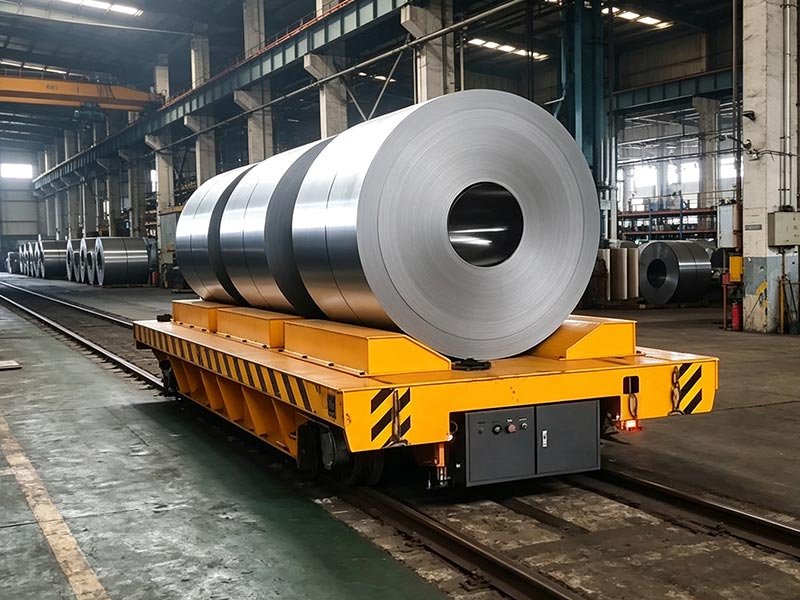
Heavy-duty transfer of steel billets, slabs and steel coils between continuous casting, hot rolling and cold rolling processes. High-temperature resistant and dust-proof configurations enable operation under harsh working conditions.

Home Appliance & 3C Electronics
Transportation of finished products such as TVs and refrigerators from assembly lines to testing, packaging and warehousing areas; delivery of SMT material bins on 3C production lines, compatible with multi-variety flexible production.

Prefabricated Building Materials
Workshop transfer of heavy and fragile construction materials including PC components, stone and glass, as well as loading/unloading from curing kilns. Stable operation reduces cargo damage.
Application Fields
Rail Guided Vehicle is suitable for industrial scenarios featuring fixed travel paths, high handling frequency and heavy loads. Its main application fields are listed below:
Warehousing & Logistics
As core equipment for high-bay warehouses, it connects stacker cranes with loading/unloading stations to realize rapid pallet transfer and multi-vehicle coordinated scheduling, greatly improving inbound and outbound efficiency of the warehouse.
Automotive Manufacturing Parts
Used for efficiently transporting heavy dies, vehicle bodies, engine assemblies and various components in stamping, welding and final assembly workshops. It seamlessly matches real production line cycles to achieve stable and precise material delivery tasks.
New Energy Industry
Inter-process transfer of battery cells and modules on battery production lines, as well as finished goods warehousing operations. It enables automatic circulation of silicon wafers and modules in the photovoltaic sector and supports 24-hour continuous production.
Iron & Steel Metallurgy
Heavy-duty transfer of steel billets, slabs and coils between continuous casting, hot rolling and cold rolling processes. High-temperature resistant and dust-proof configurations support harsh working conditions.
Home Appliance & 3C Electronics
Transportation of finished products such as TVs and refrigerators from assembly lines to testing, packaging and warehousing areas; delivery of SMT material bins on 3C production lines, compatible with multi-variety flexible production.
Prefabricated Building Materials
Workshop transfer of heavy and fragile construction materials including PC components, natural stone and glass, as well as loading/unloading from thermal curing kilns. Stable operation effectively reduces cargo damage.
Technical Specifications
| RGV Automated Rail-Guided Vehicle Technical Specifications | ||||||||||
| Model | RGV-5t | RGV-10t | RGV-15t | RGV-25t | RGV-40t | RGV-63t | RGV-100t | RGV-160t | RGV-200t | |
| Rated Load Capacity (t) | 5 | 10 | 15 | 25 | 40 | 63 | 100 | 160 | 200 | |
| Platform Dimensions(mm) | Length (L) | 3600 | 3600 | 4000 | 4500 | 5000 | 5600 | 6300 | 8000 | 8200 |
| Width (W) | 2000 | 2000 | 2200 | 2200 | 2500 | 2500 | 2800 | 2800 | 3000 | |
| Height (H) | 550 | 550 | 600 | 650 | 700 | 850 | 900 | 1100 | 1250 | |
| Travel Speed (m/min) | 30 | 30 | 30 | 30 | 25 | 25 | 20 | 20 | 18 | |
| Wheelbase A (mm) | 2000 | 2200 | 2200 | 2500 | 2800 | 3200 | 3600 | 5000 | 5000 | |
| Rail Gauge C (mm) | 1435 | 1435 | 1435 | 1435 | 1435 | 1435 | 1650 | 2000 | 2000 | |
| Wheel Diameter (mm) | 400 | 400 | 400 | 500 | 500 | 600 | 700 | 700 | 700 | |
| Ground Clearance (mm) | 50 | 50 | 50 | 60 | 60 | 60 | 60 | 70 | 70 | |
| Minimum Turning Radius | 30 | 35 | 50 | 55 | 60 | 80 | 100 | 100 | ||
| Power Supply Type | Battery、Low-Voltage Rail Power Supply、Cable Reel、Conductor Bar、Trailing Cable | |||||||||
| Recommended Rail Type | 24kg/m | 38kg/m | 43kg/m | QU80 | QU100 | |||||
| Number of Wheels | 4 | 8 | ||||||||
| Maximum Wheel Load (t) | 1.91 | 3.21 | 4.87 | 7.5 | 11.5 | 16.9 | 27.6 | 22.8 | 28.5 | |
| Reference Weight (t) | 3.4 | 3.72 | 4.2 | 6 | 8.5 | 11.4 | 15.2 | 25.5 | 31.5 | |
Selection Guide: How to Choose the Right Rail Guided Vehicle
Load Capacity
First confirm the specifications of goods and record the maximum weight of a single unit to be transported daily. A safety margin of 1.25 times the maximum load is recommended during model selection.
Avoid excessive cost cutting when determining load capacity. Long-term overloading will not only accelerate wear of drive components and vehicle structure, but also create potential safety hazards.
Efficiency
RGV transfer cart selection shall match line tact time. If materials need delivery every 90s, the RGV round-trip cycle must stay within 90 seconds.
For track layout, loop tracks support simultaneous multi-vehicle operation without direction switching time, offering higher efficiency than straight reciprocating tracks. Yet loop layouts need more floor space; conduct evaluation based on actual site conditions.
Positioning Accuracy
Required positioning accuracy depends on goods transfer method. ±15 mm suffices if the RGVs only transports goods to a designated area. When docking with production equipment, ±5 mm or better accuracy is generally required.
Higher accuracy imposes stricter demands on drive systems and feedback devices, raising costs. Select accuracy based on process needs instead of pursuing ultra-high precision.
Power Supply
For three-shift continuous production, the conductor rail power supply system is preferred. It enables non-stop 24-hour operation with low long-term maintenance costs.
Battery power supply works for single-shift or intermittent operation scenarios. However, it is necessary to verify whether battery endurance and charging time can meet production tact time.
Purchase Reminder:
Rail Guided Vehicle procurement involves not merely a single piece of equipment, but a complete system engineering solution consisting of vehicle bodies, tracks, power supply systems and dispatching software. When requesting quotations, require suppliers to provide separate pricing for each component to facilitate horizontal comparison. Do not focus solely on the vehicle body price while ignoring the costs of supporting accessories.
Customization Capabilities
Rail Guided Vehicle are non-standard customized equipment. Working conditions vary greatly across different industries and factory sites, so fully universal standard models are rarely available. We offer customization in the following aspects according to customers’ actual requirements:
FAQ
Get your custom material handling solution
RMK supports full-spec non-standard customization. Fill in your requirements to receive a tailored material handling equipment solution.
Related Products
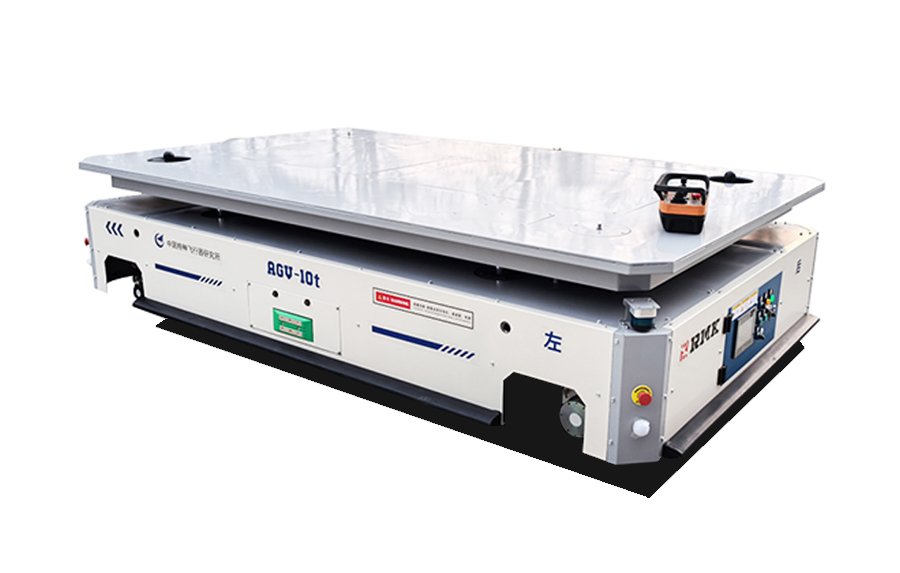
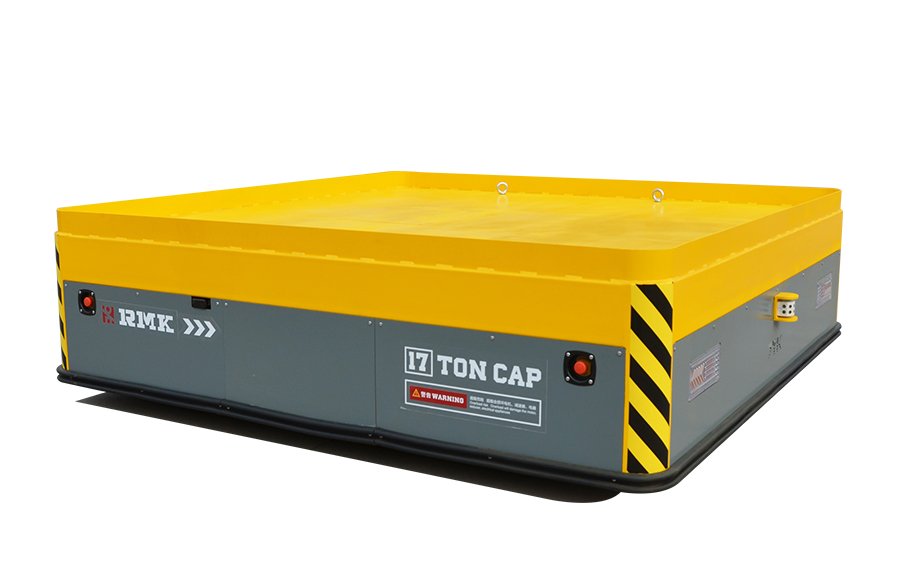
AGV/AMR
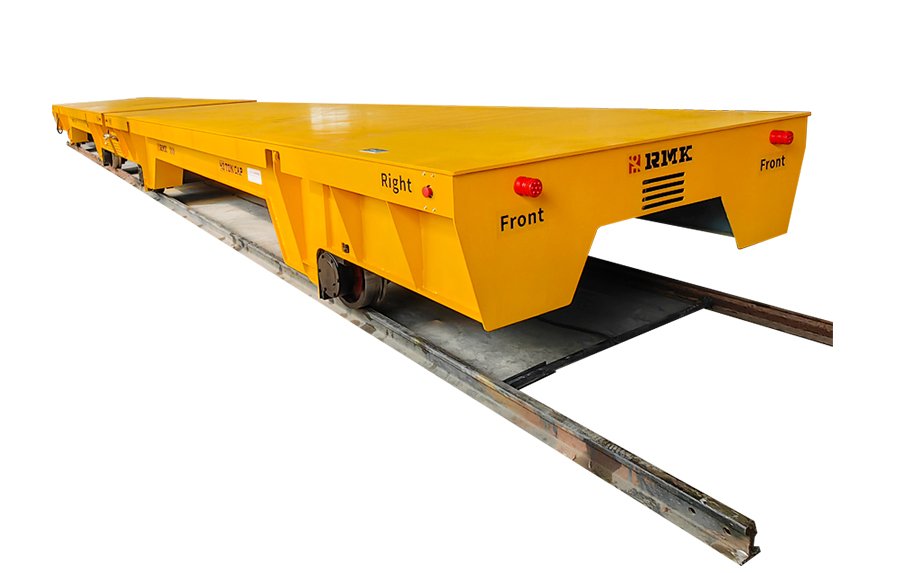
AGV/AMR feature intelligent navigation and multi-level safety obstacle avoidance systems, delivering omnidirectional movement, high precision and stable automated transportation for smart factories.Rail Guided Vehicle
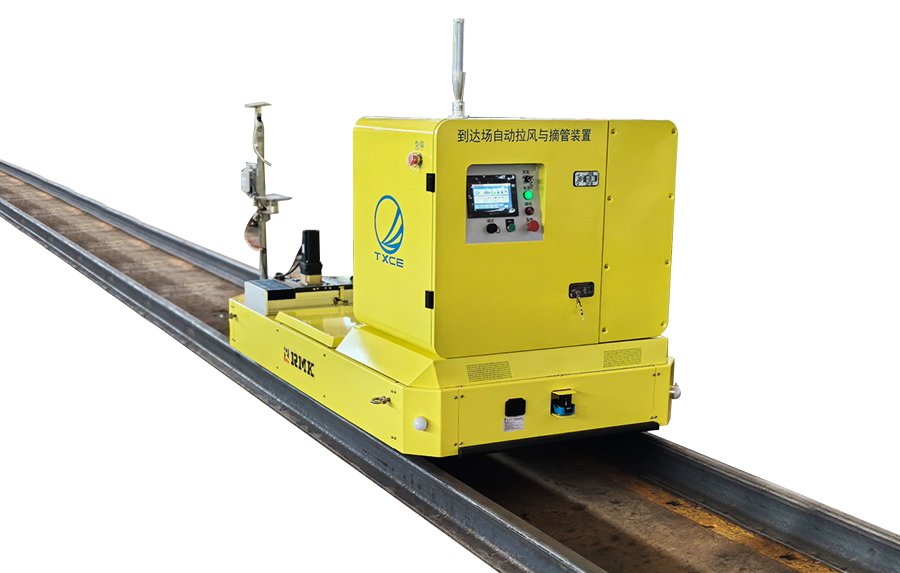
Our intelligent Rail Guided Vehicle (RGV) delivers fully automatic, precise rail transport to streamline production, cut labor, improve safety and maximize efficiency for smart factories.
Related Products
AGV/AMR
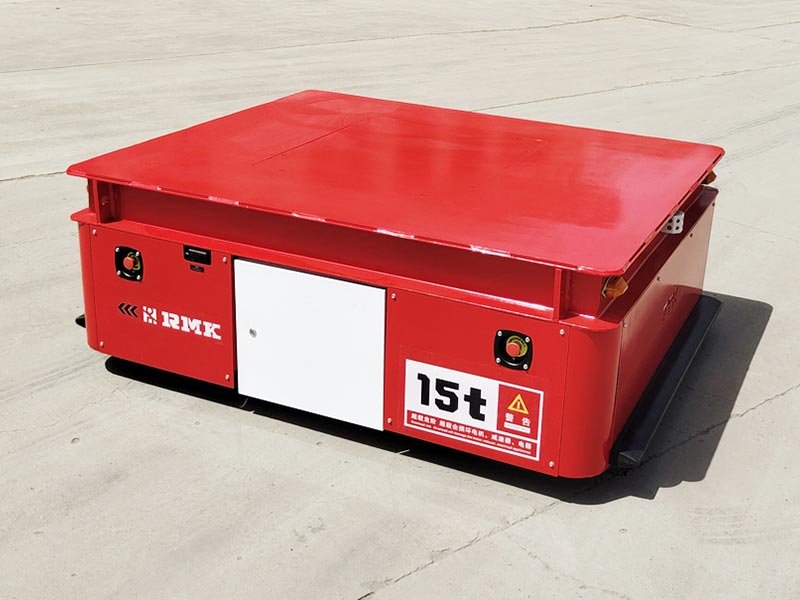
AGV/AMR feature intelligent navigation and multi-level safety obstacle avoidance systems, delivering omnidirectional movement, high precision and stable automated transportation for smart factories.Rail Guided Vehicle
Our intelligent Rail Guided Vehicle (RGV) delivers fully automatic, precise rail transport to streamline production, cut labor, improve safety and maximize efficiency for smart factories.
Hot blog
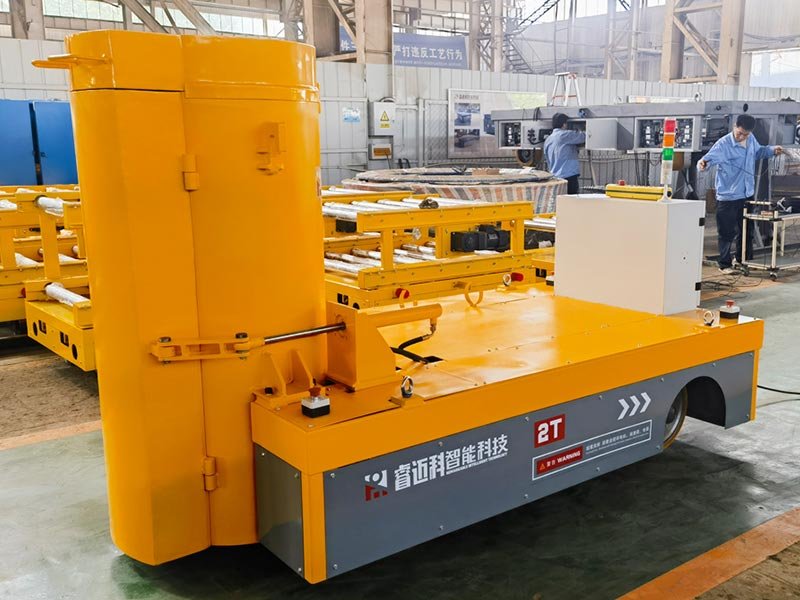
Applications and Solutions for Industrial Material Transfer Carts in Bulk Material Handling
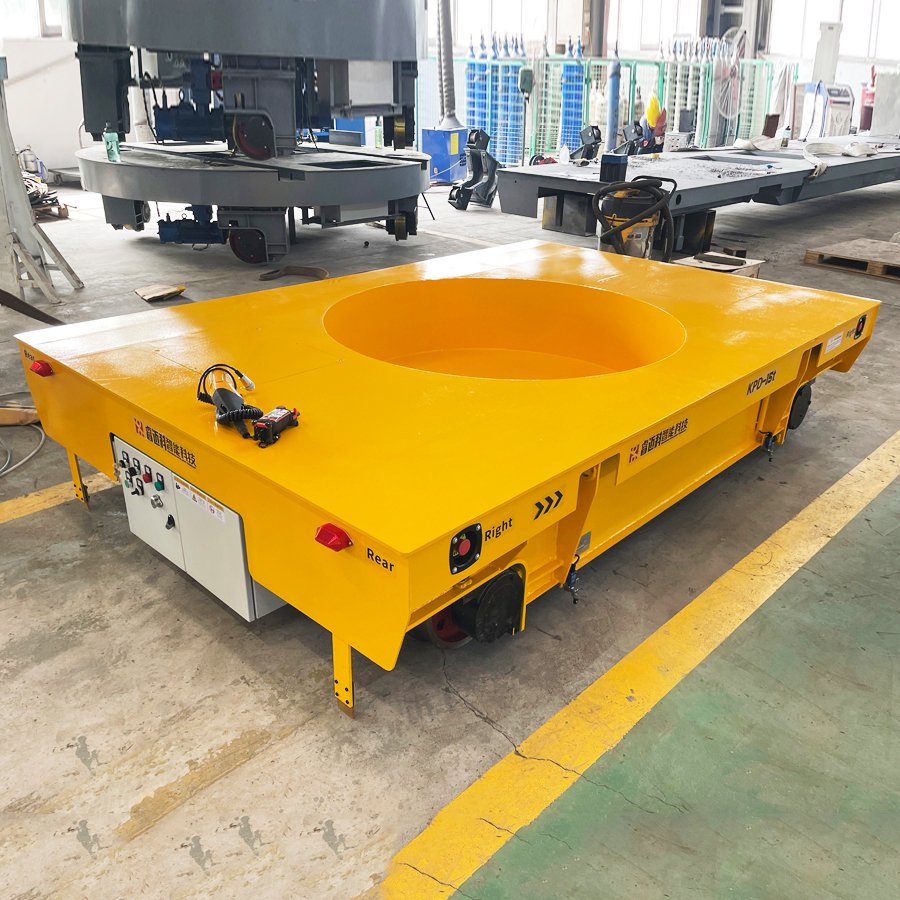
In modern industrial production, efficient material handling plays an important role in maintaining production flow, improving operational efficiency,…How to Choose a Ladle Transfer Cart for Steel Plants?
A ladle transfer cart is a specialized heavy-duty material handling vehicle used in metallurgical, steelmaking, and foundry production…
Hot blog
Applications and Solutions for Industrial Material Transfer Carts in Bulk Material Handling
In modern industrial production, efficient material handling plays an important role in maintaining production flow, improving operational efficiency,…How to Choose a Ladle Transfer Cart for Steel Plants?
A ladle transfer cart is a specialized heavy-duty material handling vehicle used in metallurgical, steelmaking, and foundry production…