
Mecanum wheel transfer cart — Mecanum-wheel AGV with hybrid laser, magnetic tape & QR code navigation
This is an electric trackless transfer cart designed for omnidirectional material handling in narrow industrial spaces. Equipped with high-strength Mecanum wheels and a stable drive system, it enables forward, backward, diagonal movement, and 360° rotation without requiring a traditional turning radius. This equipment is suitable for transporting molds, machinery, pallets, workpieces, and other industrial materials, especially in working conditions where the turning space for conventional transfer carts is limited.
| Load Capacity |
6 Tons(13227.74 Ibs). |
| Power type |
Battery powered. |
| Application |
Precision workpieces, molds, electronic equipment components, machine tool accessories, automated production line materials, various heavy-duty semi-finished products, etc. |
| Add-on |
Integrated lifting platform (with a dust-proof protective cover). |


Mecanum wheel transfer cart — 20-Ton Differential Steering Transfer Cart – Netherlands
The Mecanum Wheel Transfer Cart features a central dedicated Mecanum omnidirectional mechanism. With a unique inclined roller structure and independent drive control, it breaks traditional vehicle movement limitations—no steering axles or wheels required.
It easily achieves forward/backward travel, lateral shifting, diagonal movement, and 360° in-situ rotation with zero turning radius. Running smoothly, quietly, and with precise positioning, its wear-resistant, pressure-resistant Mecanum wheels suit confined spaces like narrow aisles and compact workshops.
Built with a robust heavy-duty frame, it’s easy to operate with low failure rates. Ideal for precise handling of workpieces, molds and materials, it’s an optimal flexible logistics solution for smart manufacturing and space-restricted factories.
| Load Capacity |
6 Tons(13227.74 Ibs). |
| Power type |
Battery powered. |
| Application |
Precision workpieces, molds, electronic equipment components, machine tool accessories, automated production line materials, various heavy-duty semi-finished products, etc. |
| Add-on |
Integrated lifting platform (with a dust-proof protective cover). |
What Is a Mecanum Wheel Transfer Cart?
Mecanum Wheel Transfer Cart is an electric trackless transfer vehicle that uses Mecanum wheels as the driving mechanism. It is mainly used for material handling inside factories, warehouses, and production lines.
Unlike traditional transfer carts that can only move forward, backward, or change direction through a steering mechanism, the mecanum transfer cart uses specially designed Mecanum wheels and an independent drive control system to achieve forward movement, backward movement, lateral movement, diagonal movement, and in-place rotation.
Mecanum wheels consist of multiple rollers installed at an inclined angle. When the wheels rotate, the rollers generate forces in different directions. By controlling the operating speed and direction of each wheel independently, the cart can achieve multi-directional movement without requiring a large turning radius.
It is mainly used for:
According to different application requirements, the transfer cart can be equipped with remote control or automatic navigation systems. It can also be customized based on load capacity, platform dimensions, operating environment, and transportation requirements.

How Does a Mecanum Wheel Transfer Cart Work?
A mecanum wheel cart achieves omnidirectional movement mainly through the Mecanum wheel structure and a multi-wheel independent drive control system.
Mecanum Wheel Structure
The wheel is equipped with multiple angled rollers installed around the wheel body. When the wheel rotates, the rollers contact the ground and generate directional forces that can be decomposed into different movement directions.
Independent Drive System
Each Mecanum wheel on the transfer cart is equipped with an independent drive motor. The control system separately adjusts the speed and rotation direction of each wheel.
Multi-Wheel Coordination Enables Omnidirectional Movement
The system controls four wheels, allowing the cart to move forward, backward, laterally, diagonally, and rotate in place. Unlike conventional transfer carts, it changes direction without rotating the body.
Optional Control System Configuration
For conventional material handling applications, a remote control operation mode can be selected. For automated applications, navigation and positioning components can be added to enable unmanned automatic transportation.
Key Advantages of Mecanum Wheel Transfer Cart
01——
Omnidirectional Movement Without Turning Radius
Mecanum wheels enable forward, backward, lateral and diagonal movement, allowing flexible operation in confined industrial spaces.
02——
Flexible Handling in Complex Workshop Layouts
The cart can move freely around machines, production lines and obstacles, improving handling efficiency in limited spaces.
03——
Precise Positioning for Industrial Applications
Independent wheel control allows accurate positioning and smooth alignment during material transfer.
04——
Customized Heavy Load Handling Solution
Load capacity, platform size, control system and safety functions can be customized according to different working conditions.
What Can a Mecanum Wheel Transfer Cart Do?
The biggest feature of the mecanum wheel industrial cart is its Mecanum wheel drive system, which overcomes the movement limitations of traditional transfer carts and enables flexible multi-directional transportation. Through independent control of multiple Mecanum wheels, the cart can move in different directions without changing the orientation of the vehicle body, making it suitable for industrial material handling applications with limited space, complex routes, and precise positioning requirements.
Forward & Backward Movement
The Mecanum Wheel Transfer Cart can move forward and backward like a traditional transfer cart, meeting basic material handling requirements such as internal factory transportation, production line feeding, and equipment-to-equipment transfer.
Suitable for:
- Material transportation between production areas
- Short-distance handling between warehouses and production lines
- Transfer of workpieces and pallets
Lateral Movement
Unlike conventional transfer carts, the Mecanum Wheel Transfer Cart can move directly sideways without first rotating the vehicle body to change direction.
This movement capability is especially suitable for:
- Material handling in narrow aisles
- Side docking with equipment
- Precise positioning at production workstations
- Material transfer between parallel equipment
The lateral movement capability reduces the space required for vehicle direction adjustment and improves transportation flexibility in limited areas.
Diagonal Movement
By coordinating the operating direction of different Mecanum wheels, the transfer cart can move along diagonal paths.
Diagonal movement helps the cart adapt to complex factory layouts and improves movement efficiency in environments with limited equipment spacing or irregular transportation routes.
360° Rotation
The Mecanum Wheel Transfer Cart can rotate within its own footprint without requiring the large turning space needed by traditional vehicles.
This feature is suitable for:
- Compact production workshops
- Mold and large workpiece transportation
- Applications requiring direction adjustment and precise docking
Compared with conventional transfer equipment, it reduces the space required for turning and improves workshop space utilization.
Precise Positioning & Flexible Docking
By configuring suitable control systems and navigation methods, the Mecanum Wheel Transfer Cart can achieve more precise position control.
It can be used for:
- Equipment loading and unloading docking
- Production workstation connection
- Automated logistics transportation
- Material handling along fixed routes
According to project requirements, it can be equipped with:
- Remote control
- Magnetic navigation
- QR code navigation
- Laser navigation
To enable manual operation or automated operation.
Industrial Material Handling in Limited Spaces
With its multi-directional movement capability, the Mecanum Wheel Transfer Cart is especially suitable for applications where traditional transfer carts cannot operate flexibly.
such as:
- Narrow workshop aisles
- Dense equipment layouts
- Frequent changes in transportation directions
- Applications requiring close positioning near production equipment
With its omnidirectional movement capability, the cart improves material handling flexibility while reducing the limitations of factory layouts on transportation routes.
What Is the Difference Between a Mecanum Wheel Transfer Cart and a Conventional Transfer Cart?
Traditional transfer carts are suitable for conventional material handling operations with sufficient space and fixed travel routes. Mecanum wheel material handling cart are mainly used for applications that require omnidirectional movement and flexible maneuvering in confined spaces.
| Comparison Item | Mecanum Wheel Transfer Cart | Conventional Transfer Cart |
| Forward/Backward Movement | √ | √ |
| Lateral Movement | √ | Generally Not Supported |
| Diagonal Movement | √ | Generally Not Supported |
| Rotation in Place | √ | Limited by Mechanical Structure |
| Space Required for Turning | Requires Less Space | Requires a Larger Turning Space |
| Fixed Track | No Track Required | Some Models Require Tracks |
| Travel Route Flexibility | High Flexibility | Depends on the Model |
| Automation Expansion | Supports Optional Upgrades | Some Models Support Optional Upgrades |
| Operation in Confined Spaces | Suitable for Confined Spaces | Depends on the Vehicle Structure |
If the customer mainly requires straight-line transportation, a conventional rail or trackless transfer cart may be sufficient. If lateral movement, diagonal movement, in-place rotation, or precise positioning in confined spaces is required, a Mecanum Wheel Transfer Cart should be considered.
What Is the Difference Between a Mecanum Wheel Transfer Cart and a Mecanum Wheel AGV?
Mecanum wheels, transfer carts, and AGVs are different concepts.
- Mecanum Wheel: A wheel drive technology that determines the movement capabilities of the vehicle.
- Transfer Cart: A load-carrying vehicle used for material handling in factories, workshops, and warehouses.
- AGV: An automated guided vehicle that relies on navigation and automatic control systems to achieve autonomous operation.
Simply put, Mecanum wheels are a movement solution, while AGV represents automated operating capability.A Mecanum Wheel Transfer Cart can be operated by wireless remote control as standard, and navigation and automatic control systems can be added according to project requirements to upgrade it into an automated material handling system.
Examples:
- Manual Mode: The operator controls the cart movement using a remote controller.
- Automatic Mode: The cart relies on a navigation system to travel along preset routes, automatically stop at designated positions, align with equipment, and complete material transfer.
Applications of Mecanum Wheel Transfer Cart
Mold Transportation:
Suitable for the internal transportation of large molds used in injection molding, stamping, die casting, and other manufacturing processes.
The cart supports lateral movement and in-place rotation, making it easier to access workstations from the side of equipment and reducing the required turning space.
Machinery Manufacturing:
Used for transporting large machine tools, mechanical equipment, components, and assembly workpieces within workshops.
MAutomotive Manufacturing:
Used for process transfer of engines, chassis, tooling fixtures, and various components inside automotive production workshops.
Factory and Warehouse Logistics:
Used for short-distance transportation of pallets, raw materials, semi-finished products, and tooling equipment within factory areas.
Automated Production Lines:
With optional navigation and positioning control systems, the cart can automatically transport materials between workstations and integrate with production logistics systems.
How to Choose a Mecanum Wheel Transfer Cart?
When selecting a Mecanum wheel transfer cart, it is not enough to focus only on the rated load capacity. The selection should also consider the load dimensions, movement routes, and operating environment.
Calculate the Maximum Load Capacity
Select the cart based on the heaviest actual load at the site rather than estimating by average weight. The load capacity determines the frame strength, motor selection, Mecanum wheel specifications, and battery configuration.
Confirm Load Dimensions
Provide the length, width, height, and weight of each load to determine the platform size and overall cart dimensions, avoiding interference during loading and passage through aisles.
Define Movement Requirements
Confirm whether forward movement, lateral movement, diagonal movement, or in-place rotation is required. If only straight-line transportation is needed, there is no need to select a higher-cost omnidirectional movement solution.
Evaluate Ground Conditions
Check ground material, flatness, slope, oil contamination, debris, and conditions. Determine whether the cart is used indoors or outdoors. Mecanum wheels require higher flatness and cleanliness. Poor conditions affect stability and must be confirmed before selection.
Calculate Daily Operating Time
Match the battery capacity according to daily operating hours, travel distance, and handling frequency, and determine the appropriate charging solution.
Select the Control System
Choose the control method according to the required automation level: wireless remote control, semi-automatic control, or fully automatic operation.
Select the Navigation System
For automated versions, choose suitable navigation solutions based on site conditions, such as magnetic tape, QR code, laser SLAM, or other customized navigation systems.
Custom Mecanum Wheel Transfer Cart
The load specifications, carrying capacity, and workshop transportation routes vary from factory to factory. Therefore, mecanum transfer cart usually require customized designs based on actual operating conditions.
Load Capacity Customization
The frame strength, complete drive system, and Mecanum wheel specifications are designed according to the maximum transfer load required on site.
Platform Size Customization
The platform length, width, and ground clearance are determined based on the load dimensions and workstation aisle space to avoid interference issues.
Power System Customization
The appropriate battery system and charging solution are selected according to the daily operating hours, transfer frequency, and on-site charging conditions.
Control Mode Customization
According to the required automation level, the cart supports wireless remote control, semi-automatic operation, and fully automatic modes for different industrial handling applications and environments.
Navigation System Customization
Based on the factory layout and transportation routes, navigation solutions such as magnetic navigation, QR code navigation, and laser navigation can be configured.
Lifting Platform Customization
When the cart needs to interface with production lines, tooling equipment, or workstations at different heights, a lifting platform can be added to achieve height adjustment.
Safety System Customization
Safety protection components can be configured based on site conditions, including emergency stops, audible and visual alarms, anti-collision detection, obstacle sensors, and safety scanners.
Optional Configuration Solutions for High-Efficiency Auxiliary Equipment
For scenarios involving high-frequency operation, heavy-duty conditions and continuous production, dedicated accessories can be selected on demand to further enhance equipment safety, stability and operational efficiency. All auxiliary components are natively compatible with the main control system and require no secondary modification.
Options for High-Frequency Mobility
Waterproof and dustproof wireless emergency stop remote controller with strong anti-interference signal and fast response. It eliminates operation delay and signal interruption in complex workshop environments and improves operational safety.
Options for Heavy-Load Operations
Upgraded high-torque hub motors with omnidirectional anti-collision sensors. The system delivers ample power reserve and real-time obstacle detection, enabling warning and deceleration for safety and stability during heavy-load travel and precision positioning.
Options for Continuous Production Operations
Fast-charging charging stations plus spare battery packs support rapid battery swapping for uninterrupted long-hour shift operation, drastically cutting charging standby time and matching the stable non-stop continuous production rhythm of modern factories.
Maintenance of Mecanum Wheel Transfer Cart
Daily maintenance mainly focuses on four key components: Mecanum wheels, drive units, batteries, and the electrical control system.
From Design to Delivery: Complete Mecanum Wheel Transfer Cart Solution
Working Condition Analysis
Analyze
- load requirements
- workshop layout
- movement path
- floor condition
- Customized Engineering Design
Customize
- load capacity
- platform dimensions
- wheel configuration
- control system
- Manufacturing & Quality Inspection
Include
- mechanical assembly
- electrical testing
- load testing
- Installation & Technical Support
Provide
- commissioning
- operation training
- after-sales support
Full-Cycle Implementation Services
We deliver one-stop services including customized solution design, 3D drawing delivery, customized manufacturing, remote training, installation & commissioning, and technical briefing. Dedicated one-on-one support is provided throughout the whole process, ensuring the equipment is ready for immediate deployment with perfect application compatibility.
FAQ
Related Products
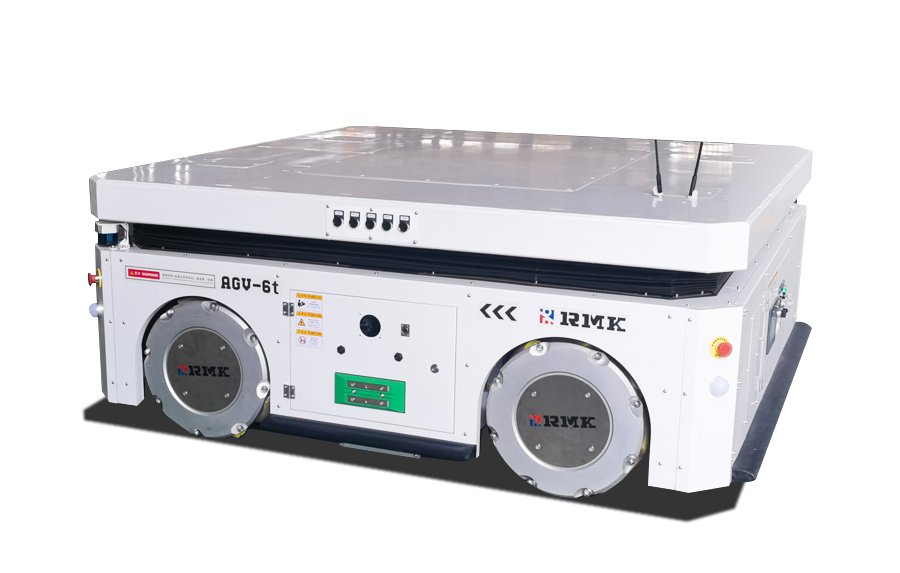
Mecanum wheel transfer cart
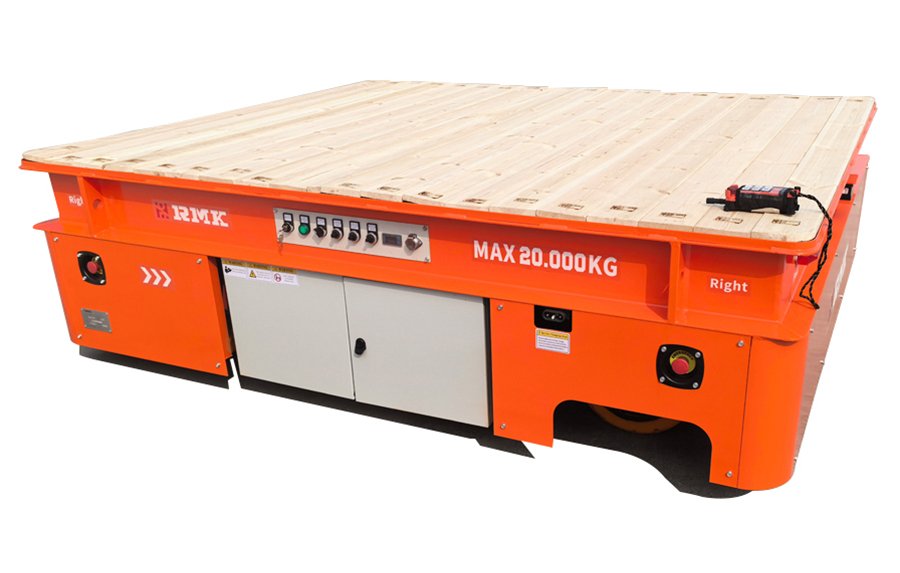
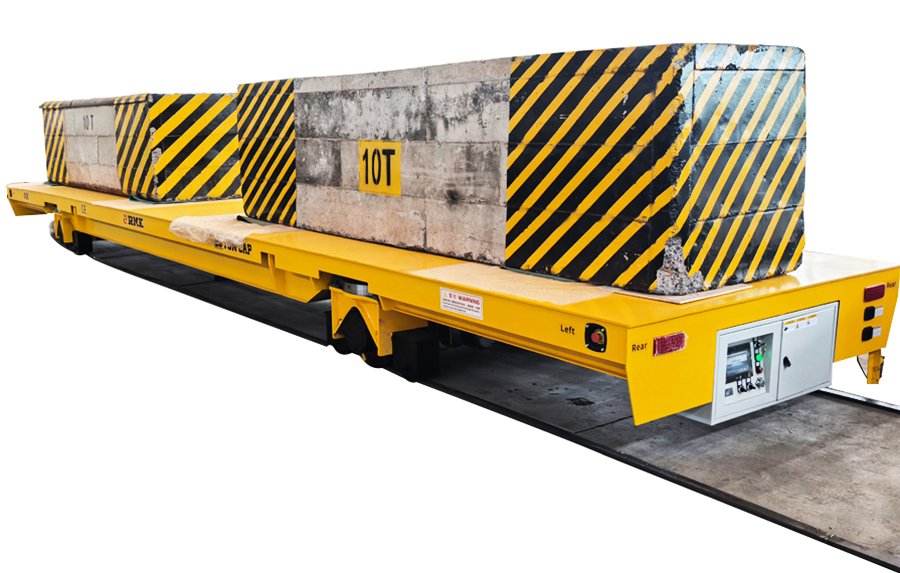
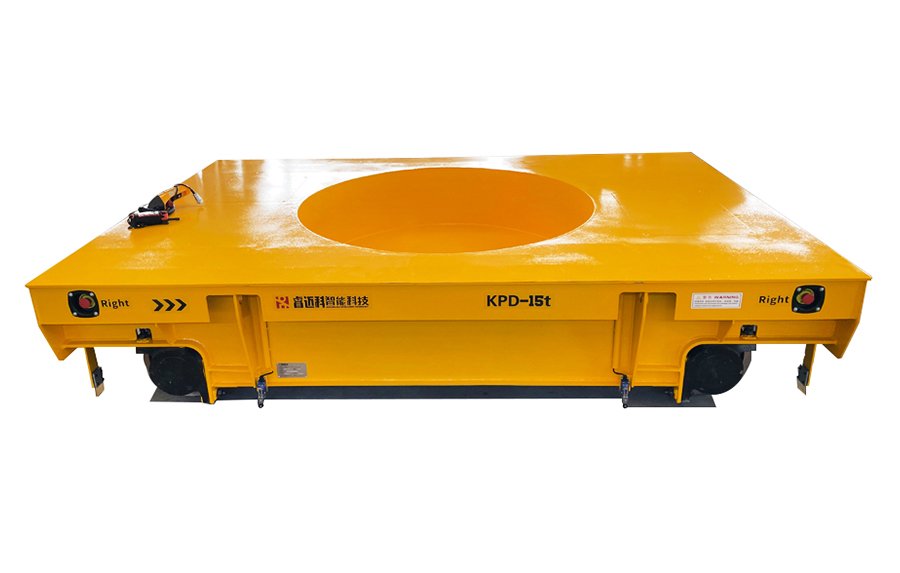
Mecanum wheel transfer cart is equipped with a dedicated Mecanum wheel travel system. Adopting an omnidirectional wheel set structure, it…Differential Steering Trackless Transfer Cart
Differential Steering Trackless Transfer Cart features flexible steering via differential drive, operates tracklessly without path constraints, and efficiently handles heavy-duty…
Related Products
Mecanum wheel transfer cart
Mecanum wheel transfer cart is equipped with a dedicated Mecanum wheel travel system. Adopting an omnidirectional wheel set structure, it realizes lateral movement, diagonal travel and in-situ rotation, enabling…Differential Steering Trackless Transfer Cart
Differential Steering Trackless Transfer Cart features flexible steering via differential drive, operates tracklessly without path constraints, and efficiently handles heavy-duty material transport.
Hot blog
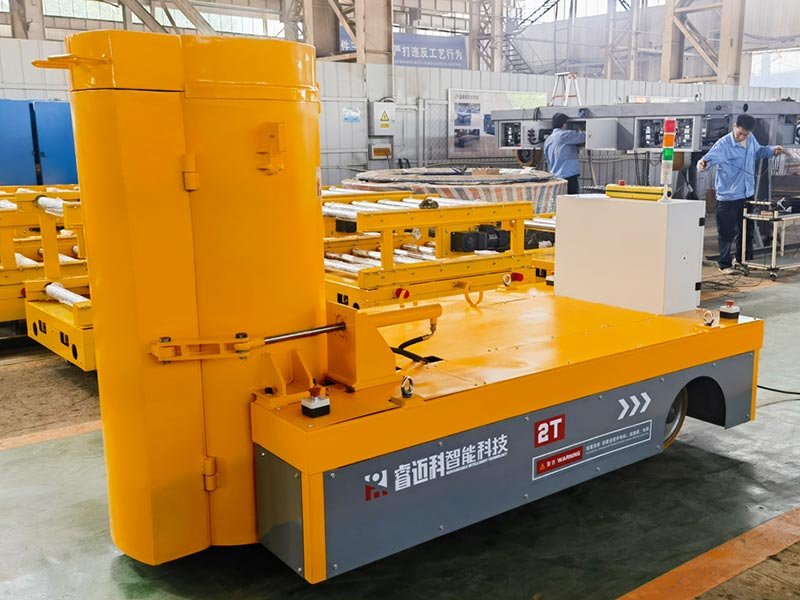
Applications and Solutions for Industrial Material Transfer Carts in Bulk Material Handling
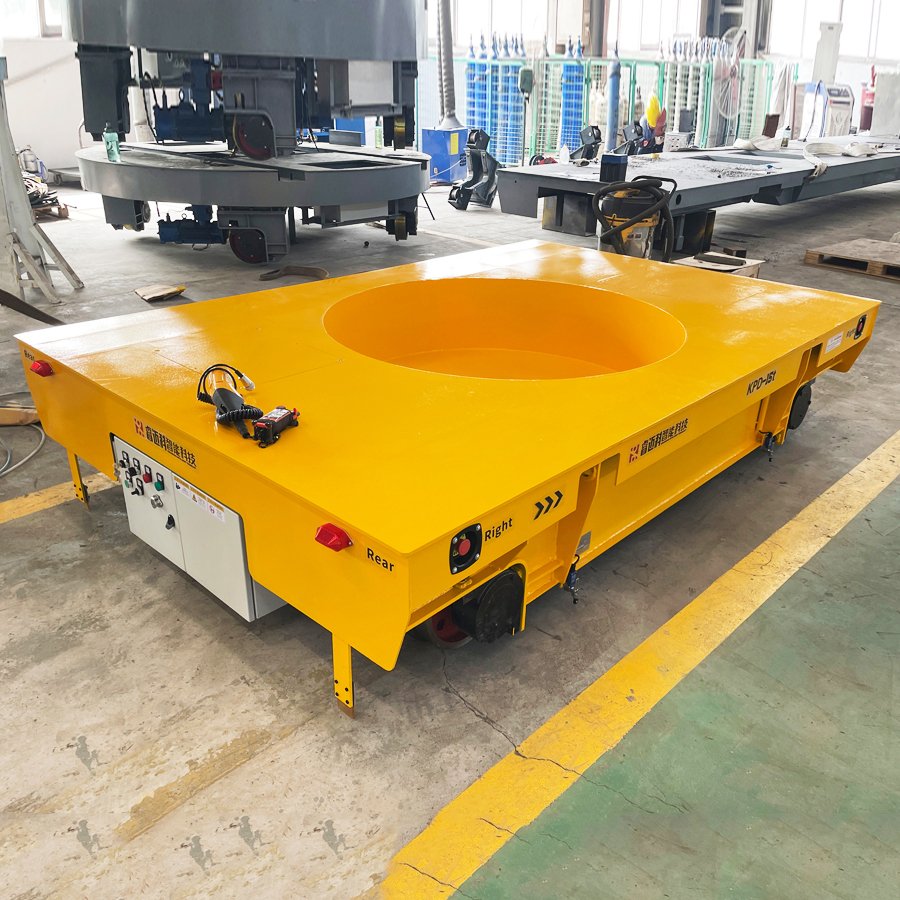
In modern industrial production, efficient material handling plays an important role in maintaining production flow, improving operational efficiency,…How to Choose a Ladle Transfer Cart for Steel Plants?
A ladle transfer cart is a specialized heavy-duty material handling vehicle used in metallurgical, steelmaking, and foundry production…
Hot blog
Applications and Solutions for Industrial Material Transfer Carts in Bulk Material Handling
In modern industrial production, efficient material handling plays an important role in maintaining production flow, improving operational efficiency,…How to Choose a Ladle Transfer Cart for Steel Plants?
A ladle transfer cart is a specialized heavy-duty material handling vehicle used in metallurgical, steelmaking, and foundry production…