
Low Voltage Rail Transfer Cart | 5–300 Ton KPD Transfer Cart
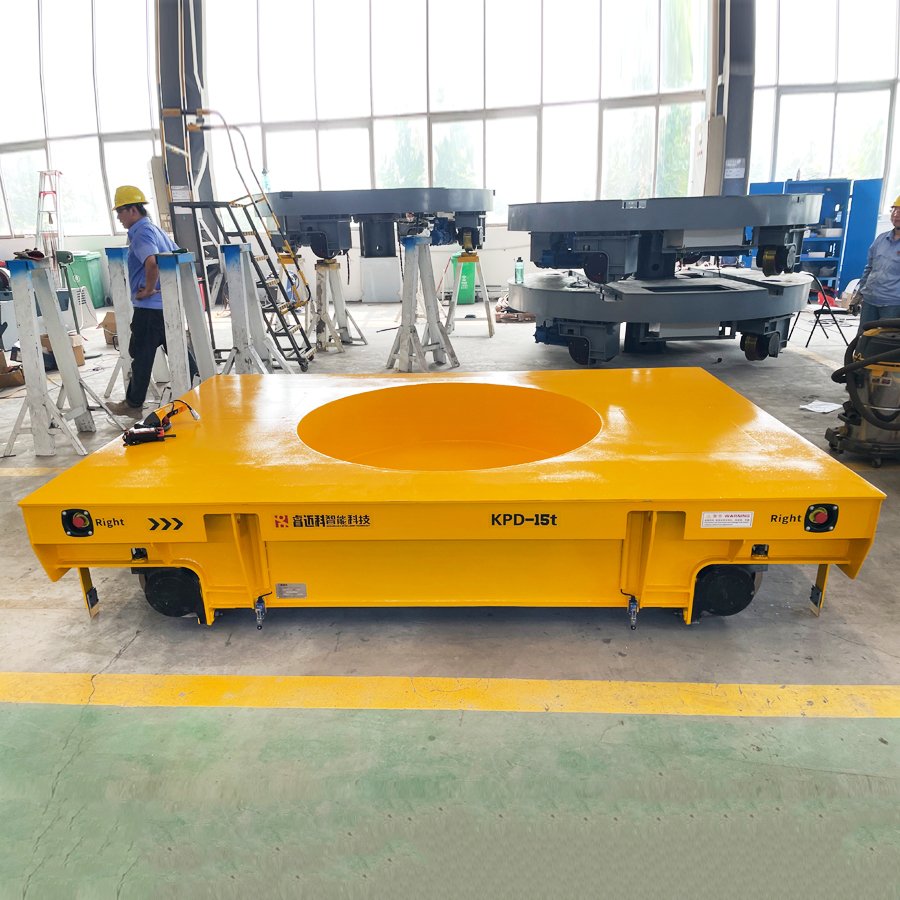
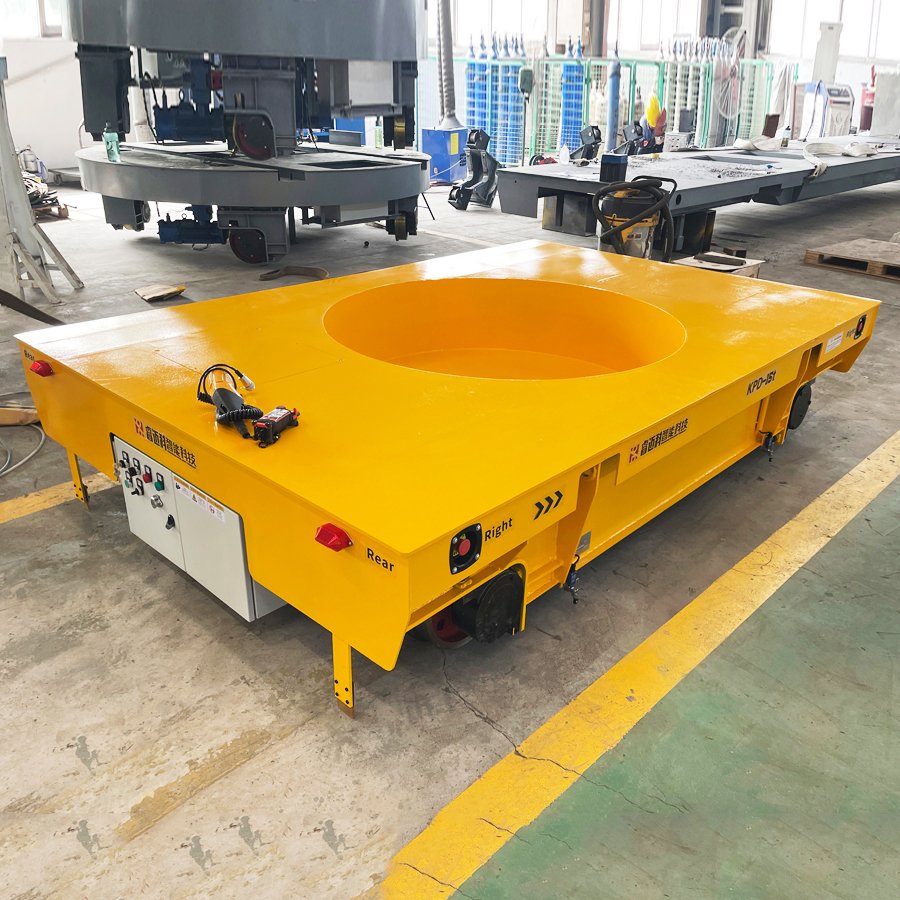
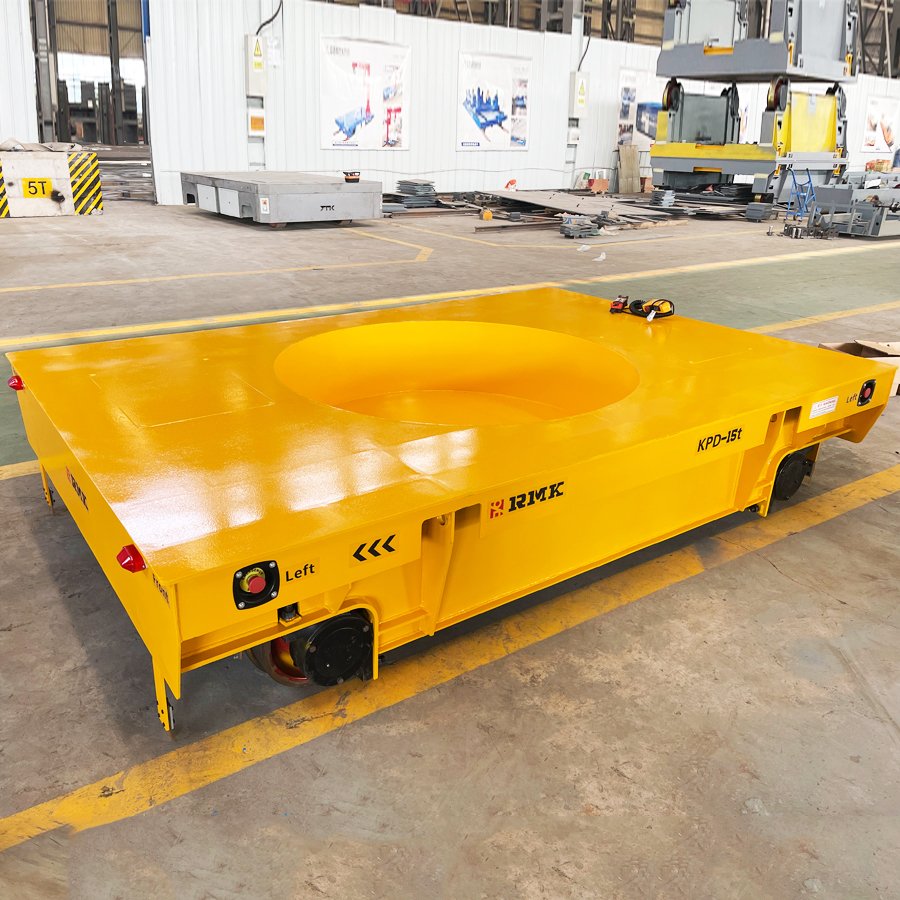
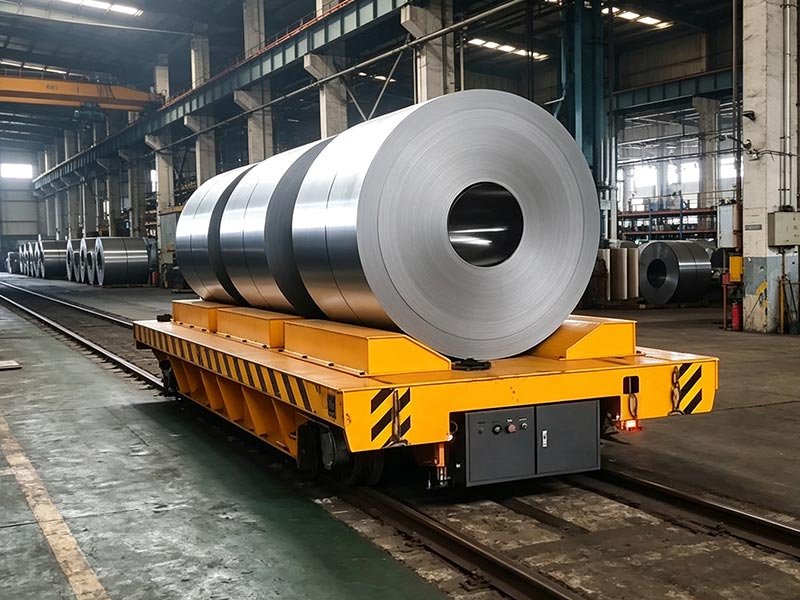
RMK KPD low voltage rail transfer carts are designed for heavy-duty material handling along fixed rail routes. The cart receives power from a 36V low-voltage rail system, eliminating the need for trailing cables or battery charging during operation.
With load capacities from 5 to 300 tons, the transfer cart can be customized with different platform sizes, rail gauges, travel speeds, control systems and load-handling fixtures to match specific factory conditions.
| Load Capacity |
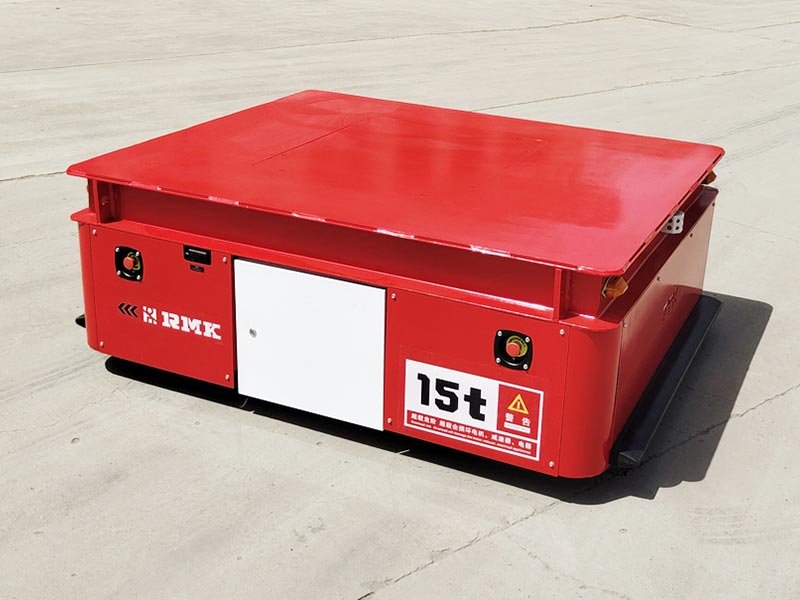
15 Tons. |
| Power type |
Low voltage rail. |
| Application |
Steel coils, steel billets, silicon ingots, molten aluminum ladles, large cylindrical molds, pressure vessels, and more. |
| Add-on |
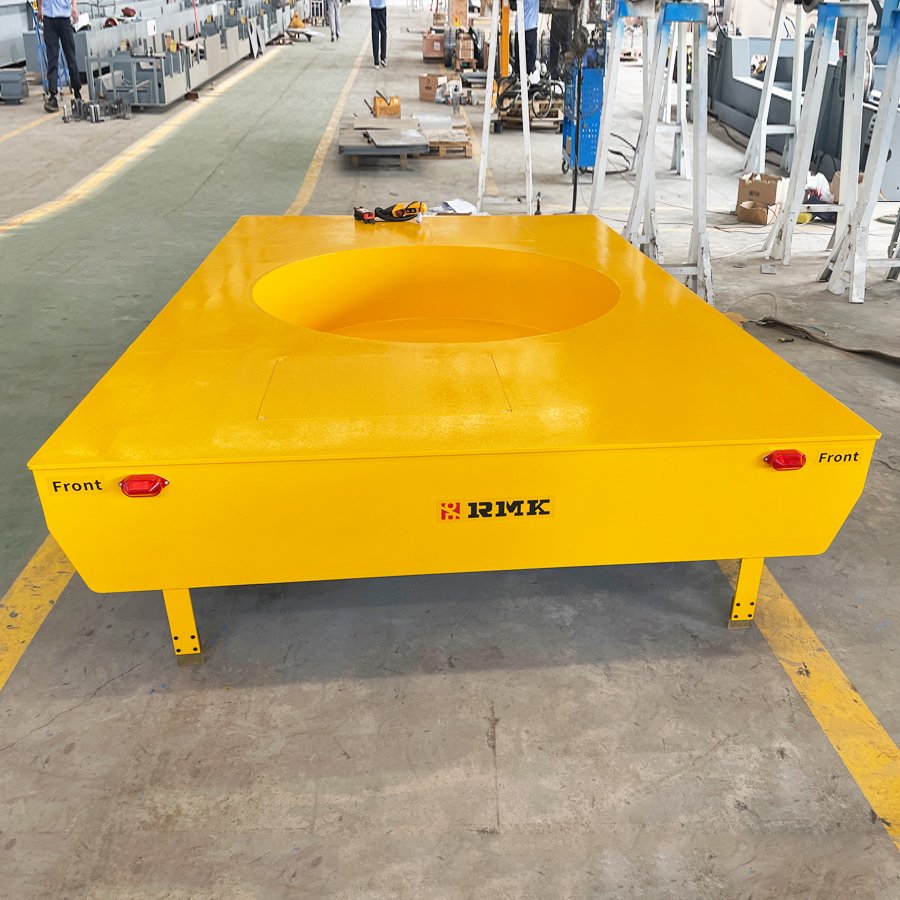
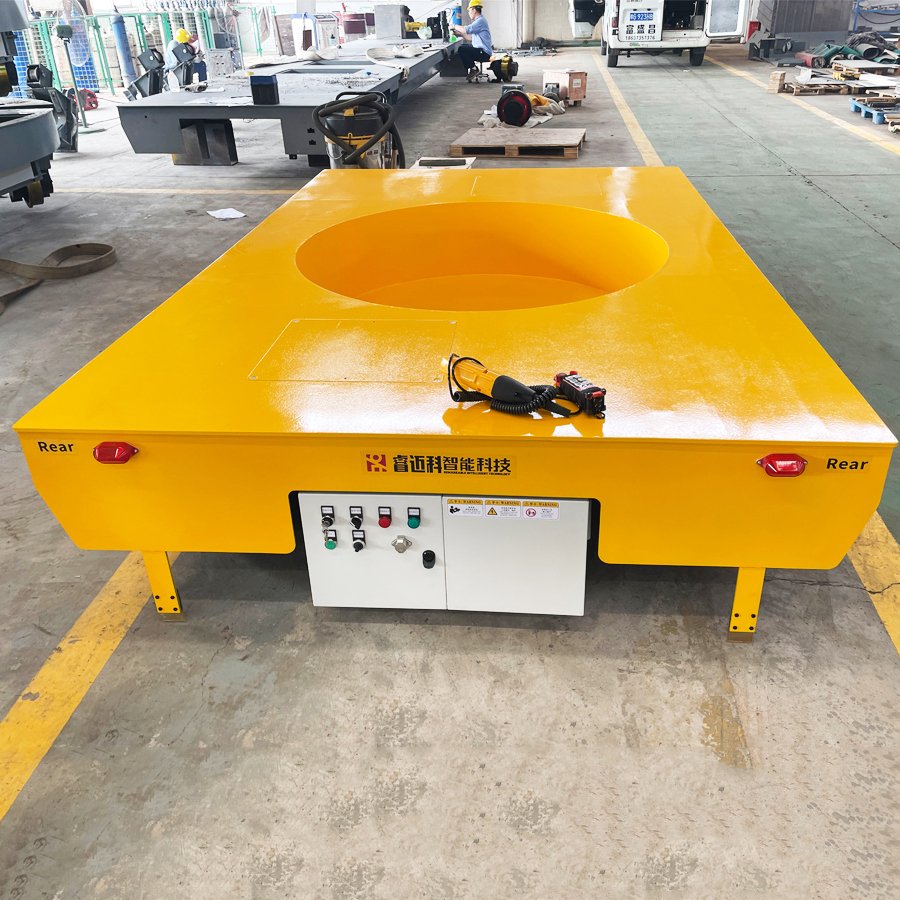
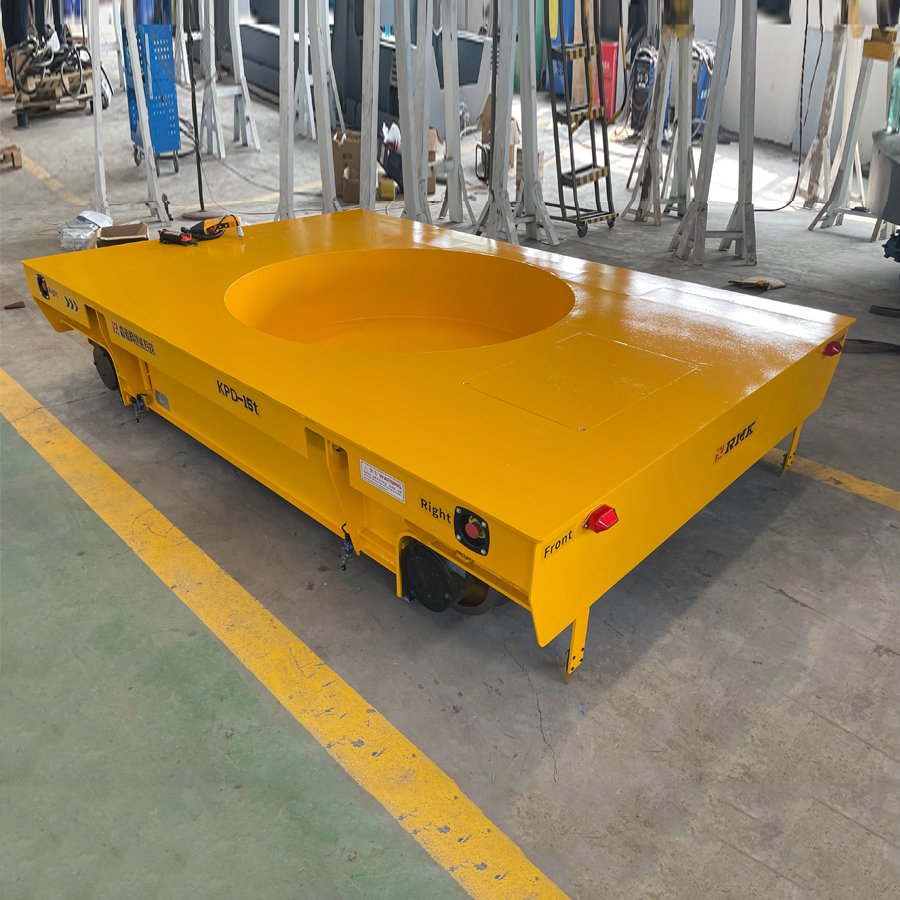
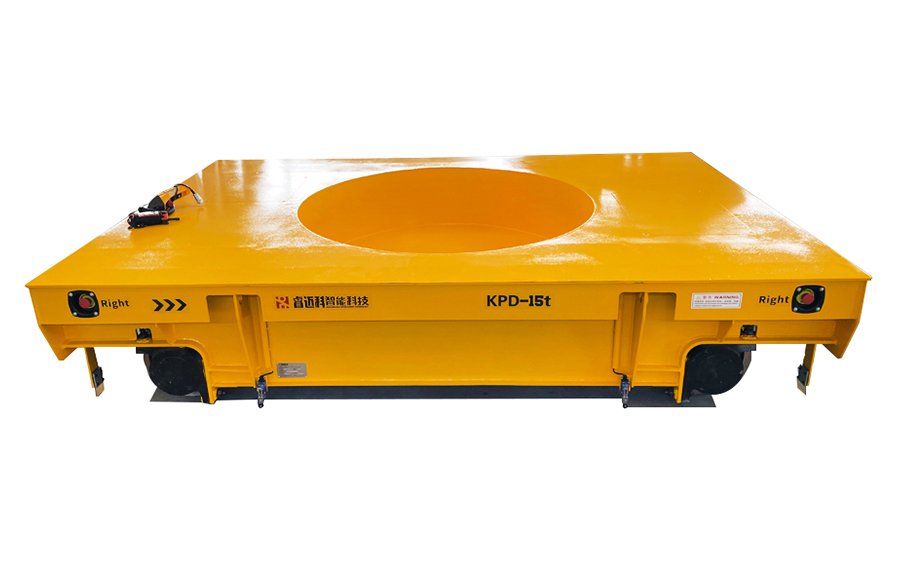
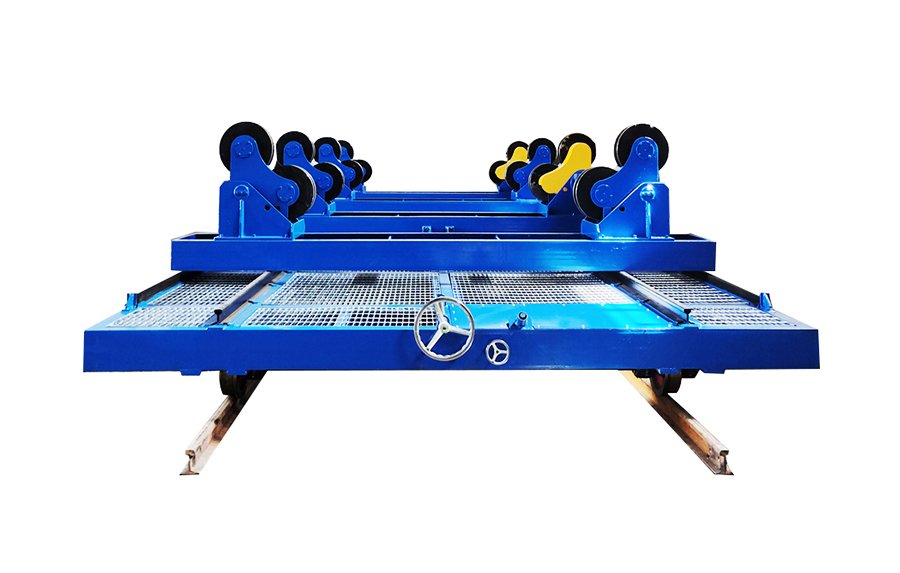
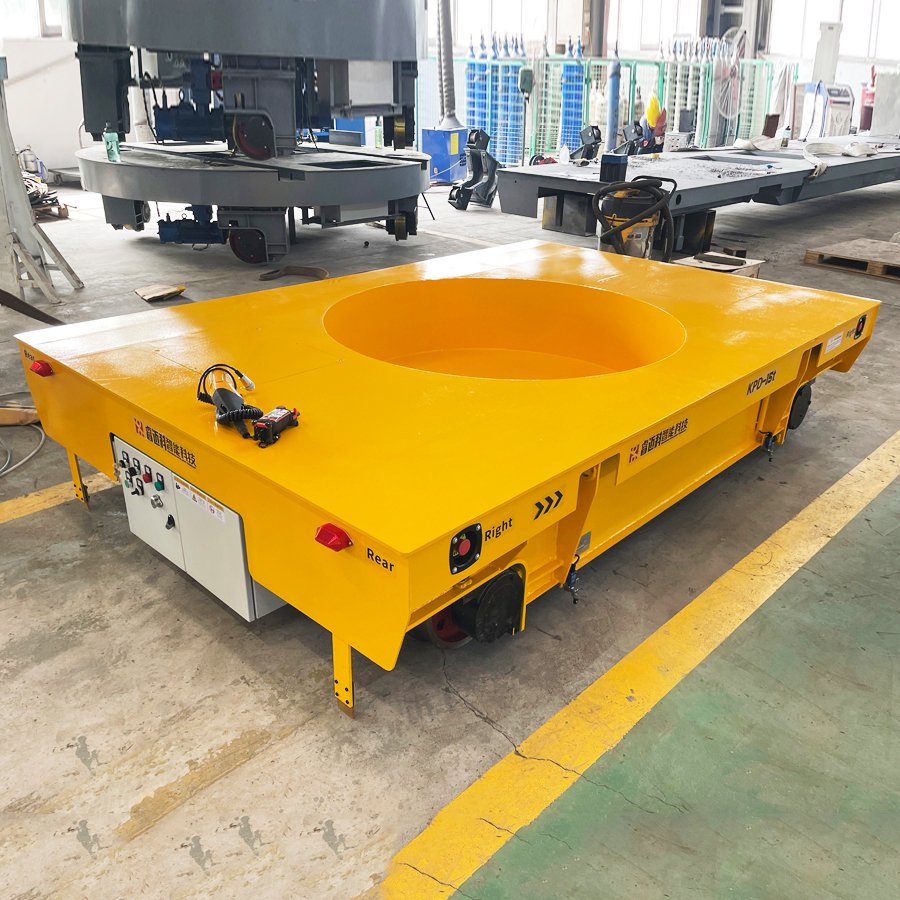
Customized circular recessed work station. |
Low Voltage Rail Transfer Cart | 5–300 Ton KPD Transfer Cart
RMK KPD low voltage rail transfer carts are designed for heavy-duty material handling along fixed rail routes. The cart receives power from a 36V low-voltage rail system, eliminating the need for trailing cables or battery charging during operation.
With load capacities from 5 to 300 tons, the transfer cart can be customized with different platform sizes, rail gauges, travel speeds, control systems and load-handling fixtures to match specific factory conditions.
| Load Capacity |
15 Tons. |
| Power type |
Low voltage rail. |
| Application |
Steel coils, steel billets, silicon ingots, molten aluminum ladles, large cylindrical molds, pressure vessels, and more. |
| Add-on |
Customized circular recessed work station. |
What Is a Low Voltage Rail Transfer Cart?
A low voltage transfer cart is an electrically powered material handling vehicle that receives power through conductive rails installed along its running track.
The KPD system typically reduces the workshop’s 380V AC power supply to 36V through a step-down transformer. The low-voltage power is then supplied to the rails and collected by a power pickup device on the transfer cart. The onboard electrical system provides power to the drive motor and controls the cart’s starting, stopping, forward and reverse movement.
Unlike battery-powered transfer carts, the KPD system does not require battery charging. Unlike cable reel carts, it does not drag a power cable behind the vehicle.
This makes it particularly suitable for fixed routes, high-frequency material handling and long-duration operation in industrial workshops. Similar KPD systems in the industry use the same 36V rail-powered principle.
How Does a Low Voltage Rail Transfer Cart Work?
The Low Voltage rail transfer Cart operates fully automatically by drawing power from low-voltage electrified rails, featuring a straightforward working mechanism and outstanding durability.
380V industrial power supplied to the workshop is first stepped down to safe 36V low voltage via an on-ground isolation transformer and transmitted to insulated rails. The cart obtains power through conductive wheels mounted on its base that make contact with the rails. An on-board electrical system then boosts the voltage to drive the travel motors.
Operators control start/stop, forward/reverse movement and speed adjustment via a pendant controller or wireless remote control. Power is supplied entirely through low-voltage rails without trailing cables. The cart enables stable cyclic transportation along fixed workshop routes, delivering superior safety and continuous operation performance.
Why Choose a Low Voltage Rail Transfer Cart?
Low Voltage Rail Transfer Cart is an ideal solution for heavy-duty material handling within industrial facilities. Powered by a continuous 36V rail power supply system, it combines outstanding safety, high load capacity, continuous operation capability, and cost-effective performance. It is widely used for heavy workpiece transportation in heavy manufacturing workshops. Its key advantages include:
01
Continuous Power Supply for 24/7 Operation
Continuous power is supplied through low-voltage rails, eliminating the need for battery charging or replacement and preventing downtime caused by low battery levels. This makes the transfer cart suitable for long-duration, high-frequency continuous transport operations.
02
36V Low-Voltage Power Supply for Enhanced Electrical Safety
The 380V power supply is converted to 36V low-voltage and supplied to the transfer through insulated rails, with leakage protection and grounding protection to reduce the risk of electric shock and improve safety in environments.
03
Cable-Free Operation for Reduced Site Interference
With rail power supply, no trailing cable or cable reel is required, reducing cable wear, maintenance requirements, and interference with personnel or other equipment, while ensuring cleaner and more stable transfer cart operation.
04
Heavy-Duty Load Capacity, Customizable to 300 Tons and Beyond
Custom-designed based on the actual load distribution, wheel load, rail type, platform dimensions, and operating conditions to meet the transport requirements of large equipment, steel, molds, and other heavy materials.
05
Ideal for High-Frequency Transport on Fixed Routes
Operating along fixed rails, it is suitable for transport within production lines, workshops, and between workshops, especially for applications requiring high frequency, long hours, and continuous operation.
KPD Low Voltage Rail Transfer Cart Technical Specifications
| Technical Parameters Table Of KPD Low Voltage Electric Rail Transfer Cart | |||||||||||||||||||||||||
| Rated Load Capacity(t) | 5 | 10 | 15 | 20 | 30 | 40 | 50 | 60 | 80 | 100 | 150 | 200 | |||||||||||||
| Table Size(mm) | Length | 2000 | 2400 | 3000 | 3000 | 4000 | 4500 | 5000 | 5000 | 6000 | 6000 | 7000 | 8000 | ||||||||||||
| Width | 1300 | 1500 | 2000 | 2000 | 2200 | 2200 | 2500 | 2500 | 2500 | 2500 | 3000 | 3000 | |||||||||||||
| Height | 450 | 500 | 550 | 550 | 600 | 600 | 700 | 700 | 800 | 800 | 900 | 900 | |||||||||||||
| Ground Clearance(mm)) | ≥50 | ||||||||||||||||||||||||
| Wheelbase(mm) | 1300 | 1600 | 2000 | 2000 | 2700 | 3000 | 3300 | 3300 | 4000 | 4000 | 4800 | 5500 | |||||||||||||
| Rail Inner Distance(mm) | 900 | 1100 | 1435 | 1435 | 1435 | 1435 | 1650 | 1650 | 1650 | 1650 | 2000 | 2000 | |||||||||||||
| Operation Method | Remote Control & Hand Operate Pendant | ||||||||||||||||||||||||
| Move Way | Forward/backwards, Turning (Customized), Vertical-Horizontal Crisscross Movement (Customized) | ||||||||||||||||||||||||
| Running Speed(m/min)) | 25 | 20 | |||||||||||||||||||||||
| Motor Power(kW) | 1.1 | 1.5 | 2×1.1 | 2×1.1 | 2×1.5 | 2×2.2 | 2×2.2 | 2×3 | 2×3 | 2×4 | 2×5.5 | 2×7.5 | |||||||||||||
| Motor Type | Three-Phase Asynchronous Motor | ||||||||||||||||||||||||
| Brake Mode | Electromagnetic Brake | ||||||||||||||||||||||||
| Protective Measures | Audible and visual alarm lamp+ Emergency stop button+Limit switch+Laser obstacle avoidance sensor(Optional)+Anti-collision contact edge(Optional) | ||||||||||||||||||||||||
| Wheel Quantity | 4 | 8 | |||||||||||||||||||||||
| Wheel Material | ZG55 | ||||||||||||||||||||||||
| Drive Wheel Diameter(mm) | Ф300 | Ф300 | Ф350 | Ф350 | Ф400 | Ф400 | Ф500 | Ф500 | Ф600 | Ф600Heavy Duty Wheel | Ф700Heavy Duty Wheel | Ф600Heavy Duty Wheel | |||||||||||||
| Recommended Rail Type | P15 | P18 | P24 | P24 | P38 | P38 | P43 | P43 | QU70 | QU70 | QU100 | QU100 | |||||||||||||
| Power Supply Mode | Step Down 380V To 36V, And Step Up 36V To 220V | Step Down 380V To 36V And Step Up 36V To 380V | |||||||||||||||||||||||
| Rail Quantity | 2 | 2+1 Conductive Rails | |||||||||||||||||||||||
| Transformer Power(kVA) | 3 | 3 | 6 | 6 | 6 | 10 | 10 | 10 | 10 | 20 | 20 | 30 | |||||||||||||
| Working Environment | Temperature: -10°c~40°c; Humidity: 20%~80%, No Condensation(Customized for high-temperature and explosion-proof environments) | ||||||||||||||||||||||||
| Vehicle Body Color | Customized | ||||||||||||||||||||||||
| Other Functions | Over Voltage, Under Voltage, Over Current Protection etc | ||||||||||||||||||||||||
| Versione Automatica – RGV | Combined With An Automatic Positioning System, Signal Reception System, And Programmable System, The Rgv Realizes Automated Handling Functions. Customizable Rgv Carts Such As Mother-Child Carts (Ferry Carts), Vertical-Horizontal Moving Carts, And Curved Track Carts Can Be Provided. | ||||||||||||||||||||||||
When Is a Low Voltage Rail Transfer Cart Suitable?
If your material handling operation has the following characteristics, a low voltage rail transfer cart is an ideal choice.
Fixed Transport Routes
The transfer cart runs along fixed rails between two or more workstations.
High-Frequency Operation:
Suitable for applications where the same transport task must be repeated multiple times during each shift.
Long-Duration Continuous Operation:
The rail power supply system supports continuous operation without downtime for battery charging.
Heavy-Duty Transport:
Can be designed for large and heavy workpieces that are difficult to move with forklifts or conventional material handling equipment.
Defined Production Processes:
KPD series transfer carts can be integrated into production lines to transport materials between machining, assembly, welding, storage, and testing areas.
When Is a Low Voltage Rail Transfer Cart Not Suitable?
To assist customers with accurate model selection and avoid operational issues, the key application limitations of Low Voltage rail transfer Car are specified below:
Travel Distance Limitation
Voltage drop will occur during long-distance transportation. Supplementary copper busbars for voltage compensation or additional supporting transformers must be installed to guarantee stable equipment operation.
Power Supply Mode Limitation
Power supply solutions are clearly classified by load capacity. Heavy-duty models over 50 tons use three-phase low-voltage power supply, light-duty variants suit single-phase low-voltage power supply.
Rail Installation Limitation
The cart draws power from insulated rails. Proper insulation treatment and earthing protection are mandatory during rail laying; otherwise, safe and normal operation cannot be achieved.
Travel Route Limitation
The cart is only applicable for fixed straight tracks or fixed loop tracks. It does not support complex operating conditions involving crossed tracks or frequent turnout switching.
Low Voltage vs Battery vs Cable Reel
| Comparison Item | Low Voltage rail transfer Cart | Battery powered transfer cart | KPJ Cable Drum Transfer Cart |
| Power Supply Mode | Continuous power supply via 36V safe low-voltage rails | On-board battery power supply | 380V power supplied via trailing cable reel |
| Continuous Operation Capacity | Capable of 24-hour non-stop operation with no endurance limits, ideal for cyclic assembly line transportation | Must stop for charging after operating for a period, disrupting production schedules | Continuous operation available; travel distance limited by cable length |
| On-site Cleanliness & Safety | No exposed cables to avoid cable crushing or pulling. 36V low voltage minimizes electric shock risks | No external cables, maintaining a tidy site | Trailing cables on the ground are prone to crushing damage and trip hazards, creating safety risks |
| Applicable Travel Distance | Suitable for long-distance and cross-workshop rail transportation | Works for both short and long distances, unrestricted by rail routes | Suitable for short-distance transfer. Longer travel distances lead to higher cable power loss and failure rates |
| Site Modification Requirements | Insulated rails need to be laid with one-time civil construction | No powered rail modifications required; flexible deployment | Ordinary rails are sufficient; rail insulation treatment is unnecessary |
| Long-Term Operating Cost | No battery replacement fees; stable energy consumption. Only routine mechanical maintenance required | Batteries require full replacement every 3–5 years, leading to high long-term consumable costs | Cables wear out from long-term friction and require periodic replacement |
| Workpiece Adaptation Advantages | Supports extensive platform customization (circular grooves, V-shaped supports, lifting platforms, etc.). The top choice for heavy cylindrical workpieces | Customizable platform available; not ideal for long-duration heavy-load operation | Customizable platform available; frequent heavy-load long-distance use is not recommended |
| Typical Application Scenarios | Pressure vessel factories, head processing, heavy industry workshops, mass non-stop assembly line transportation | Scattered workstations, locations where insulated rails cannot be installed, short-distance intermittent transport | Short-distance fixed-point transfer inside workshops, basic applications with limited budgets |
Many customers struggle to choose the appropriate power supply solution when purchasing heavy-duty rail transfer carts.
If your facility requires round-the-clock continuous production, handles heavy workpieces, involves long transport routes, and maintains high standards for workshop safety compliance, the Low Voltage rail transfer Cart is the preferred option.
For frequent transportation of heavy items such as cylindrical shells and annular castings, the cable-free design effectively prevents production downtime caused by cable failures. Paired with a custom recessed platform, it delivers superior transport stability.
Battery-powered electric transfer carts are recommended for intermittent operation or sites where civil works for insulated rail installation cannot be carried out.
Cable reel transfer carts are a viable choice for short-distance fixed-point handling within workshops with budget constraints.
Low Voltage Electric Transfer Cart Applications
Benefiting from 24-hour continuous operation capability, cable-free structure and safe low-voltage power supply, Low Voltage rail transfer Carts are suitable for high-frequency transportation of heavy workpieces along fixed rail routes within factories, and ideal for non-stop assembly line production.
Pressure Vessel & Tank Manufacturing Industry
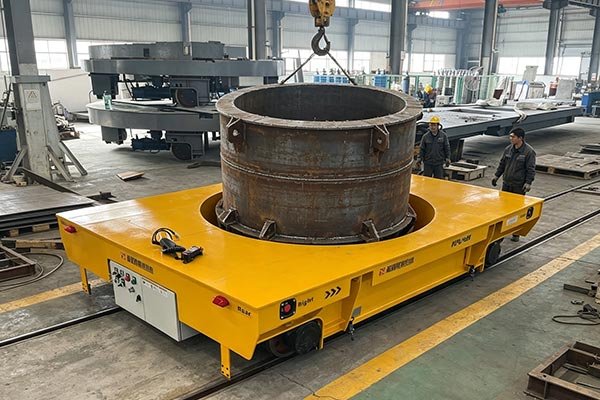
Designed specifically for vertical cylindrical tanks, pressure vessel shells and cylindrical blanks.
The cart’s middle circular recess secures cylinder bases for reliable positioning. It eliminates rolling, shifting and collision risks when transporting vertical cylindrical workpieces and ensures smooth transit.
Circulation of Small Empty Ladles and Cylindrical Components
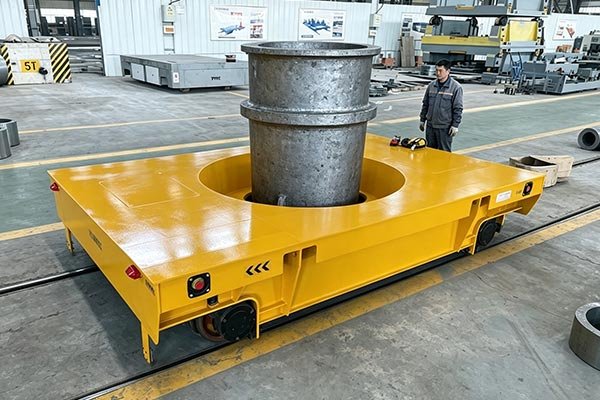
Suitable for transporting cooled small empty ladles; not applicable for operations containing molten high-temperature steel.
It also handles machined cylindrical blanks and large circular sleeve workpieces. The recessed platform delivers stable positioning, perfect for high-frequency cyclic transportation along fixed workshop tracks.
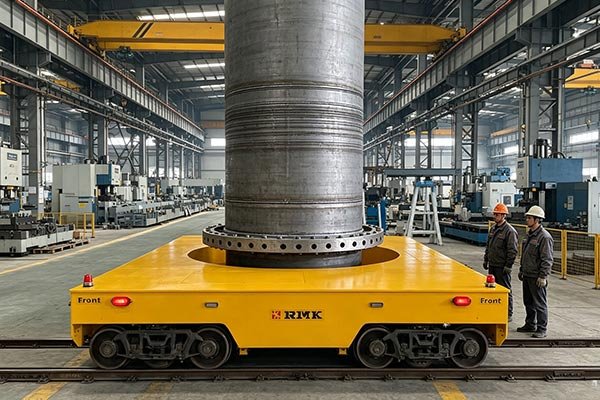
Transportation of Circular Components for Wind Power and Heavy Industry
Suitable for vertical wind turbine tower sections, heavy cylindrical bases and flanged cylinder assemblies in wind power industry. Cylindrical workpieces easily slip and roll in transit. The trolley’s central circular recess offers bottom restraint to secure loads, enabling stable, deviation-free transport for continuous heavy workshop production lines.
Application Scenarios of Low Voltage rail transfer Carts
Benefiting from 24-hour continuous operation capability, cable-free structure and safe low-voltage power supply, Low Voltage rail transfer Carts are suitable for high-frequency transportation of heavy workpieces along fixed rail routes within factories, and ideal for non-stop assembly line production.
Pressure Vessel & Tank Manufacturing Industry
Designed specifically for vertical cylindrical tanks, pressure vessel shells and cylindrical blanks.
The cart’s middle circular recess secures cylinder bases for reliable positioning. It eliminates rolling, shifting and collision risks when transporting vertical cylindrical workpieces and ensures smooth transit.
Circulation of Small Empty Ladles and Cylindrical Components
Suitable for transporting cooled small empty ladles; not applicable for operations containing molten high-temperature steel.
It also handles machined cylindrical blanks and large circular sleeves. The recessed platform delivers stable positioning, ideal for cyclic transport along fixed workshop tracks.
Circular Component Transport for Wind & Heavy Industry
Suitable for vertical wind turbine tower sections, heavy cylindrical bases and flanged cylinder assemblies in wind power industry. Cylindrical workpieces slip and roll in transit. The trolley’s central recess offers bottom restraint to secure loads, enabling stable, deviation-free transport for heavy workshop production lines.
Working Condition Selection Reference
Operating conditions where Low Voltage rail transfer Cart are preferred:
Customization Advantages from the Manufacturer
We offer non-standard customization for this Low Voltage rail transfer Cart with a circular recessed platform. Modifications can be tailored according to customers’ workpiece dimensions and production procedures. Instead of generic standardized equipment, our carts are built to match the actual transportation requirements of each workshop.
Customizable Recess Dimensions
No fixed standard recess is adopted. Recess depth and curvature are engineered on-site based on customers’ cylindrical workpiece diameter and dead weight. This achieves tight fitting, eliminating shaking and loosening in transit for superior positioning performance.
Optional Anti-slip Structures
To address minor sliding risks of vertical cylindrical workpieces, anti-slip plates and positioning stoppers can be installed upon request. These fixtures firmly secure loads to prevent shifting and collisions, maximizing workpiece integrity and operational safety.
Flexible Optional Auxiliary Tooling
Hydraulic lifts and rotating platforms can be fitted to match production workflows. The cart supports processes including cylinder fitting, joint assembly and non-destructive testing. One unit meets transport demands across multiple procedures for greater versatility.
FAQ
Related Products
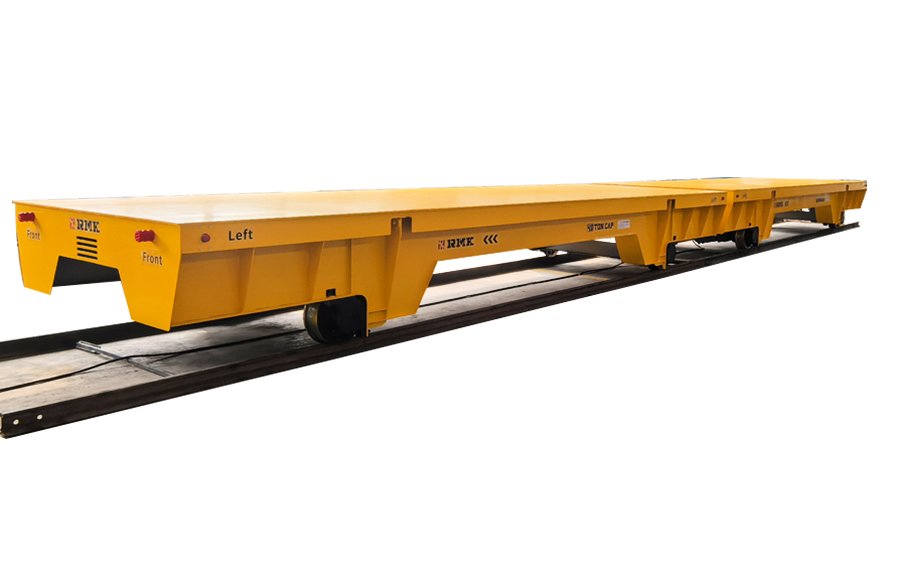
KPC Sliding Contact Line Transfer Cart
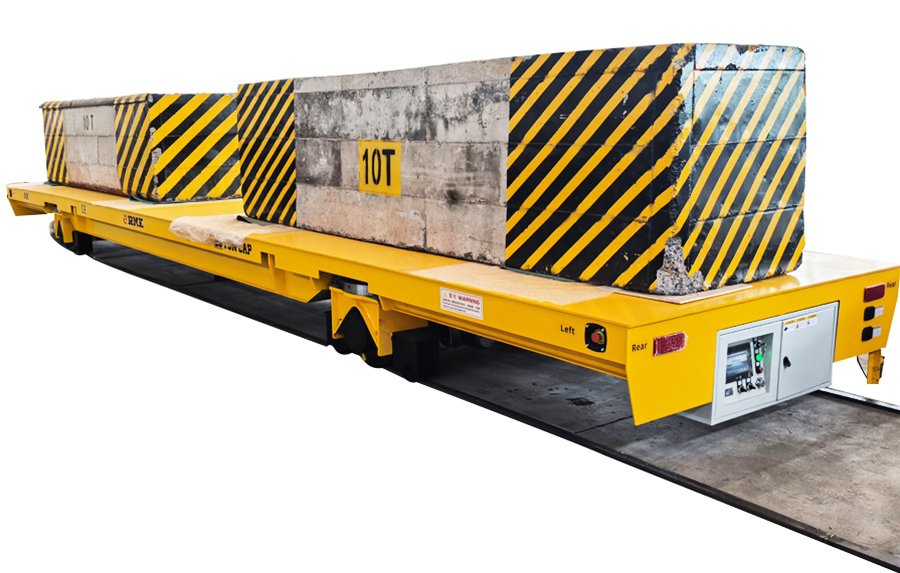
This KPC Sliding Contact Line Transfer Cart delivers continuous, low-maintenance power via contact lines, ideal for long-distance, high-frequency heavy material handling.Low Voltage rail transfer Car
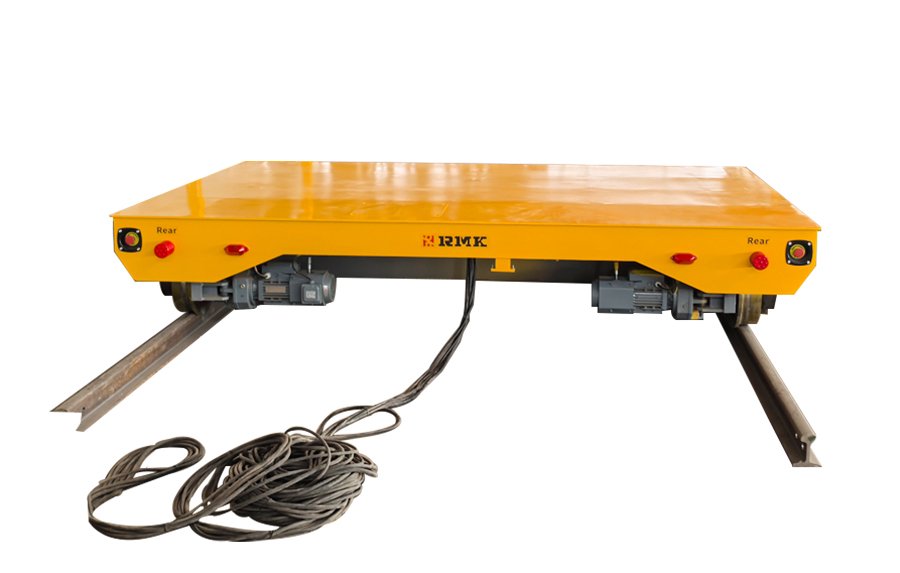
Including the KPD Low Voltage Electric Rail Transfer Cart, which obtains power through a low-voltage powered rail system for safe and stable operation.
Related Products
KPC Sliding Contact Line Transfer Cart
This KPC Sliding Contact Line Transfer Cart delivers continuous, low-maintenance power via contact lines, ideal for long-distance, high-frequency heavy material handling.Low Voltage rail transfer Car
Including the KPD Low Voltage Electric Rail Transfer Cart, which obtains power through a low-voltage powered rail system for safe and stable operation.
Hot blog
Applications and Solutions for Industrial Material Transfer Carts in Bulk Material Handling
In modern industrial production, efficient material handling plays an important role in maintaining production flow, improving operational efficiency,…How to Choose a Ladle Transfer Cart for Steel Plants?
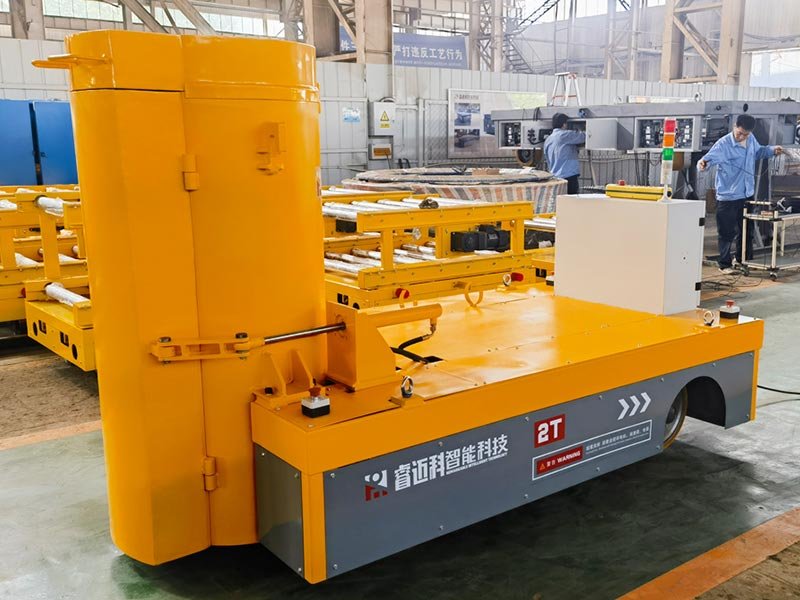
A ladle transfer cart is a specialized heavy-duty material handling vehicle used in metallurgical, steelmaking, and foundry production…
Hot blog
Applications and Solutions for Industrial Material Transfer Carts in Bulk Material Handling
In modern industrial production, efficient material handling plays an important role in maintaining production flow, improving operational efficiency,…How to Choose a Ladle Transfer Cart for Steel Plants?
A ladle transfer cart is a specialized heavy-duty material handling vehicle used in metallurgical, steelmaking, and foundry production…