
What are the advantages of Transfer cart compared to forklifts?
In industrial workshop material handling applications, Transfer carts and forklifts are the two most widely used types of equipment. Both can perform basic material transport tasks to support workshop production flow. However, as manufacturing accelerates its modernization and large-scale upgrading, production cycles continue to quicken, and demand for heavy-duty, high-efficiency, and stable material transport has grown significantly. Traditional forklifts are increasingly limited in load capacity, operational stability, and maneuverability, making them unable to fully meet current high-standard production requirements. As a result, many enterprises face a dilemma when choosing material handling equipment between Transfer cart and forklifts. While each has its own applicable scenarios and advantages,Transfer cart offer more prominent benefits in meeting the needs of modern workshops. Starting from core operational requirements, this article provides a detailed analysis of the unique advantages of Transfer trolley.
Definition & Features
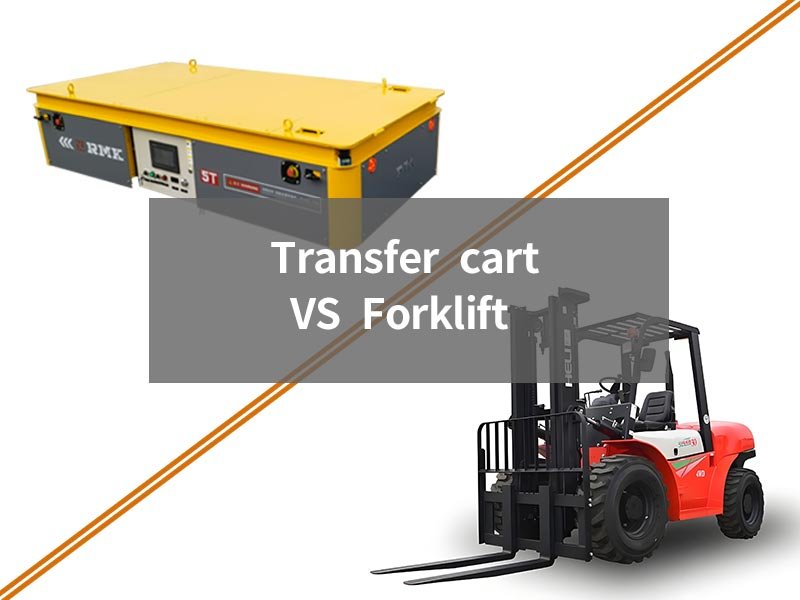
Transfer cart
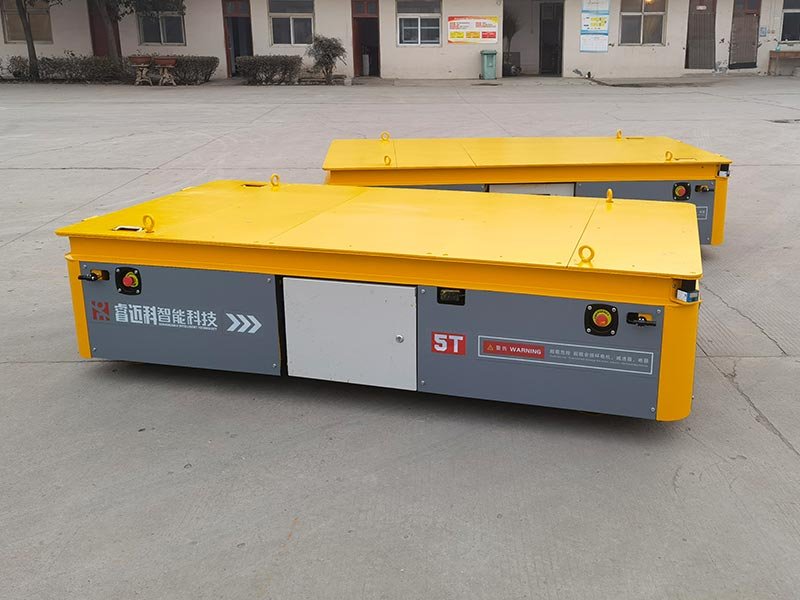
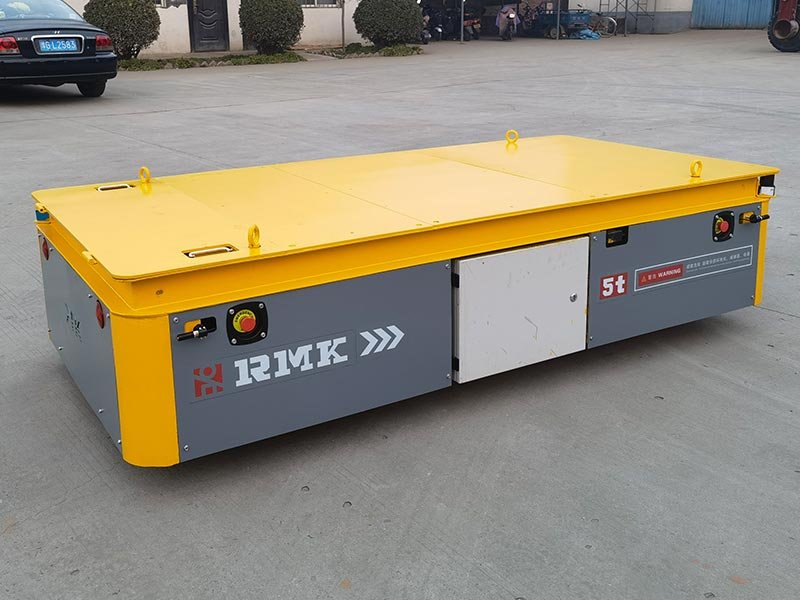
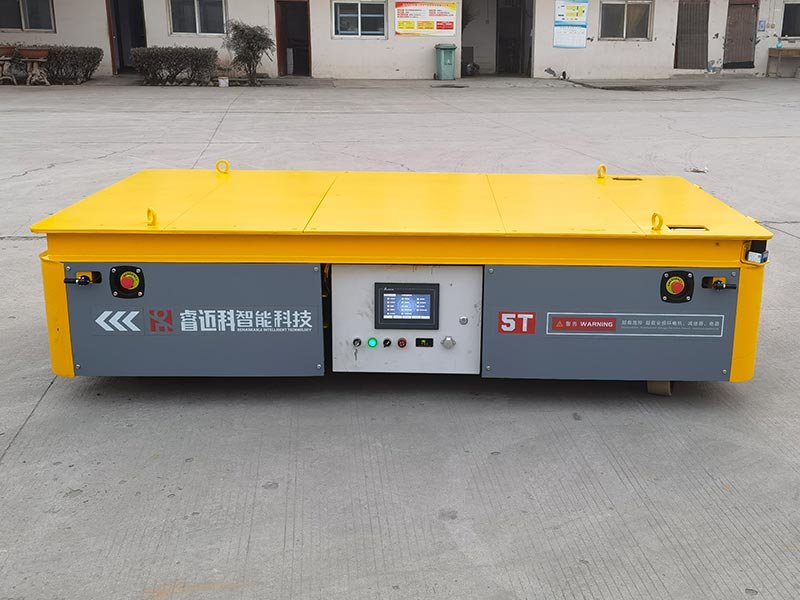
An Transfer carts is a rail‑borne or trackless material transport vehicle used in industrial plants. Powered by electric motors, it runs smoothly along fixed rails or directly on the ground. The complete unit mainly consists of a car body, drive system, and electric control system. The material and structure of the car body can be customized to meet different load‑bearing requirements. It features simple operation, with basic functions including forward and reverse travel. Key advantages include high load capacity, easy maintenance, and long service life, making it a widely used device for frequent, short‑distance and fixed‑point heavy‑load transportation inside and outside workshops.
Forklift
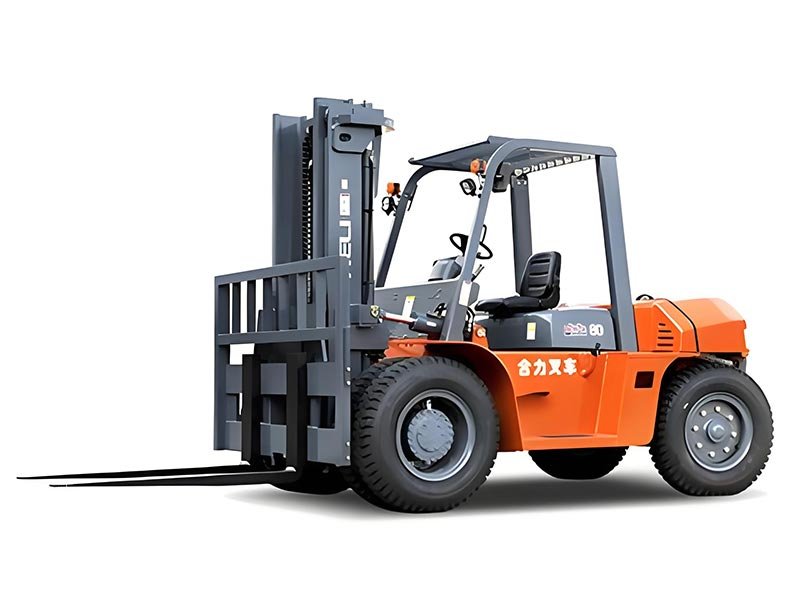
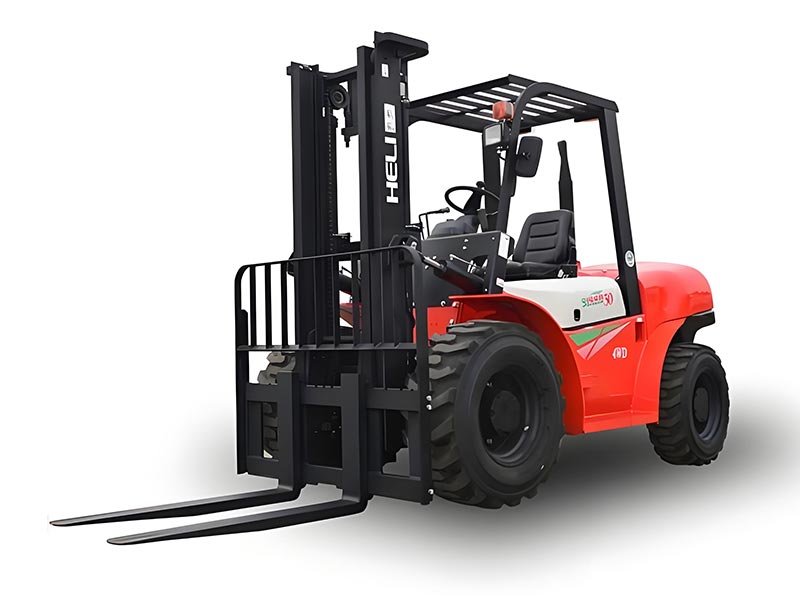
A forklift is a highly versatile industrial handling vehicle equipped with forks and a lifting mechanism, mainly used for loading, unloading, stacking, and short‑distance transport of goods. It is available in internal combustion and electric power versions, and comprises a power unit, frame, working mechanism, and other components. Forklifts are characterized by high maneuverability, good site adaptability, and high operating efficiency. With rated load capacity and load center distance as core performance parameters, forklifts represent indispensable material handling equipment in modern logistics and industrial production.
Load Capacity
Electric Flat Car
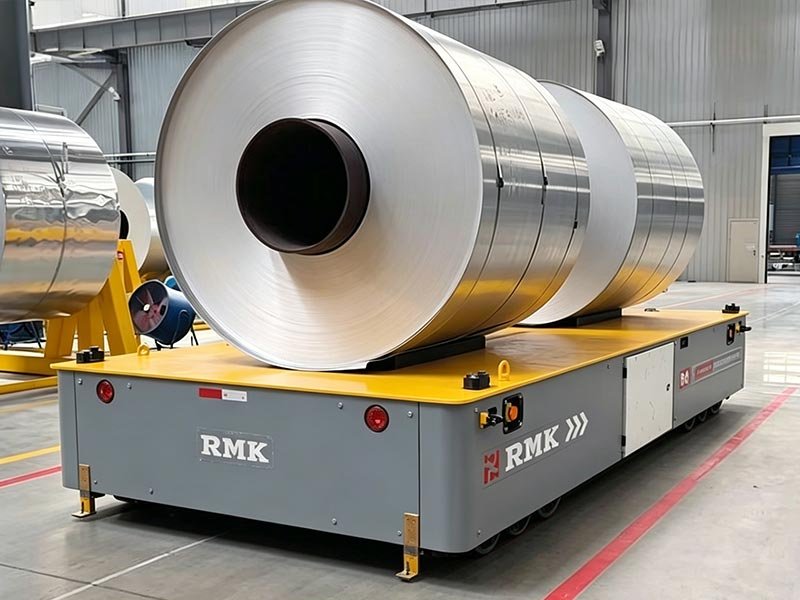
Electric Flat Car boast exceptional heavy-duty load capacity. Standard models can carry several tonnes to dozens of tonnes, meeting general material transportation needs in most factories. For heavy-duty applications such as metallurgy and machinery manufacturing, custom versions can achieve a maximum load capacity of 500 tonnes, enabling stable transportation of large equipment, heavy raw materials and finished goods while ensuring smooth and safe heavy-load handling.
Forklift
The maximum load capacity of forklifts is generally within 10 tonnes, making them suitable for loading, unloading, stacking and short-distance transport of light and medium-weight goods. They are not capable of handling overweight cargo. Additionally, limited by the fork structure, loads tend to sway during lifting, which reduces operational efficiency and poses safety risks such as falling goods and forklift instability.
Operational Stability
Transfer trolly
Transfer trolly run on fixed rails, delivering exceptional operational stability. Constrained by the track, they experience virtually no lateral or longitudinal swaying, a major advantage for transporting precision components. In industries such as electronics manufacturing and precision instrument processing, produced parts are highly sensitive to vibration; jolting during transit can damage components and compromise quality. Transfer trolly effectively eliminate such issues, ensuring precision parts remain intact during transportation, greatly reducing damage caused by bumps, and providing reliable support for high-quality production.
Forklift
Forklifts exhibit significant instability during operation. As they travel on tires in direct contact with the ground, heavy loads can lead to body or fork sway due to uneven ground, speed changes, or turning. This sway causes cargo displacement and falling risks, endangering goods and reducing handling efficiency. To minimize sway, operators must reduce speed and proceed with extreme caution, which extends transport time. In applications with strict delivery time requirements, this drawback directly hinders overall production efficiency.
Ease of Operation
Transfer trolley
It features simple operation and a straightforward control interface. Basic functions such as forward/reverse travel and acceleration/deceleration can be performed using only standard buttons or a control lever. New operators can quickly master operation after a brief on-site introduction, without the need for extensive professional training. This effectively reduces corporate training costs, shortens the learning curve, and improves overall work efficiency.
Forklift
Forklift operation is far more complex. Operators must receive professional training, pass relevant examinations, and obtain a special equipment operation license before being qualified to work. Maneuvers such as turning and stacking demand high technical proficiency, requiring precise control of direction and force. Operating in narrow passages further tests operator experience, as collisions and scrapes are common, resulting in damage to goods and equipment, reduced efficiency, and increased financial losses. Enterprises face higher costs for recruitment, training, and personnel screening, which also limits forklift application in certain specialized scenarios.
Environmental Adaptability
Transfer dolly
Transfer dolly are available in rail-mounted and trackless versions, which can be flexibly selected according to plant layout. Rail-mounted flat cars run along dedicated tracks with fixed paths and stable travel posture. Trackless flat cars require no track laying and can operate directly on conventional hardened surfaces such as concrete, tile, and wear-resistant flooring, working normally both indoors and outdoors.
Even in common industrial environments with oil contamination, slight water accumulation, or dust, Transfer dolly maintain stable performance with minimal impact from road conditions, demonstrating strong environmental adaptability and high operational safety.
Forklift
While forklifts offer good maneuverability on standard flat surfaces, they have relatively high requirements for pavement conditions. In harsh environments such as slippery, muddy, soft, uneven, or heavily oil-contaminated areas, tires lack sufficient grip, leading to a high risk of skidding, drifting, and even tipping.
Meanwhile, forklifts have a high center of gravity, so even minor unevenness can compromise stability. Compared with Transfer trolley, forklifts show significantly weaker adaptability and safety in complex industrial environments.
Application Scenarios
Transfer cart
Transfer cart boast exceptional environmental adaptability and operate stably under various harsh working conditions.
In high-temperature environments such as metallurgical and foundry workshops, their heat-resistant bodies and electrical components safely transport high-temperature materials including steel billets and castings.
In dusty industrial sites like heavy industry and coal facilities, high-sealing and dust-proof designs prevent dust intrusion and ensure reliable equipment performance.
Moreover, these carts can flexibly cross obstacles such as production lines and trenches, efficiently completing material transfers between workstations and maintaining smooth production flow.
Forklift
Forklifts face considerable limitations in certain specialized scenarios. In high-temperature environments, internal combustion forklifts are prone to engine overheating, which impairs power output, while electric forklifts experience degraded battery performance and reduced operating hours.
In dusty conditions, forklift hydraulic systems and electrical components are vulnerable to dust contamination, leading to accelerated component wear and increased failure rates. Furthermore, forklifts require relatively flexible, flat, and wide routes for smooth travel and turning.
In confined spaces with numerous obstacles, such as narrow aisles in old warehouses, forklifts are difficult to maneuver or even impassable. This greatly restricts their applicable scenarios and prevents them from meeting diverse material handling requirements.
Intelligent Development
Transfer dolly
Driven by the trend of intelligent manufacturing, Transfer dolly are advancing rapidly toward intelligent operation. They can be seamlessly integrated with a factory’s MES system to accurately receive production commands, automatically plan transport routes and schedules, and achieve fully automated operation.
Forklift
Compared with Transfer trolleys, the intelligent development of forklifts is relatively slow. Although some high-end forklifts are equipped with automatic navigation and path planning functions, such models are expensive and impose high requirements on the working environment and supporting technology, resulting in low popularity. Most enterprises still rely on traditional manually operated forklifts.
Due to insufficient intelligence and flexibility, forklifts struggle to meet the demands of high-end logistics and advanced manufacturing scenarios, putting the industry under significant pressure for transformation and upgrading.
Operating Cost
Electric Flat Car
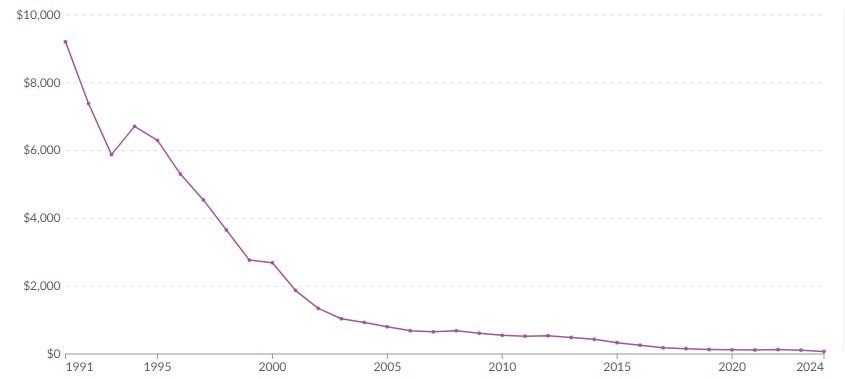
Powered by batteries, Electric Flat Car incur much lower electricity costs compared with fuel expenses, resulting in low overall operating costs. Maintenance is simple: with no hydraulic system, there is no need for frequent hydraulic oil changes. Daily upkeep only involves inspections and basic maintenance of the body, drive system, and other core components, leading to lower maintenance material and labor costs and significant long-term economic benefits.
Forklift
Internal combustion forklifts have high fuel consumption, and rising fuel prices keep their operating costs high. Forklifts are equipped with complex hydraulic systems and lifting mechanisms, which are prone to wear, leakage, and other issues over prolonged use and require regular servicing.
Expenses for hydraulic oil replacements, seals, and other parts are considerable, resulting in high overall operating and maintenance costs that increase the financial burden on enterprises.
Conclusion
Overall, Transfer cart demonstrate more prominent advantages in heavy-duty transportation, stable operation, long-distance handling, and operational safety. They feature greater load capacity, capable of transporting heavy materials ranging from several tonnes to hundreds of tonnes. Their operation is far more stable, with minimal risks such as cargo swaying or tipping.
In addition, Transfer cart are well suited for fixed routes and long-distance transportation. They are energy-saving, eco-friendly, and feature low operation and maintenance costs, performing exceptionally well in heavy industrial scenarios such as metallurgy and machinery manufacturing.
Naturally, equipment selection should still be comprehensively evaluated based on actual working conditions. Forklifts offer higher flexibility for short-distance, multi-directional handling and scattered cargo stacking. In contrast, Electrical trolleys excel in heavy-duty, fixed-point, and long-distance material transport.
In actual production, the two types of equipment can complement each other. However, for heavy-duty, large-scale, and fixed-route material handling applications, Electrical trolleys clearly outperform forklifts in overall performance and benefits.
FAQ
References & Sources
1. Battery-the United States government
2. Battery cost-Our World in Data
3. Automation and IoT-ASCM
4. MES-Wikipedia