
What Are the Differences Between Rail Transfer Carts and Trackless Transfer Carts? How to Choose the Right One?
Transfer Cart are indispensable handling equipment for material transfer operations within factory workshops and plant yards. As short-distance transport machinery featuring low energy consumption, heavy load capacity and outstanding stability, they boast easy operation, smooth running and wide adaptability. Gradually replacing manual handling and forklift transfer solutions, electric flatcars have become the core equipment for moving heavy materials, machinery and workpieces inside manufacturing facilities.
Rail transfer carts and Trackless transfer cart are currently the two most widely adopted types on the market. Though both serve short-distance material conveyance, they differ markedly in operating principles, equipment characteristics, applicable scenarios and upfront investment costs.
Core Definition
What Is a Rail transfer carts?
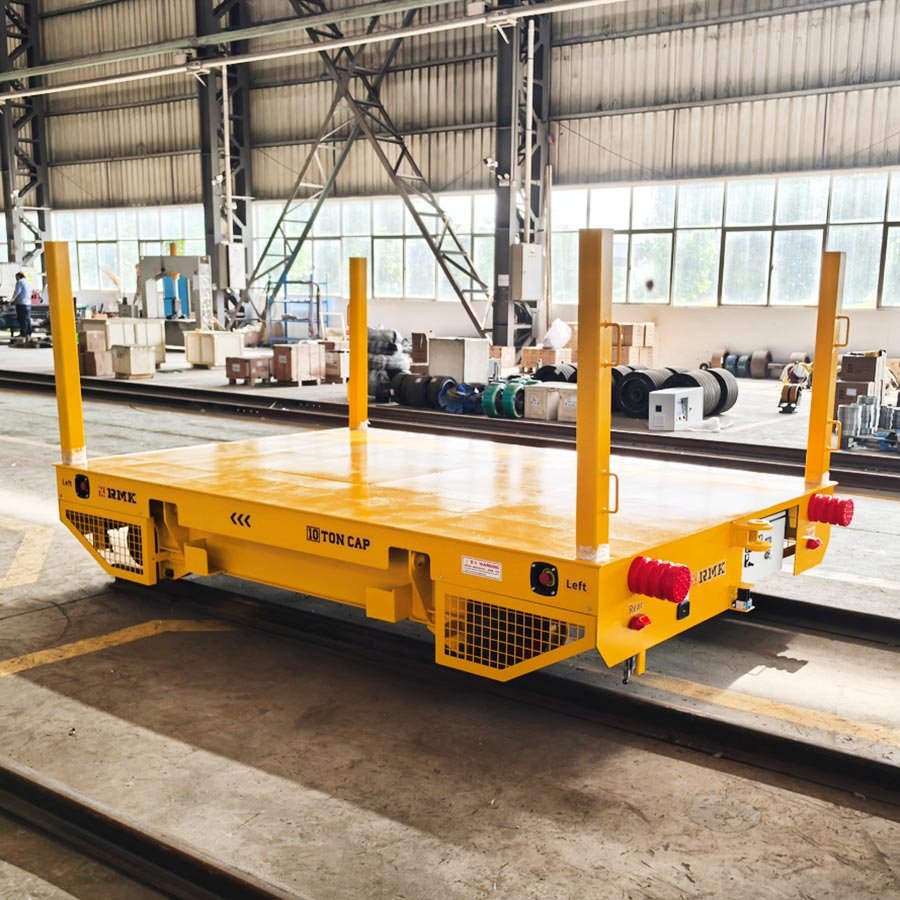
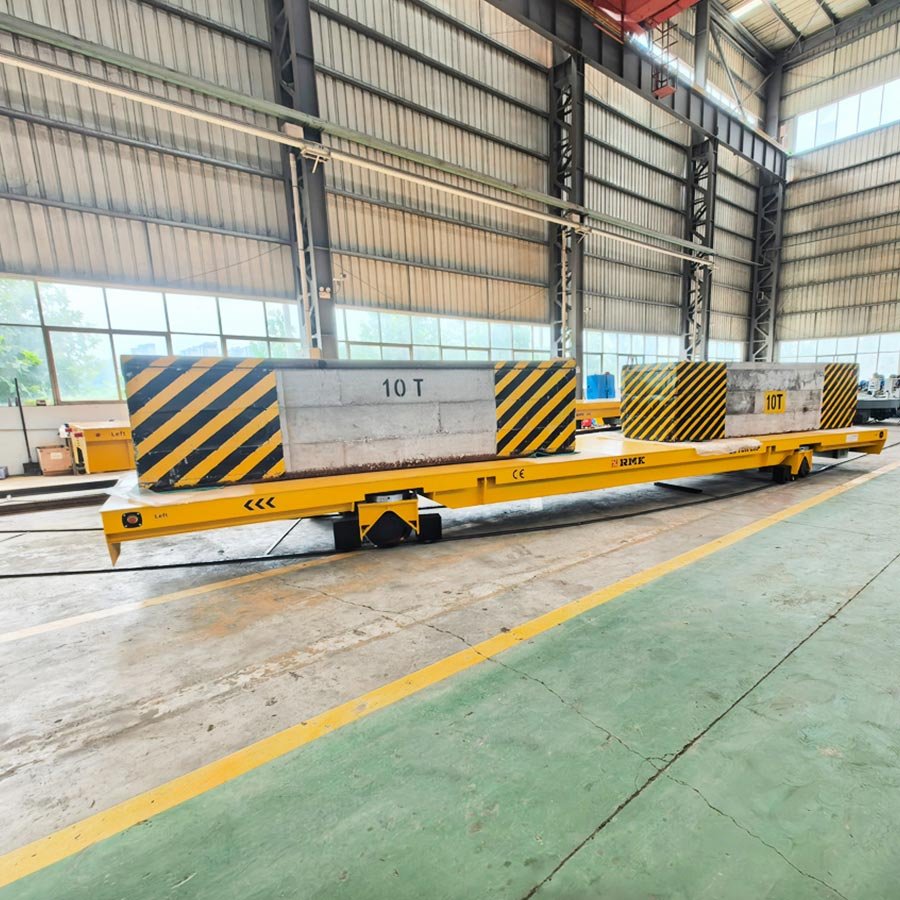
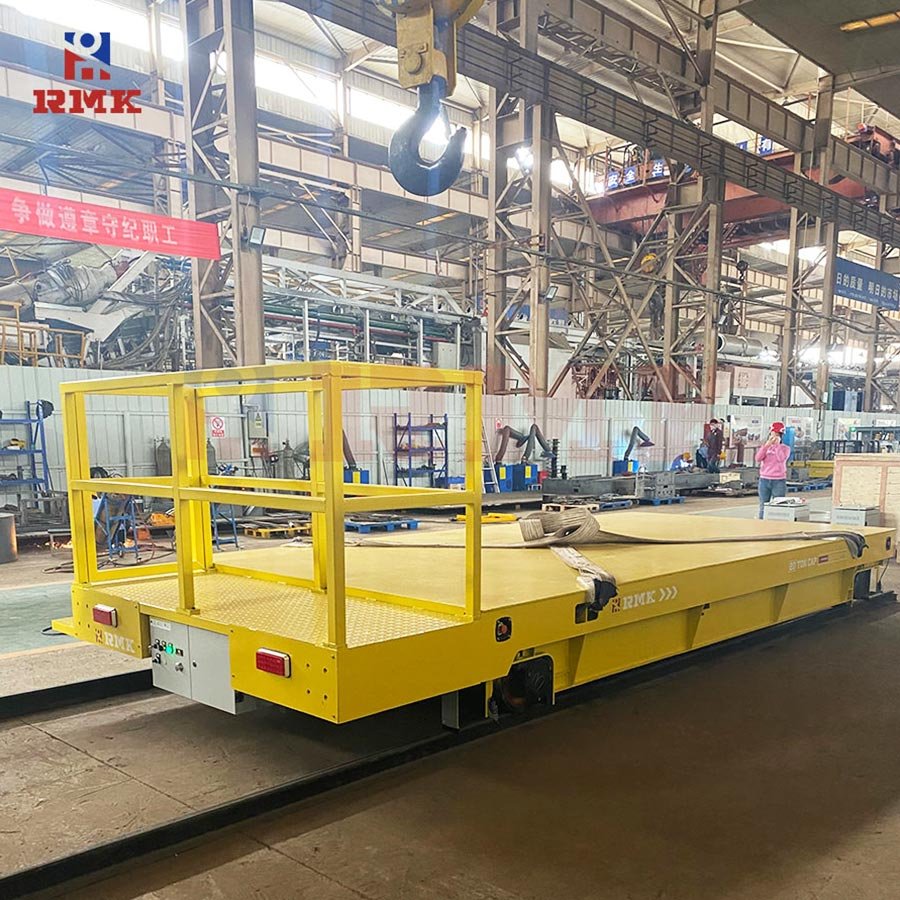
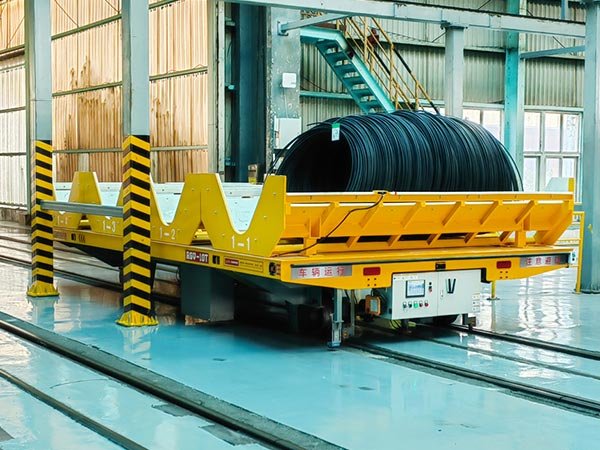
A Rail transfer carts is a specialized industrial transport vehicle that travels along pre-installed ground rails. It mainly consists of a car body, running wheels, drive system, power supply system and control system.
This equipment can only operate on embedded or laid dedicated rails with a fully fixed travel route that cannot be altered arbitrarily. It supports multiple power supply options, including cable reel power supply, low-voltage rail power supply and battery power supply. Featuring a robust overall structure, heavy load capacity and exceptional operational stability, it is suitable for high-frequency, heavy-tonnage transport of bulky materials. It serves as a standard material handling solution widely adopted across heavy industries.
What Is a Trackless Electric trolley?
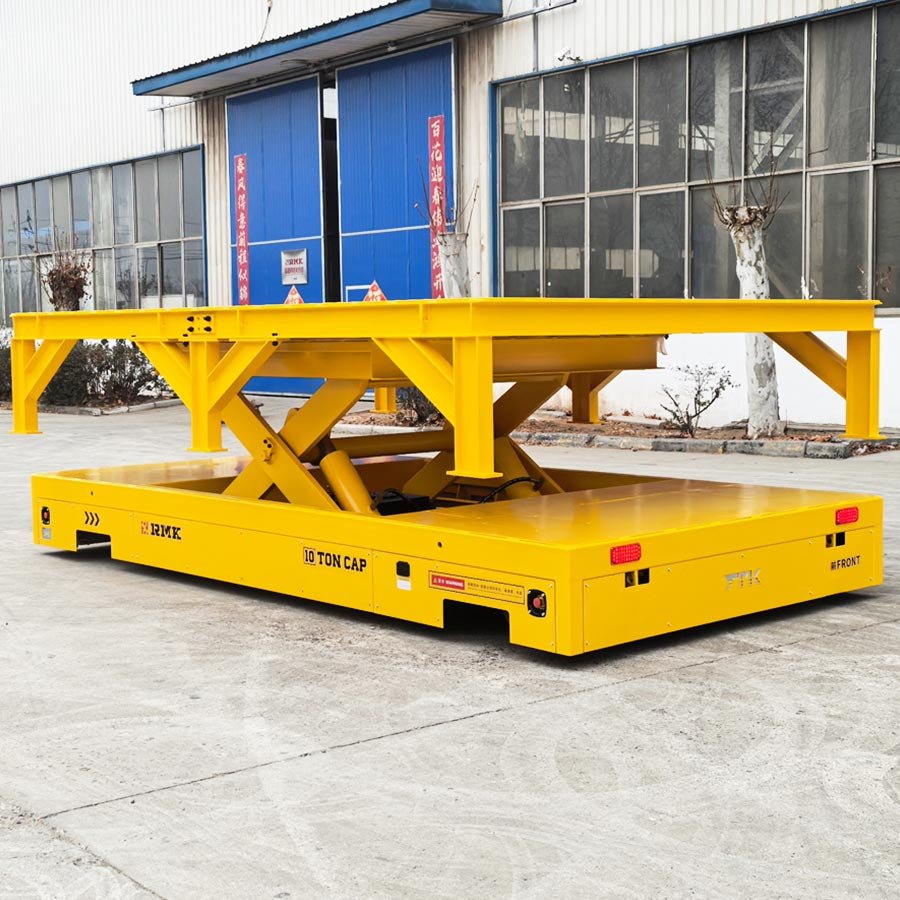
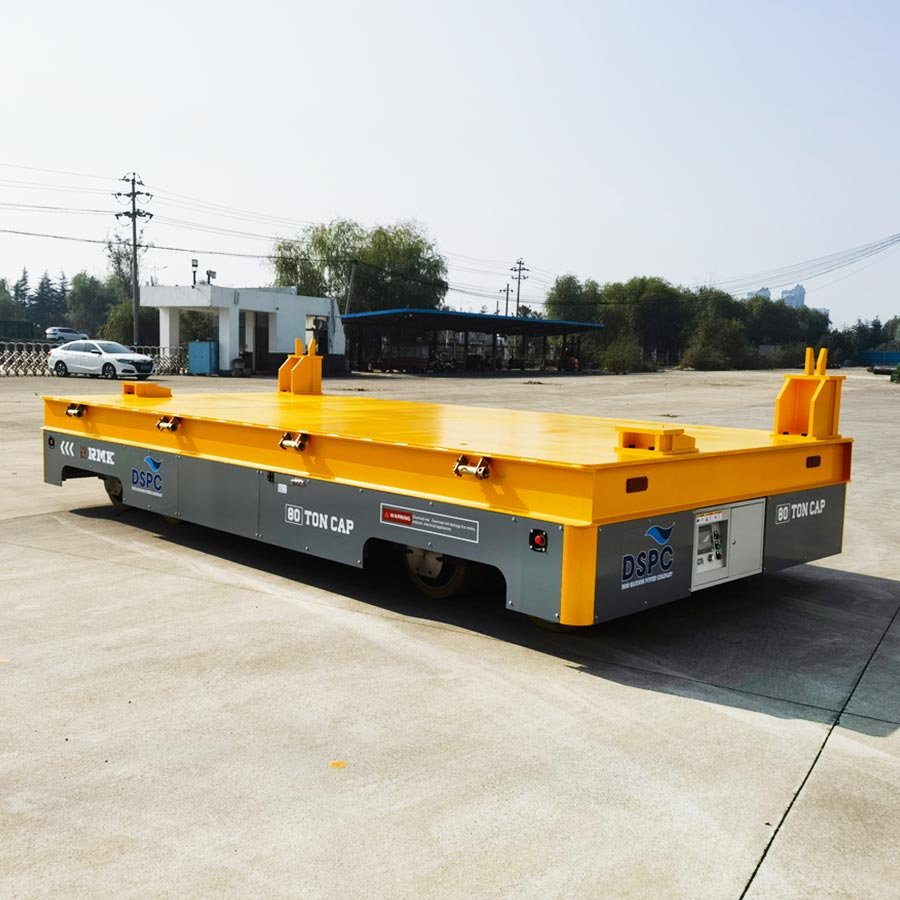
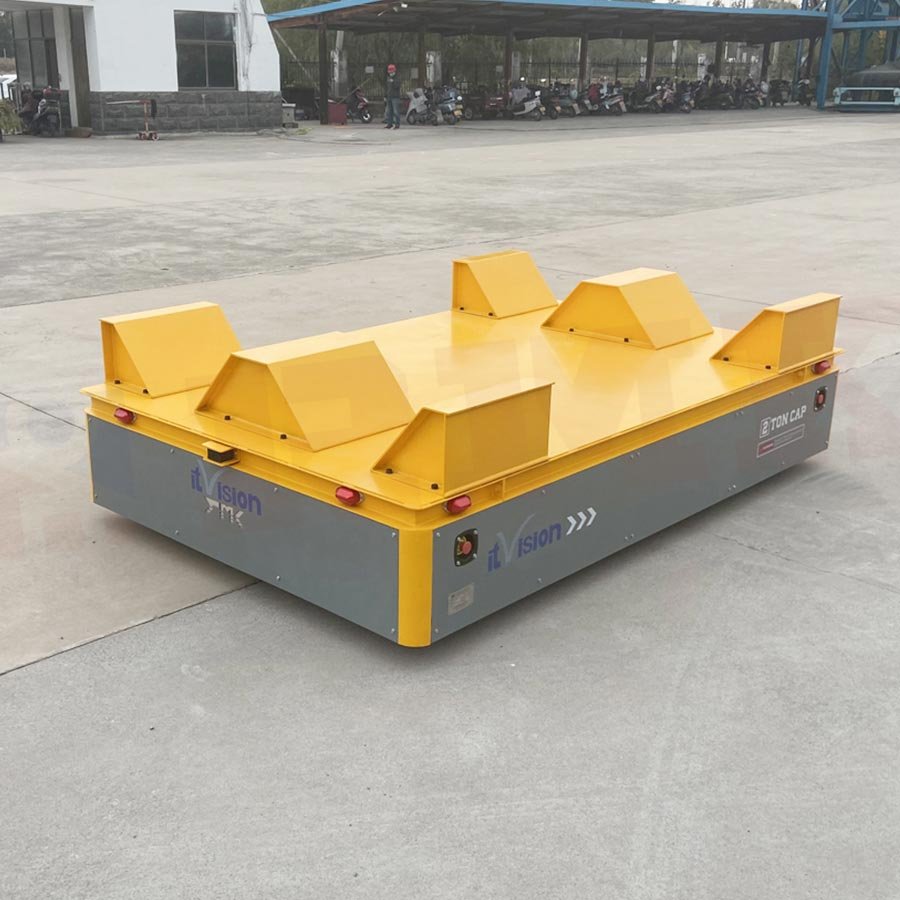
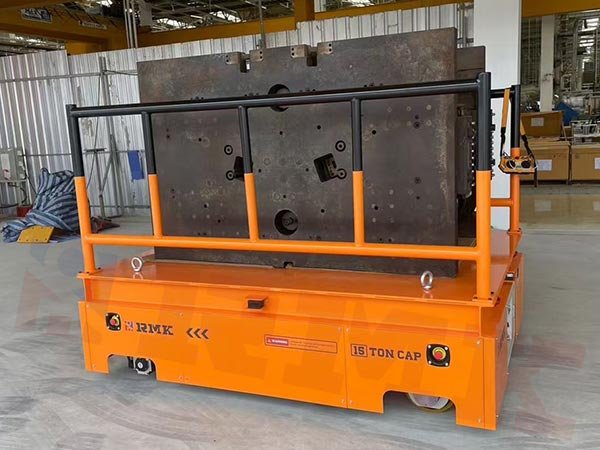
A Trackless transfer cart is a flexible material handling machine free from rail constraints. It adopts solid wear-resistant rubber wheels as its traveling mechanism, eliminating the need for rail installation or ground foundation modification.
Powered by batteries and equipped with an intelligent steering system, it delivers 360-degree in-place rotation and free movement. Operators can adjust transport routes at any time according to production requirements and smoothly navigate obstacles on site.
Compared with rail-type flatcars, trackless flatcars are ready for immediate deployment with superior versatility, making them ideal for the operational demands of modern flexible manufacturing.
Differences Between Track and Trackless Electric carts
To clearly illustrate the disparities between the two types of equipment, a summary of their core parameters and performance differences is provided below.
| Comparison dimensions | Rail transfer carts | Trackless transfer cart |
| Mode of operation | Operates on dedicated tracks with a fixed route that cannot be altered at will. | Equipped with rubber tires for free movement without track constraints, allowing for flexible route adjustments and obstacle avoidance. |
| Site Requirements | Requires track laying and civil engineering modifications to the ground; the installation is fixed and cannot be relocated. | No need to lay tracks or modify the flooring; it can be used on standard, level concrete surfaces. |
| Flexibility and mobility | Flexibility is poor; adjusting the production line layout requires relaying tracks, resulting in high modification costs. | Highly maneuverable, capable of navigating narrow aisles, and adaptable to new material handling scenarios at any time. |
| Load-bearing capacity | High load capacity; large-tonnage models available for customization; suitable for heavy-duty material handling. | Primarily standard tonnages; offers excellent suitability for light- to medium-load applications, but is less suitable for ultra-heavy-duty operations. |
| Operational stability | Operates within track constraints, eliminating issues such as deviation or slippage, and ensuring exceptionally smooth operation. | Ground flatness affects operational performance; slight unevenness may cause minor swaying. |
| Installation and Commissioning | The process is complex, requiring track laying and calibration/commissioning, and the installation period is long. | Installation is simple; the equipment can be put into operation immediately after being positioned, wired, and commissioned. |
| Post-implementation O&M | Maintenance focuses primarily on the tracks and power supply lines; the equipment boasts an extremely low failure rate and high durability. | Maintenance focuses primarily on the rubber tires, battery, and steering system; routine operation and maintenance are simple. |
Application Scenarios
Application Scenarios of Rail transfer carts
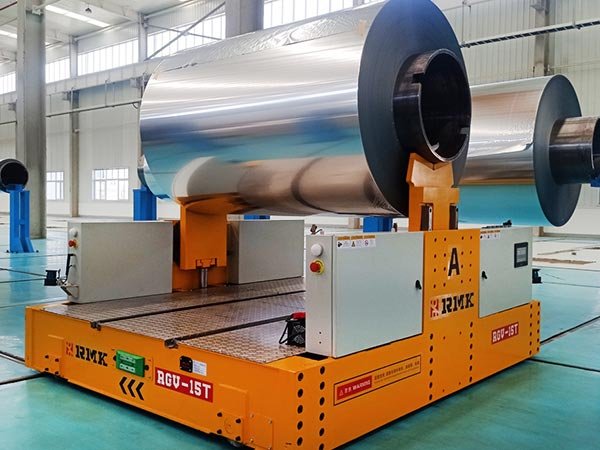
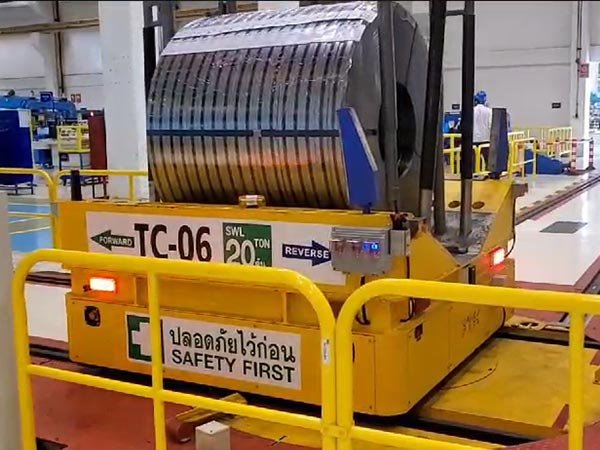
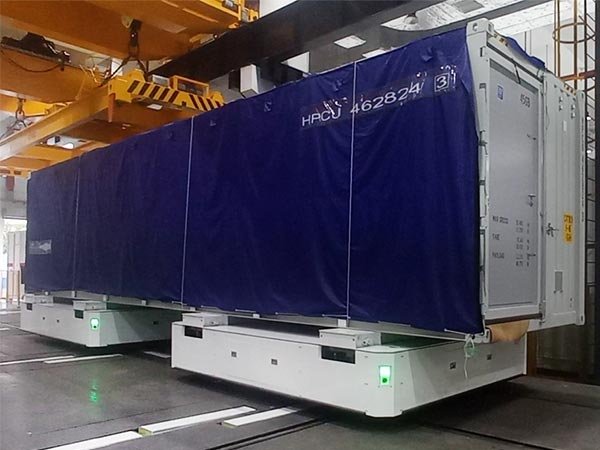
Boasting core strengths of stable heavy-load performance and rugged durability, track electric flatcars are primarily designed for sites with fixed production layouts, permanent transport routes and heavy-tonnage material handling requirements. They see particularly extensive adoption across heavy industry sectors.
General heavy industry environments
Iron and steel metallurgy, heavy machinery, mold processing, and equipment assembly.
Warehouse cargo dispatching
Transfer and transportation of oversized goods between fixed warehouse stations.
Intra-workshop circulation
Material conveyance along production lines and fixed cross-station material delivery.
Engineering rail transportation
Heavy-duty haulage on dedicated rails inside factories and tunnels.
General heavy industry environments
Iron and steel metallurgy, heavy machinery, mold processing, and equipment assembly.
Warehouse cargo dispatching
Safe stable transfer and transportation of oversized heavy bulk goods between fixed warehouse stations.
Intra-workshop material circulation
Material conveyance along production lines and fixed cross-station material delivery.
Engineering rail transportation
Heavy-duty haulage on dedicated rails inside factories and tunnels.
Application Scenarios of Trackless transfer cart
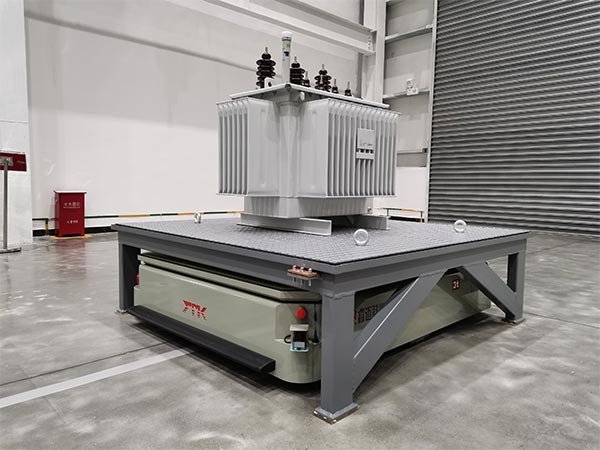
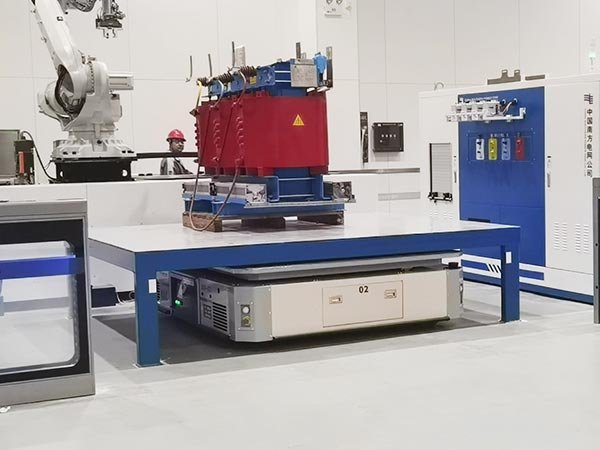
Featuring outstanding flexibility and convenience with no rail installation required, trackless electric flatcars are suitable for operations with frequently changing transport routes, sites where ground renovation is impractical, and medium & light tonnage material transportation. They fit production workshops that require frequent layout adjustments and greatly boost the agility of material handling.
Light manufacturing industries
Light electronics, electronic assembly, food and pharmaceutical production, auto parts manufacturing, etc.
Flexible workshop transit
Material conveyance through narrow aisles, unrouted circulation across workstations, temporary material deployment.
Warehouse logistics operations
Efficient automated goods sorting inside large warehouses and scattered cargo transfer across whole plant yards.
Light manufacturing industries
Light electronics, electronic assembly, food and pharmaceutical production, auto parts manufacturing, etc.
Flexible workshop transit
Material conveyance through narrow aisles, unrouted circulation across workstations, temporary material deployment.
Warehouse logistics operations
Efficient automated goods sorting inside large warehouses and scattered cargo transfer across whole plant yards.
Cost Comparison
Cost constitutes one of the most critical considerations for enterprises when choosing between track and trackless electric carts. The cost gap between the two types falls into three categories: upfront investment, post-operation maintenance, and site modification expenses.
Upfront Investment Costs
Long-term Operation & Maintenance Costs
Modification Costs
Scientific Selection Guidelines for transfer cart
Enterprises do not necessarily need high-end equipment. The optimal selection solution is to choose models tailored to their actual working conditions, budget and production plans. The specific criteria are listed below for your reference.
Conclusion
There is no absolute superior or inferior between Rail transfer carts and Trackless transfer cart; they merely suit different application scenarios.
When selecting handling equipment, enterprises should avoid the misconception of judging products solely by price or technical parameters. A comprehensive evaluation based on actual load tonnage, site conditions, production layout stability and long-term development plans is essential. Matching the right equipment model accurately can not only prevent resource waste, but also maximize the efficiency of on-site material transportation. This further supports enterprises in upgrading their production logistics to an automated and highly efficient system.
FAQ
References & Sources
1. Low Voltage Distribution Equipment-National Electrical Manufacturers Association(NEMA)
2. Lithium battery-The United States government
3. MES-Wikipedia