
What Affects Heavy-Duty Transfer Cart Prices? Key Specifications and Configurations
Heavy-duty transfer carts are used in industrial applications to transport large workpieces, steel coils, molds, transformers, and other heavy materials. For buyers, load capacity and operational stability are critical considerations, but procurement costs are also an important factor in project decisions.
During the quotation process, many customers find that even heavy-duty transfer carts with the same rated load capacity can have significantly different prices from different manufacturers. This is because the equipment price depends not only on load capacity but also on cart dimensions, drive systems, power supply systems, control methods, functional configurations, and actual operating conditions.
Why Do Heavy-Duty Transfer Cart Prices Vary Significantly?
Heavy-duty transfer carts are highly customizable industrial equipment. Unlike standard off-the-shelf products, they are typically designed according to the customer’s load requirements, travel routes, operating environment, and production processes. Even if two transfer carts have the same rated load capacity, their manufacturing costs may differ considerably.
The main factors affecting the quotation include:
Rated Load Capacity
Higher loads generally require greater strength in the frame, load-bearing components, drive system, and braking system.
Cart Dimensions
The platform length, width, and ground clearance affect steel consumption, frame structure, and overall design.
Drive Type
Rail-guided, trackless, and omnidirectional transfer carts use different travel and steering configurations.
Power Supply
Cable reels, low-voltage rail power supply systems, and battery power systems require different configurations.
Functional Configuration
Features such as hydraulic lifting, automatic steering, rotating platforms, and telescopic decks involve additional design and manufacturing work.
Automation Level
Costs vary depending on the configuration of wireless remote control, PLC control, automatic navigation, and intelligent dispatching systems.
Note: The operating environment also affects equipment selection. Outdoor operation, special ground conditions, or high-temperature industrial environments may require different wheel types, structural protection, and electrical configurations.
How Does Rated Load Capacity Affect the Cost of a Heavy-Duty Transfer Cart?
Rated load capacity is one of the most fundamental technical specifications of a Heavy duty transfer cart and a major factor influencing its manufacturing cost.
Remarkable provides industrial transfer cart solutions with different load capacities. Its standard and customized equipment covers applications ranging from 1 to 500 tons. Transfer carts with different load capacities vary significantly in frame structure, load-bearing systems, and power configurations.
How Different Load Capacities Affect Equipment Design:
Light-Duty Transfer Carts
These typically feature relatively simple frame structures and drive configurations. They are suitable for short-distance transportation of molds, mechanical components, and general industrial materials.
Medium-Duty Transfer Carts
These require greater frame rigidity, wheel load capacity, drive system performance, and braking capability. They are commonly used for transporting molds, steel materials, and large equipment.
Heavy-Duty Transfer Carts
Their design must consider frame stress, wheel arrangement, drive power, braking, and stability. Some applications need multi-axle configurations or specialized load-bearing structures.
Note: Increasing the rated load capacity requires more than using thicker steel plates. For heavy load transfer cart, manufacturers must also consider the load’s center of gravity, load-bearing points, and dynamic loads during operation.
For irregular workpieces, long steel materials, or large molds, off-center loading may require adjustments to the frame structure, wheel arrangement, and drive configuration. Buyers should therefore provide the load weight, dimensions, center of gravity, and actual loading method to ensure proper load-bearing design.
How Does the Drive Type Affect the Price of a Heavy-duty transfer cart?
The drive type directly affects a transfer cart’s mechanical structure, travel routes, and operational flexibility. It is also an important factor contributing to price differences between different equipment configurations.
The most common types of heavy-duty transfer carts include rail-guided, trackless, and omnidirectional transfer carts.
Rail-Guided Transfer Carts
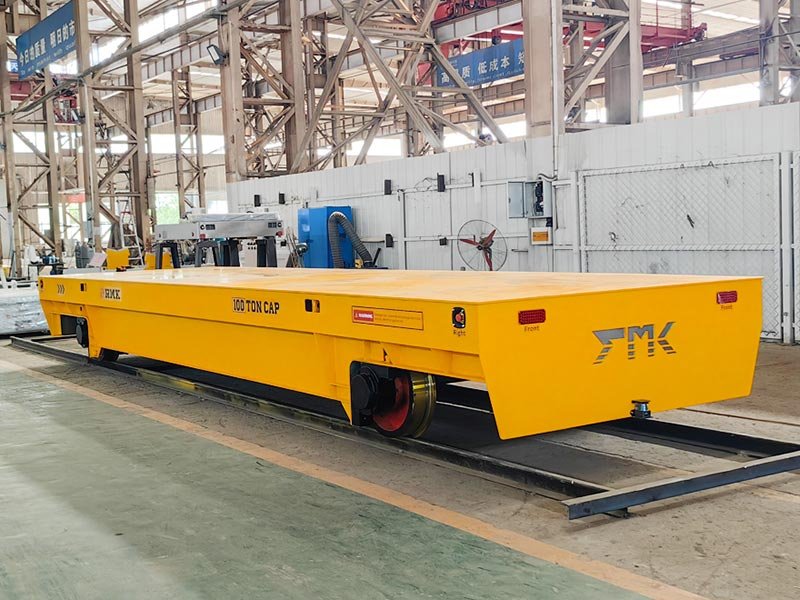
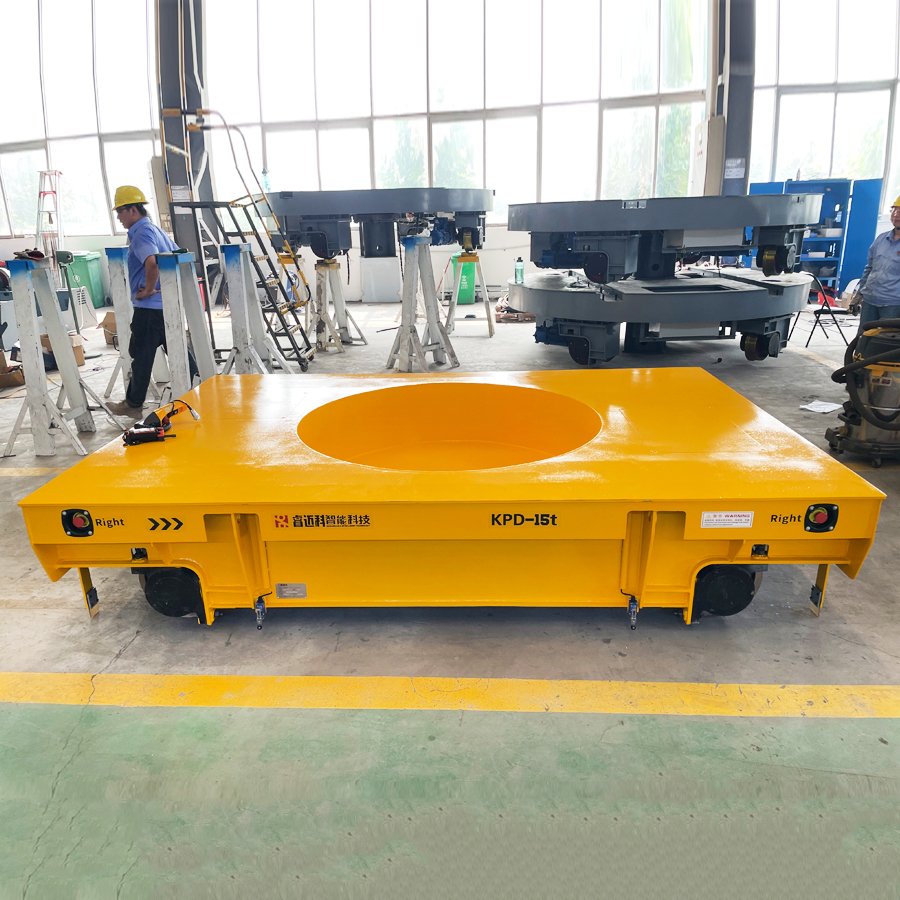
Rail-guided transfer carts operate along predefined tracks and are suitable for material transportation tasks involving fixed routes and frequent repetitive movements. Their travel paths are clearly defined, making them ideal for steel mills, production workshops, mold workshops, and large assembly areas.
Depending on project requirements, different power supply options can be selected, such as low-voltage rail power supply or cable reel power supply. If the project requires additional infrastructure, such as rails, turntables, or track switches, the associated installation and engineering costs should also be included in the overall budget.
Trackless Transfer Carts
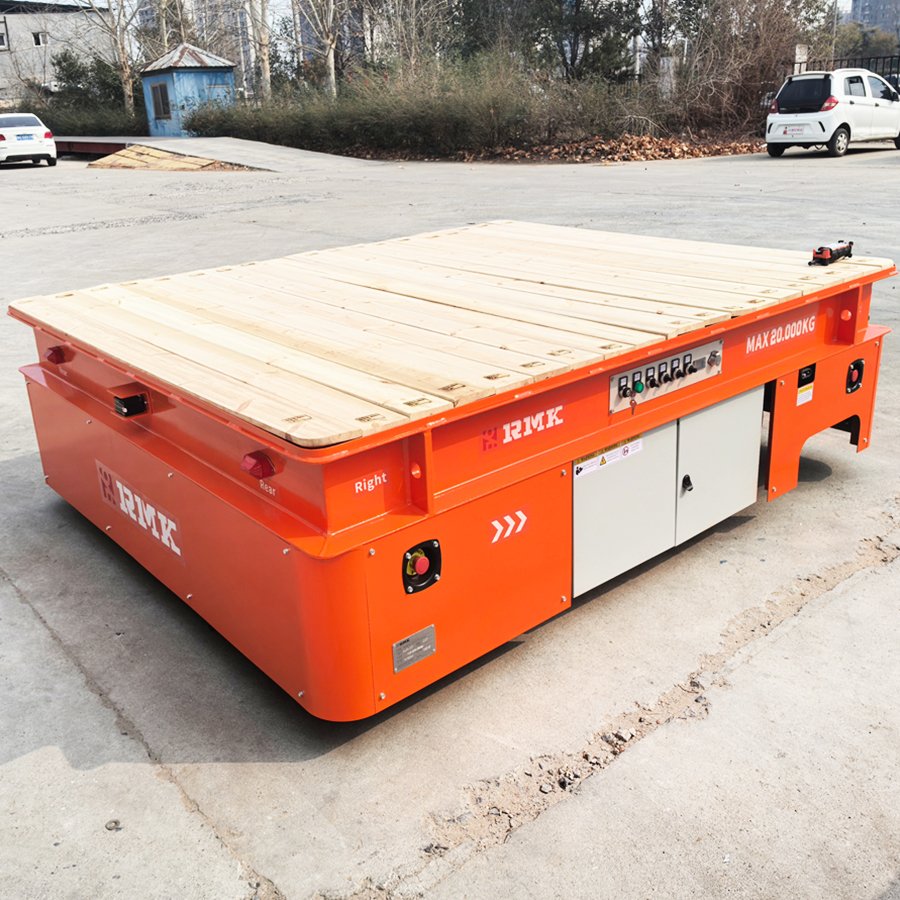
Trackless transfer carts do not rely on fixed rails and can travel along designated routes on ground surfaces that meet the equipment requirements. They are suitable for production environments where transportation routes may change or installing fixed tracks is impractical.
Compared with rail-guided transfer carts, trackless models require corresponding steering systems, wheel configurations, and travel control systems. Ground flatness, floor load-bearing capacity, and available turning space also affect equipment design.

Omnidirectional Transfer Carts
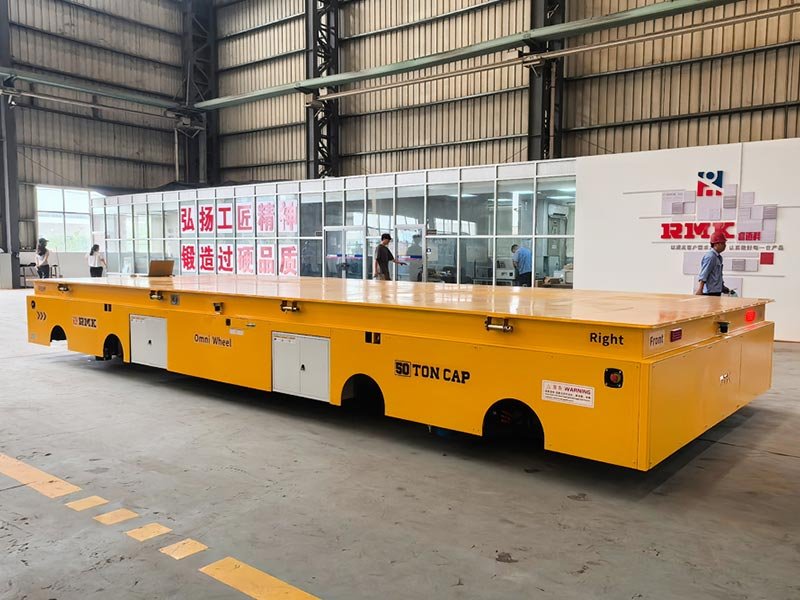
Omnidirectional transfer carts are primarily used in industrial applications where transportation directions need to be adjusted flexibly. Depending on the equipment design, they can move laterally, diagonally, and rotate in place. These capabilities make them suitable for mold workshops and large equipment assembly areas with limited space and complex material handling requirements.
Compared with conventional trackless transfer carts, omnidirectional movement generally requires more sophisticated drive and control systems. As a result, the equipment structure and control configuration may involve additional costs.
Selecting the right drive type should not be based on equipment price alone. Buyers should also consider workshop layout, travel routes, turning radius, and transportation frequency.
How Does the Power Supply Method Affect Equipment Costs?
Different power supply methods have their own characteristics in terms of electrical configuration, installation requirements, and daily operation, all of which can affect the overall equipment quotation.
Cable Reel Power Supply
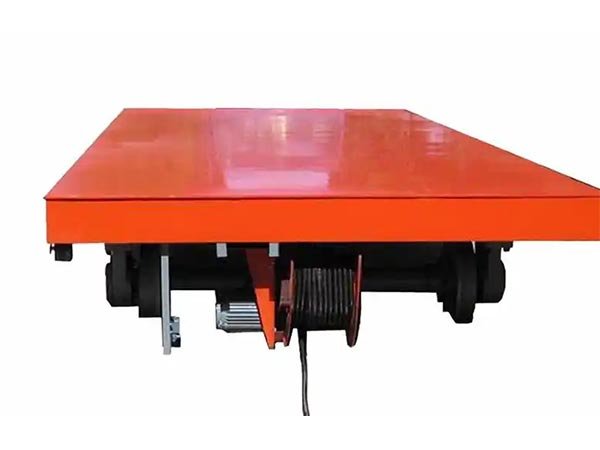
The equipment cost depends on factors such as the cable reel, cable length, electrical control system, and on-site power supply conditions. For longer travel distances, the cable configuration must be determined according to the actual operating route.
Low-Voltage Rail Power Supply
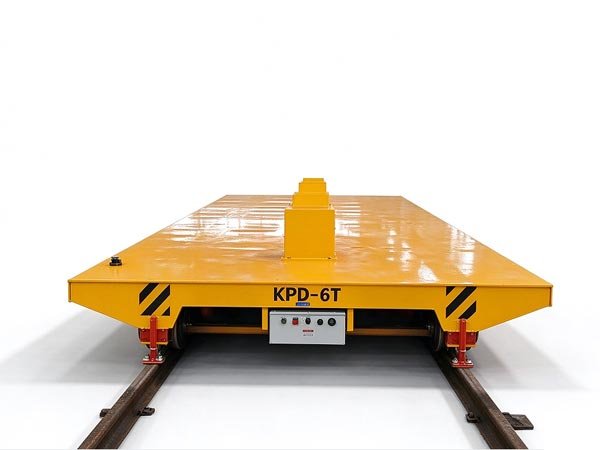
A step-down system converts 380V power into a safe 36V supply, which is collected by the current collector to power the cart. This eliminates regular battery charging, but rail system and installation costs must be considered.
Battery Power Supply
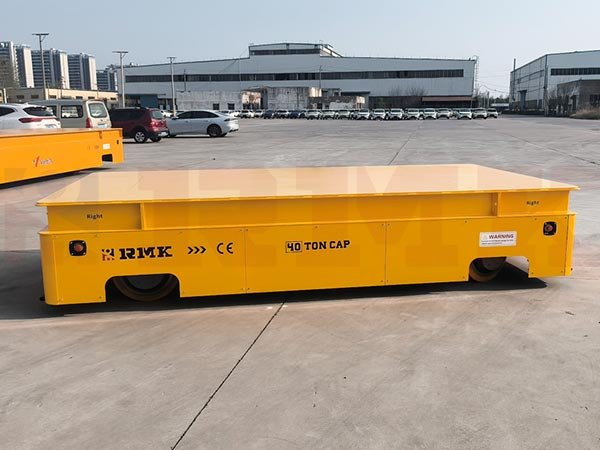
For equipment that needs to operate continuously for extended periods or handle heavy loads, the battery configuration should be determined according to operating hours, work frequency, and available charging conditions.
When selecting a power supply method, buyers should consider the initial equipment cost, on-site installation conditions, and long-term operating requirements rather than simply choosing the option with the lowest initial quotation.
How Do Cart Dimensions and Structural Design Affect Manufacturing Costs?
Many buyers only provide the required load capacity when requesting a quotation, overlooking the dimensions of the load and how it will be positioned on the cart. In practice, the platform dimensions often need to be designed according to the specific workpiece being transported.
Platform Length and Width
The platform dimensions must accommodate the actual positioning requirements of the load while allowing sufficient space for loading, unloading, and operation.
Ground Clearance and Cart Structure
Ground clearance determines whether the transfer cart can travel smoothly across the floor conditions at the facility. It also affects loading and unloading methods.
Special Load-Bearing Structures
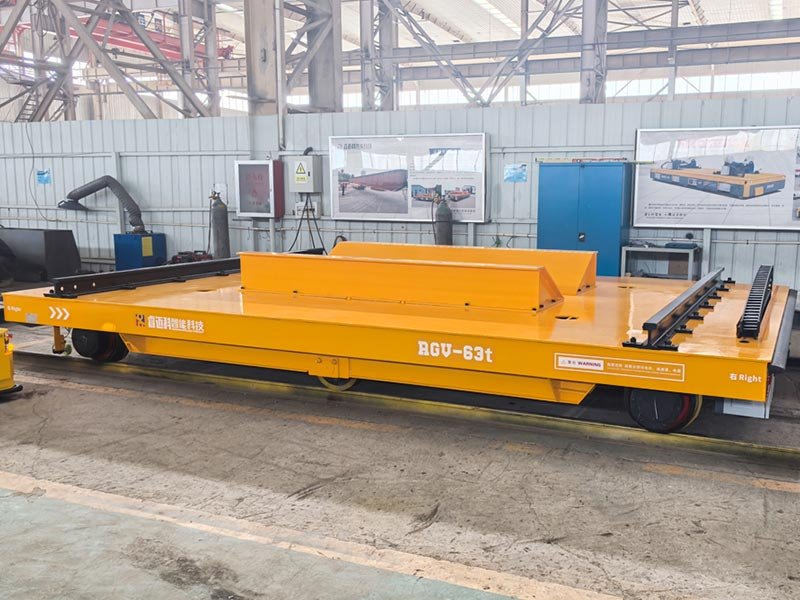
Some workpieces cannot be placed directly on a standard flat platform. Instead, dedicated load-bearing structures must be designed according to their shapes and handling requirements. Common options include V-shaped supports, positioning stops, anti-slip platforms, and customized support frames.These structures need to be designed according to the load dimensions, weight, and loading method, which may increase material, machining, and assembly costs.
How Much Do Hydraulic Lifting, Steering, and Other Functional Configurations Cost?
A heavy load transfer cart is more than just a mobile load-bearing platform. Depending on the production process, customers may require additional functions such as lifting, steering, rotation, and other auxiliary features.
Hydraulic Lifting System
A hydraulic lifting system adjusts the height of the load platform, allowing the Heavy-duty transfer cart to align with production equipment, work platforms, or other material handling equipment.
Hydraulic Steering and Differential Steering
- Hydraulic steering is typically used in heavy-duty transfer carts that require specific steering control configurations.
- Differential steering achieves directional changes by controlling the speed difference between the drive wheels. It is suitable for certain types of trackless transfer carts.
Different steering solutions involve different mechanical structures, drive configurations, and control logic. The appropriate option should be selected according to aisle width, available turning space, and travel routes at the facility.
Other Customized Functions
Some industrial applications may also require the following features:
- Rotating Platform: Changes the orientation of the load to facilitate subsequent processing or assembly operations.
- Telescopic Platform: Adjusts the effective platform length according to on-site requirements.
- Dual-Cart Linkage: Allows two transfer carts to operate together when transporting extra-long or oversized heavy workpieces.
- Special Positioning Devices: Help keep the load in its designated position during transportation.
More functions do not necessarily make a Heavy-duty transfer cart better suited to actual production needs. Buyers should prioritize the features genuinely required by their production processes and avoid unnecessary configuration costs.
How Do Automation Levels and Control Systems Affect the Quotation?
As industrial automation continues to advance, more companies are looking for automated material handling equipment that can integrate with their existing production processes.
Different control methods vary in technical complexity and can therefore affect the overall equipment quotation.
Wireless Remote Control
Wireless remote control is common for transfer carts. Operators use a remote controller to control forward and reverse movement, steering, and stopping.
This method is relatively simple to operate and is suitable for production environments where transportation routes require manual control.
PLC Control System
A PLC control system controls equipment operation according to predefined logic and can work with other functional modules.
If a project requires automatic lifting, positioning and stopping, synchronized operation, or coordinated control of multiple functions, the control program and electrical system must meet specific requirements.
AGV Automatic Navigation System
For production environments that require automated material transportation, AGV transfer carts can be considered.
Common navigation methods include magnetic navigation, QR code navigation, and laser SLAM navigation. These solutions differ in terms of site requirements, route planning, and system integration.
The quotation for an AGV system involves more than the transfer cart itself. It may also include navigation equipment, control systems, and system integration. Before purchasing, buyers should clearly define the required level of automation and distinguish between the cost of the equipment itself and the configuration costs of the entire automation project.
Which Operating Conditions and Safety Features Increase Procurement Costs?
The operating environment of a heavy-duty transfer cart directly affects its structural design and configuration. The same Heavy-duty transfer cart may require completely different design specifications depending on whether it operates in a standard indoor workshop or a challenging outdoor environment.
Indoor and Outdoor Operating Conditions
For indoor applications, equipment design typically focuses on workshop floor conditions, aisle width, equipment spacing, and travel routes.
For outdoor applications, additional factors must be evaluated, including ground flatness, slopes, drainage conditions, and weather exposure. If the transfer cart operates in rain, dusty environments, or other special conditions, additional electrical and structural protection may be required.
Special Industrial Environments
For industries such as steelmaking, metallurgy, and foundry operations, equipment configurations must be determined according to actual operating temperatures, dust levels, and surrounding equipment conditions.
Safety Protection Devices
Depending on the equipment type and project requirements, heavy-duty transfer carts can be equipped with:
- Audible and Visual Alarms: Alert nearby personnel when the equipment is in operation.
- Emergency Stop Buttons: Stop the equipment in emergency situations.
- Travel Limit Switches: Restrict equipment movement within specified operating limits.
- Laser Scanners: Detect obstacles in specific equipment configurations.
- Anti-Collision Devices: Provide appropriate protection according to the equipment design and application environment.
The selection of these devices should be based on the equipment control system and an on-site risk assessment. Some safety devices may be included as standard features, while additional protective measures may need to be configured according to customer requirements.
How to Get an Accurate Quotation for a Heavy-Duty Transfer Cart?
To receive a reliable and practical quotation from a manufacturer, buyers should provide as much complete technical information as possible.
The following information is recommended when requesting a quotation:
Load Information
Equipment Operating Requirements
On-Site Conditions
Functional and Control Requirements
With this information, the manufacturer can more accurately evaluate the equipment structure, drive system, and functional configuration, allowing them to develop a technical solution and quotation that match the actual operating conditions.
For projects where the specific technical solution has not yet been finalized, buyers can also provide load photos, site layout drawings, and basic transportation requirements. The engineering team can then assist with the preliminary equipment selection.
Conclusion
The procurement cost of a heavy-duty transfer cart is determined by a combination of technical specifications and actual operating conditions. Load capacity, cart dimensions, drive type, and power supply system form the foundation of equipment design, while hydraulic functions, automated controls, and special environmental configurations further influence the final quotation.
For buyers, a sensible purchasing approach is not simply to compare prices from different suppliers, but to first define their actual material handling requirements and then select an equipment solution that matches their production environment.
Remarkable specializes in the design and manufacturing of industrial electric transfer carts, offering rail-guided, trackless, and omnidirectional transfer cart solutions. Our equipment covers load capacities from 1 to 500 tons and can be customized according to different materials, transportation routes, and on-site conditions.
If you are planning a heavy material handling project, you can provide RMK with basic information such as load weight, dimensions, travel routes, and operating environment. Our technical team can evaluate the equipment configuration based on your actual requirements and provide a suitable technical solution and quotation.
FAQ
References & Sources
1. Machinery Safety and Risk Assessment-International Organization for Standardization (ISO)
2. Driverless Industrial Trucks-International Organization for Standardization (ISO)
3. Electrical Equipment of Machines-International Electrotechnical Commission (IEC)