
The Difference Between AGV and RGV
In automated logistics and production transportation, AGVs (Automated Guided Vehicles) and RGVs (Rail Guided Vehicles) are two commonly used automated transport solutions. AGVs feature trackless navigation, offering high flexibility and adaptability to complex and variable operating scenarios. RGVs travel along fixed rails, delivering superior performance in terms of high speed, stability and reliability on predefined routes. Although both fall under automated material handling solutions, they differ significantly in operation mode, flexibility, core advantages and applicable scenarios. The following provides a detailed introduction and comparison.
What is an AGV
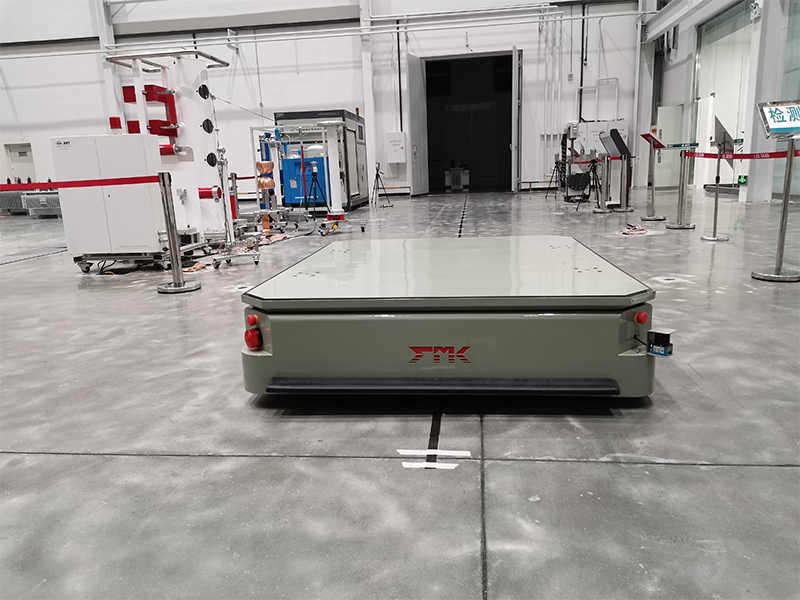
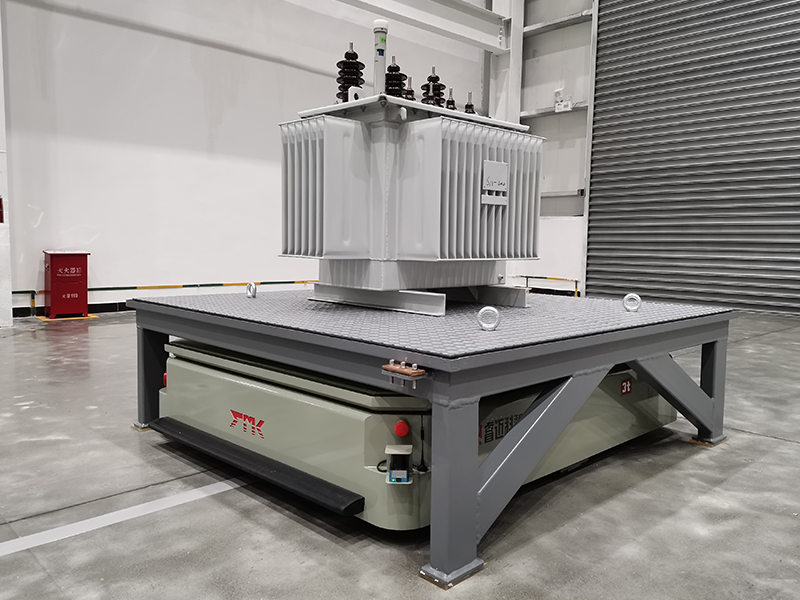
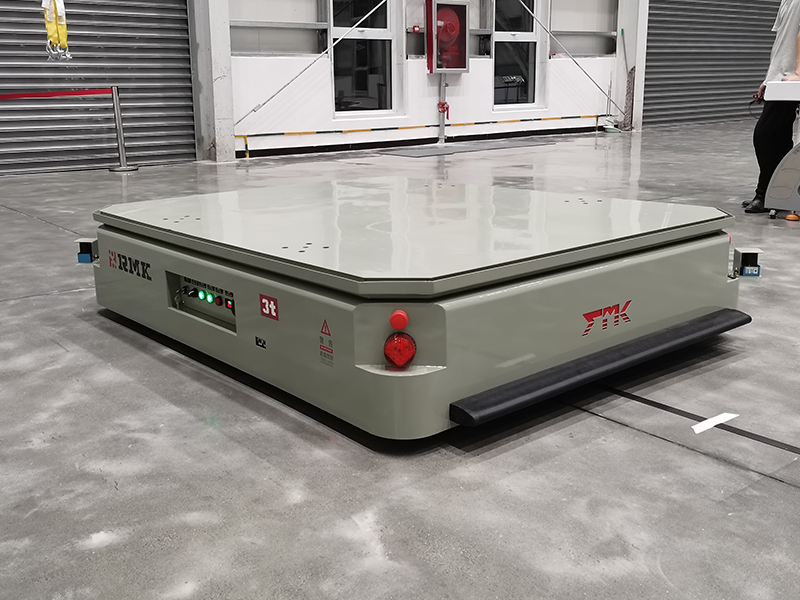
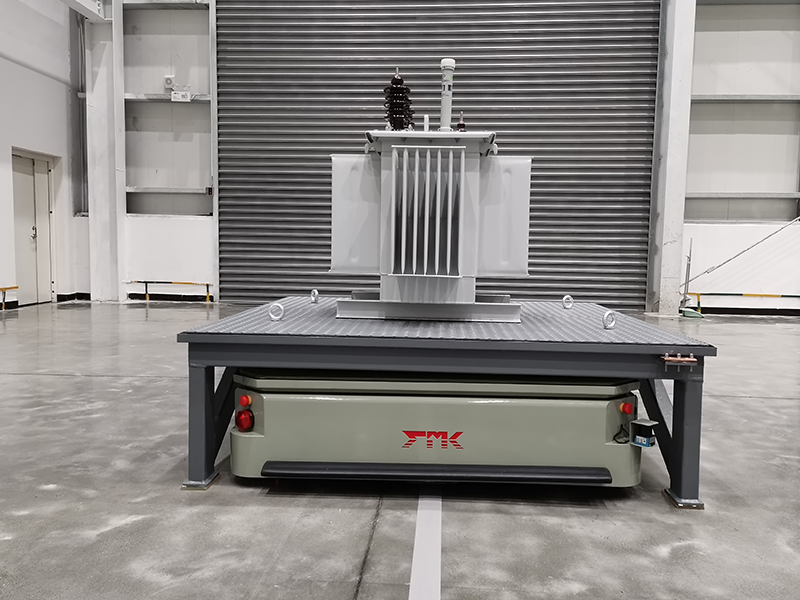
AGV stands for Automated Guided Vehicle, an unmanned handling device capable of autonomous movement.
Equipped with automatic guidance technologies such as laser navigation, magnetic navigation, and visual navigation, AGVs travel automatically along pre-programmed paths.
AGVs integrate advanced functions including automatic obstacle avoidance, precise docking, intelligent dispatching, and automatic charging. They can connect seamlessly with workshop MES (Manufacturing Execution Systems) and warehouse WMS (Warehouse Management Systems), enabling multi-vehicle coordinated operation and full-process intelligent scheduling.
As a core piece of equipment in smart warehousing, AGVs deliver flexible, efficient, and unmanned material transportation.
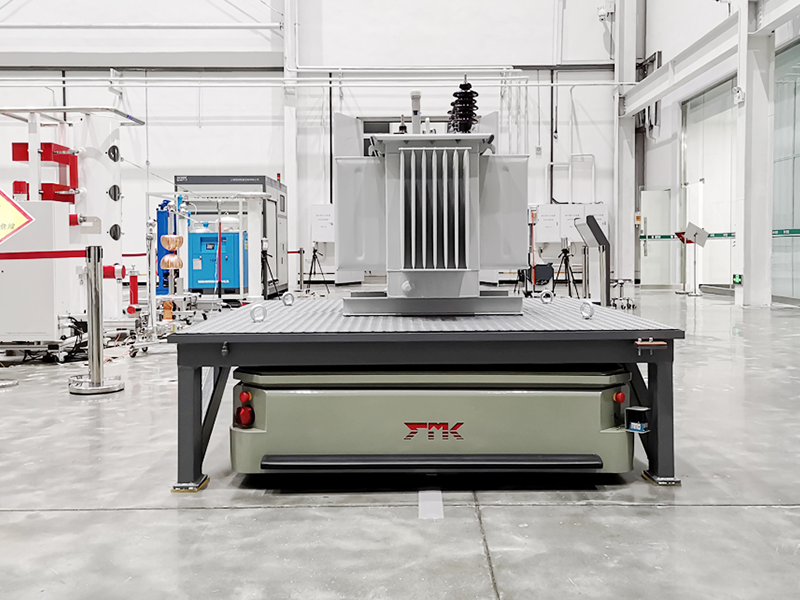
Core Advantages of AGVs
Optimal Task Allocation
Based on an intelligent dispatching system, AGVs can automatically assign the most suitable execution unit according to on-site task priorities, equipment status and operational requirements.
Optimal Path Planning
Equipped with high-precision navigation and path-planning algorithms, AGVs can identify the plant environment in real time and automatically generate the shortest and smoothest travel routes.
Automatic Congestion & Obstacle Avoidance
Featuring real-time obstacle detection and dynamic avoidance capabilities, AGVs can autonomously identify personnel, obstacles and other AGVs during operation.
Multi-Level Safety Protection
AGVs are equipped with a comprehensive safety system including physical bumpers, audible and visual alarms, emergency stop buttons, laser safety protection and other multi-layer mechanisms.
Flexible & Adjustable Speed
Travel speed can be freely adjusted to suit different operating scenarios, material characteristics and on-site requirements.
Visual Intelligent Monitoring Interface
A supporting visual management platform enables real-time monitoring of AGV position, running status, task progress, battery level and other key information.
Automatic Intelligent Charging
AGVs support automatic low-battery detection and autonomous docking charging. Energy replenishment is completed without manual intervention, ensuring continuous logistics operation.
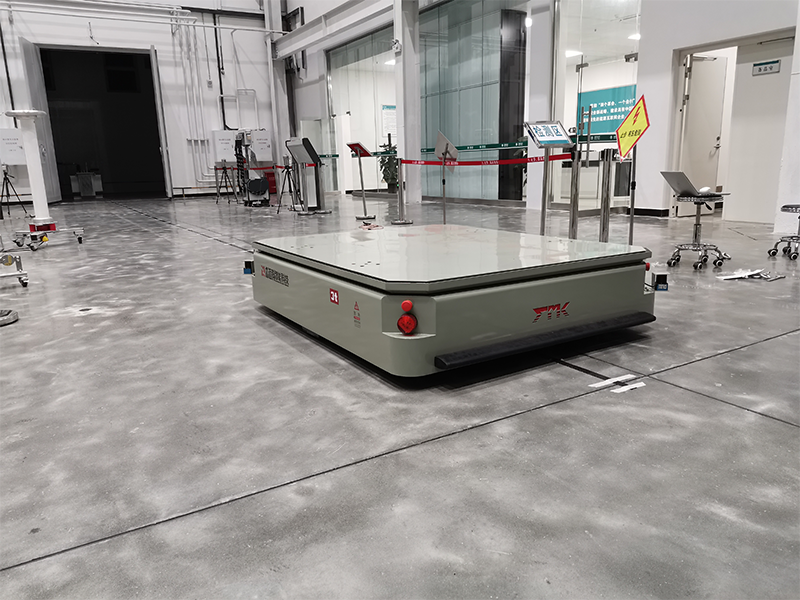
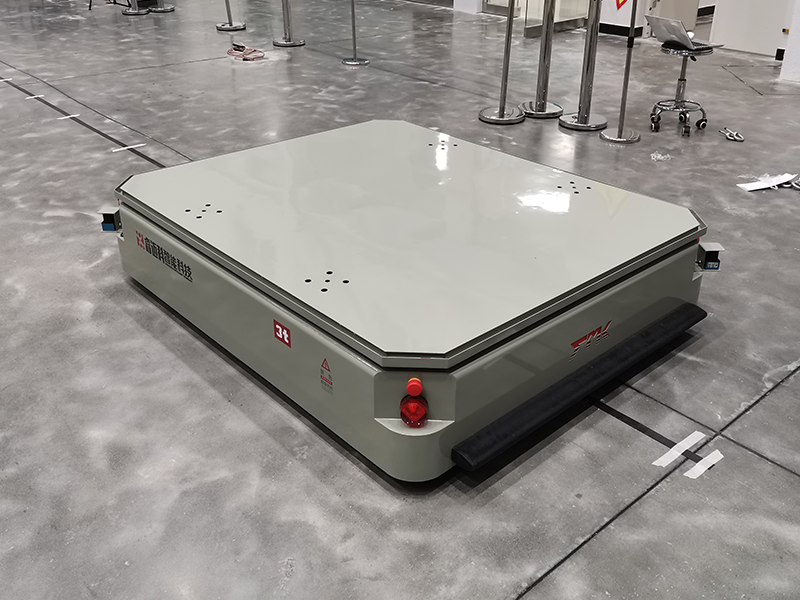
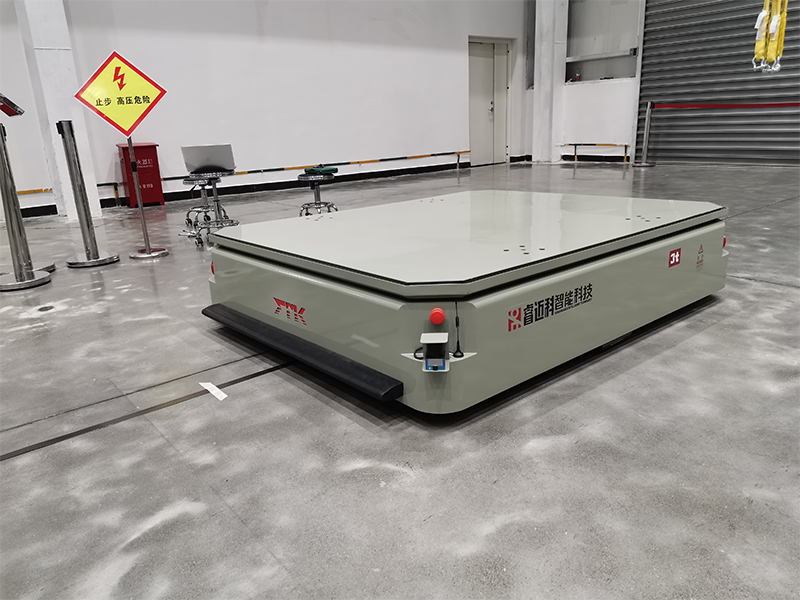
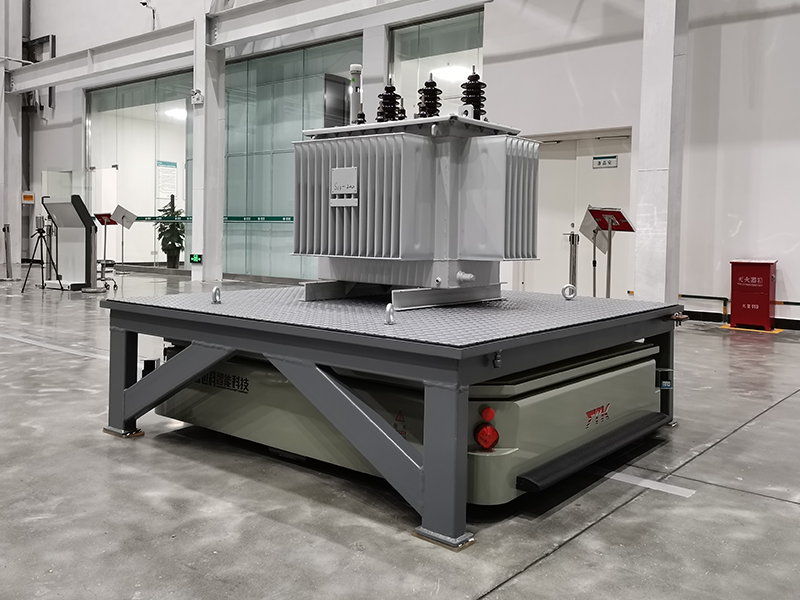
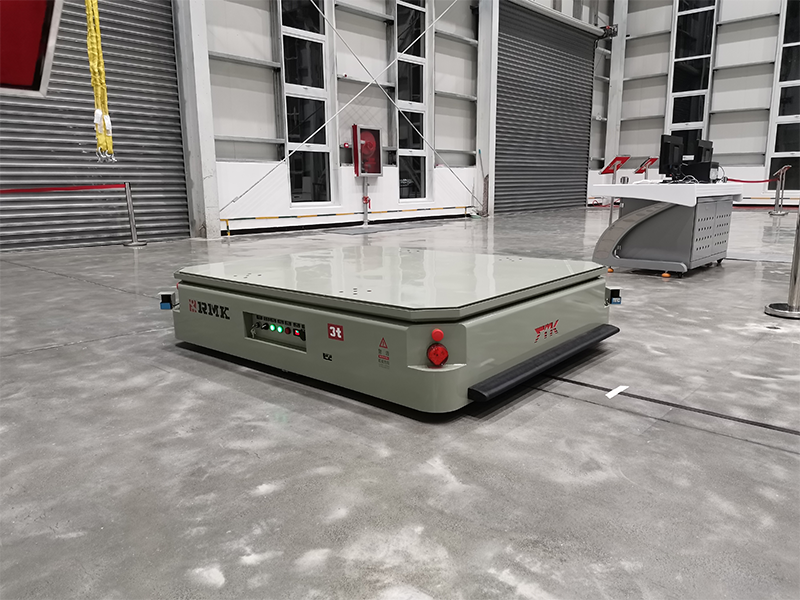
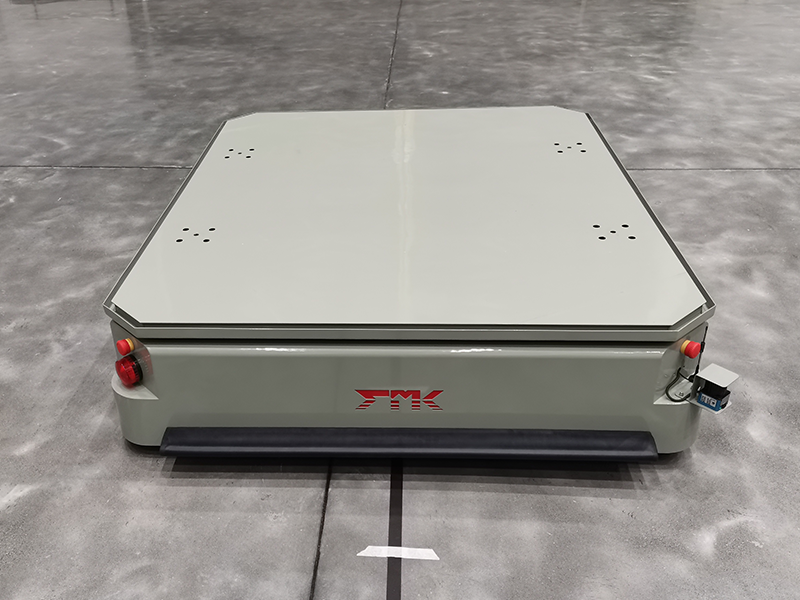
AGV Application Scenarios
Core Adaptability: Ideal for dynamic scenarios with multiple routes, high flexibility, complex environments, and frequent layout changes. Well-suited for small-batch, multi-variety production models.
Flexible Manufacturing Workshops
In 3C electronics and mixed-model automotive production lines where material transport routes require frequent adjustment, AGVs can quickly adapt to line changes by updating navigation maps, meeting diverse production requirements.
E-commerce Smart Warehousing
To handle surging orders during peak sales periods, AGVs enable goods-to-person picking and multi-floor cross-zone transportation. Sorting efficiency is doubled compared to manual operation, adapting to the dynamically changing order demands of e-commerce warehouses.
Clean & Complex Environment Applications
For material handling in food cold chain warehouses and semiconductor cleanrooms, AGVs provide contactless transportation, meeting strict requirements for cleanliness, sterility, and temperature control.
Multi-Station Cross-Zone Transfer
For material transport between machining workshops and multiple buildings in industrial parks with complex routes and flexible obstacle avoidance needs, AGVs can autonomously plan paths and perform coordinated multi-station, multi-task material handling.
What is an RGV
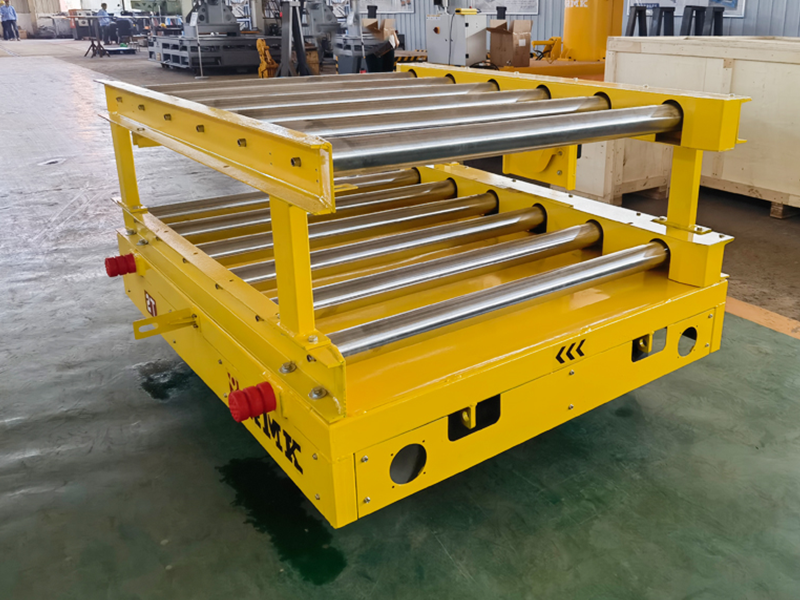
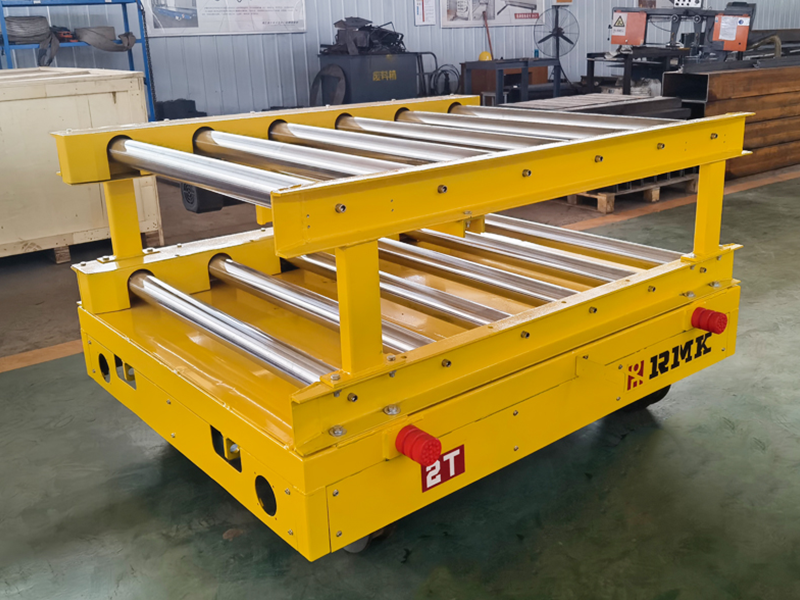
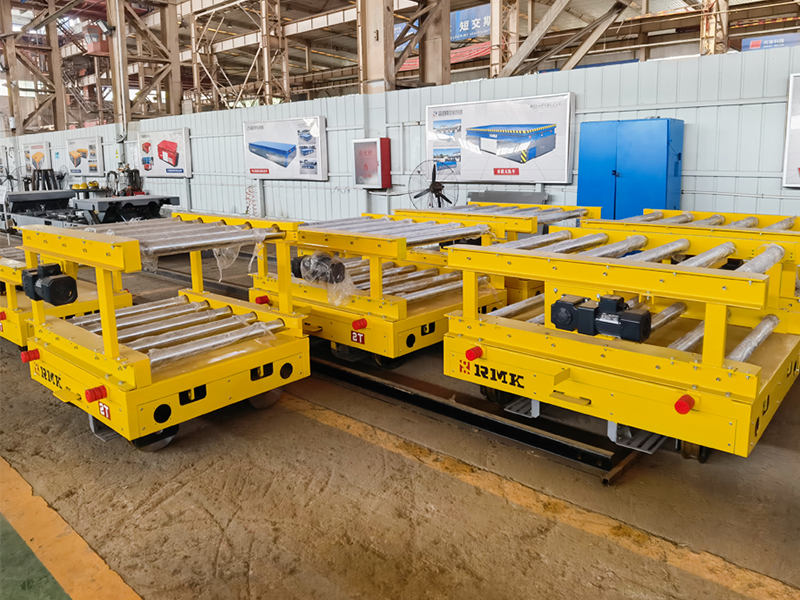
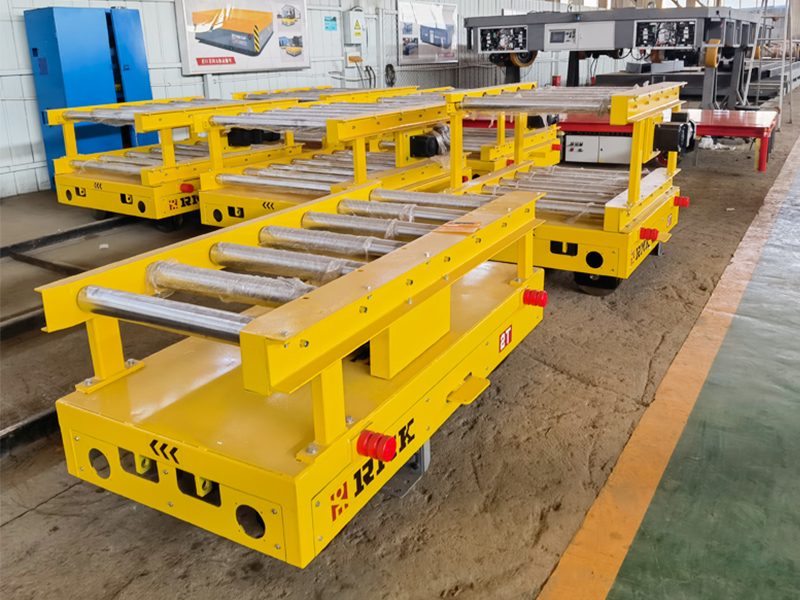
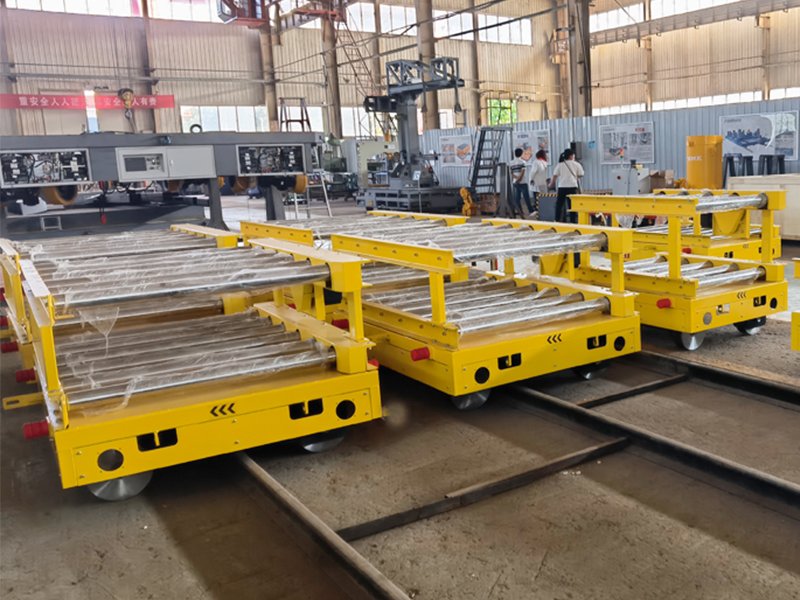
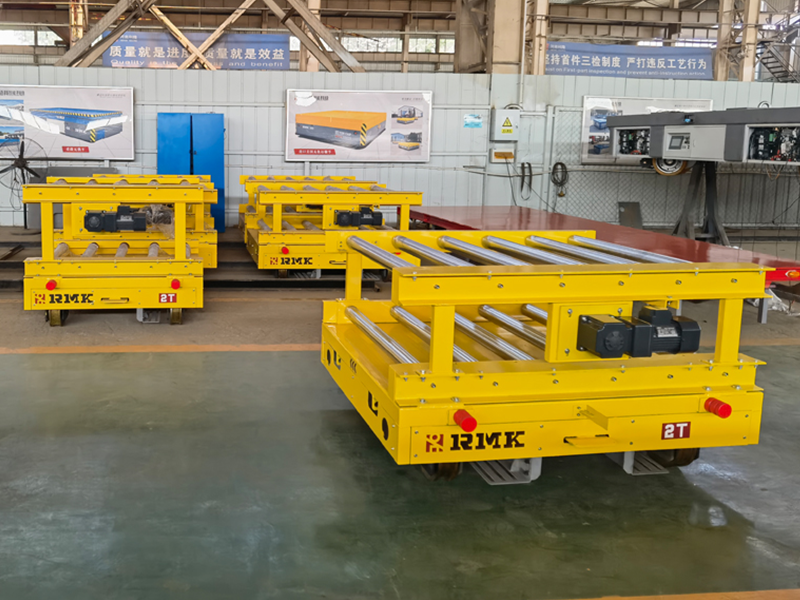
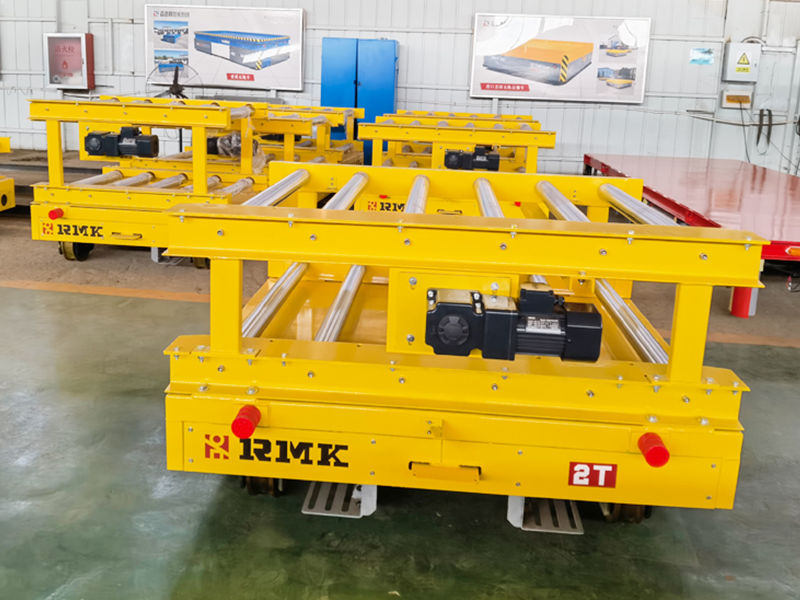
RGV stands for Rail Guided Vehicle, also referred to as a rail shuttle cart. It is an automated handling device that travels along fixed rails, moving unidirectionally, bidirectionally or in a reciprocating manner to perform fixed-point pickup, continuous transfer and other operations.
Featuring a rugged and reliable structure, RGVs offer the advantages of high running speed, high positioning accuracy, strong load capacity and excellent anti-interference performance. They perform stably in high-frequency reciprocating transportation between assembly lines, automated warehouses and fixed workshop stations, support long-term continuous operation, and greatly improve the transfer efficiency and rhythm consistency of warehouses and production lines.
Core Advantages of RGVs
Rail-guided, efficient and stable travel
Driven by dedicated rail guidance, the path is fixed and controllable, enabling high-speed and smooth movement. Compared with trackless handling equipment, it is less susceptible to ground conditions, delivering superior operational efficiency and stability.
High load capacity with stable and reliable operation
The vehicle features a robust structure and excellent load-bearing capacity to meet heavy-duty material handling needs. Traveling along rails ensures stable posture, effectively avoiding material sway and displacement, and guaranteeing safe transportation.
High positioning accuracy and precise docking
Supported by rail positioning and precision control technology, RGVs achieve high accuracy in stopping and docking. They can perfectly match production lines, conveyors, racking stations and other workstations, meeting the high-precision docking requirements of automated production lines.
Simple structure with low failure rate
The overall mechanical and electrical structure is simple, with mature and reliable core components. It features a low failure rate in daily operation and easy maintenance, greatly reducing equipment downtime and later maintenance costs.
Fixed routes for uninterrupted operation
Operating cyclically along preset fixed rails, RGVs are ideal for repetitive, high-frequency material transfer. They support 24/7 continuous and stable operation, making them suitable for large-scale, standardized production line scenarios.
Lower cost and high cost performance
Compared with trackless intelligent equipment such as AGVs, RGVs have lower overall manufacturing and investment costs while maintaining stable and efficient handling performance, with a short payback period. Their comprehensive cost advantage is significant in fixed-route applications.
RGV Application Scenarios
Core Adaptability: Ideal for structured scenarios with fixed routes, high cycle times, heavy loads and high precision. Suitable for stable production processes that do not require frequent path adjustments.
Smart AS/RS Warehouses
Used as aisle shuttles, RGVs work with stackers to achieve fast cargo sorting and storage, improving storage efficiency in high-density warehouses, such as the automated storage areas of e-commerce logistics centers.
Automated Production Lines
Used for fixed-station material transfer on manufacturing assembly lines, enabling rhythmic delivery of raw materials and semi-finished products. For example, in automotive power battery PACK lines, RGV handling can reduce production cycle time from 45 seconds to 30–35 seconds.
Heavy-Duty Handling Scenarios
Applied to heavy material transportation in metallurgy (slab and coil handling), ports (container transfer), heavy machinery parts delivery and more, leveraging their exceptional load capacity for stable heavy-load transport.
Fixed-Zone Transfer
Used for point-to-point repetitive handling between fixed internal workshop areas (e.g., raw material area to production area, finished product area to warehouse area). No frequent path adjustments are needed, ensuring high operating efficiency.
Core Differences Between AGVs and RGVs
|
Contrast Dimensions |
AGV (Automated Guided Vehicle) |
RGV (Rail Guided Vehicle) |
|---|---|---|
|
Operation mode |
Trackless travel, automatic navigation |
Rail-guided operation |
|
Flexibility |
It is tall and can freely turn, change lanes, and avoid obstacles. |
Low speed, can only travel along a fixed track, and cannot be changed arbitrarily. |
|
Navigation technology |
Laser navigation, visual navigation, magnetic stripe navigation, etc. |
Track-based positioning, no complex navigation technology required. |
|
Path planning |
Dynamically adjustable and supports multi-path scheduling |
The route is fixed and cannot be changed; changing the route requires changing the track. |
|
Positioning accuracy |
Medium to high accuracy (depending on the navigation method) |
Ultra-high precision, relying on track mechanical limiters |
|
Load capacity |
The main types are light and medium load vehicles, while heavy load vehicles are more expensive. |
It has outstanding heavy-duty capacity and strong structural adaptability. |
|
Running speed |
Moderate speed, relatively accurate positioning |
High speed, high efficiency in point-to-point transportation, high precision, and stable operation. |
|
Environmental adaptability |
Adaptable to complex indoor environments, cross-regional, and human-machine integrated operations |
Limited to the area covered by the track, with high requirements for both the track and the ground. |
|
Initial cost |
Overall, it’s on the high side (navigation + scheduling system). |
The cost of track + car body is relatively low. |
|
Renovation cost |
Low cost, requiring only software adjustments or the addition of new equipment. |
The track is high and needs to be re-laid, which is a large-scale project. |
|
Later maintenance |
High requirements for the maintenance of sensors and navigation modules. |
Low cost, simple maintenance, and easy maintenance of core components. |
|
Battery life mode |
Battery powered, supports automatic charging |
Rail-powered/contact line-powered, unlimited battery life. |
|
Applicable scenarios |
Flexible production lines, multi-site delivery, and complex operating environments |
Fixed reciprocating material handling, assembly lines, and high-density heavy-duty scenarios |
Conclusion
Select Equipment Based on Actual Needs – Suitability is the Optimal Solution
There is no absolute superiority or inferiority in the selection of automated handling equipment, only suitability.
- With high flexibility and intelligence, AGVs meet the requirements of multi-variety, small-batch production and complex logistics scenarios, helping enterprises adapt to flexible demands such as layout adjustments and cross-regional transportation.In contrast, RGVs feature high speed, stability, heavy-load efficiency and cost-effectiveness, making them ideal for fixed production lines and point-to-point high-frequency transportation scenarios. They show particular advantages under heavy-load and high-precision docking requirements.
- When selecting equipment, enterprises should focus on a comprehensive evaluation of their actual working conditions: clarify whether the operation route is fixed, the requirements for material load capacity and positioning accuracy, the frequency of workshop layout changes, upfront investment budget and later maintenance capabilities. Combined with industry characteristics and long-term development plans, enterprises can choose the most suitable electric transfer vehicle.
- If you are still unsure about the optimal solution for your working conditions, or have selection challenges in complex scenarios, please feel free to contact our professional service team.Based on your specific needs, we provide one-on-one customized industrial transportation solutions covering route planning, equipment configuration and system integration. We help enterprises achieve logistics automation upgrading, reduce costs, improve efficiency, and steadily advance the intelligent transformation of production.
FAQ
References & Sources
1. AGV-EMSD
2. laser navigation technology-Highways Department, HYD
3. Magnetic Navigation Technology-Official U.S. government
4.RGV-IEEE Xplore