
What Is an AGV? A Detailed Guide to Its Advantages, Disadvantages, and Heavy-Duty Material Handling Applications
What Is an AGV Transfer cart?
AGV stands for Automated Guided Vehicle. It is a driverless industrial vehicle used for material handling and internal logistics transportation. It can operate automatically along predefined routes to transport raw materials, semi-finished products, pallets, equipment, and heavy workpieces between warehouses, production workshops, assembly lines, and logistics areas.
Unlike conventional electric transfer carts, Automated Guided Vehicles are equipped with automatic navigation, path control, obstacle detection, safety protection, and task scheduling functions. This allows them to perform repetitive material handling tasks with reduced reliance on manual driving.
Traditional AGVs typically operate along predefined routes. Common navigation methods include:
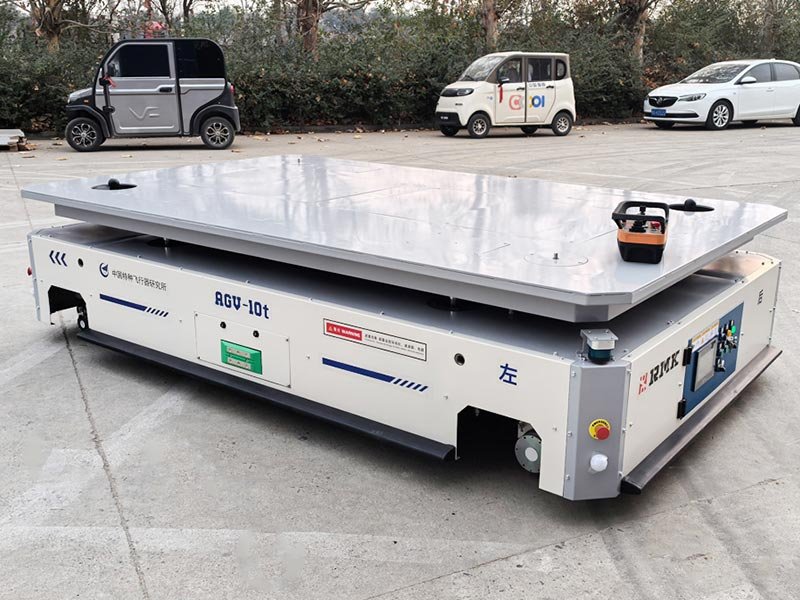
How Does an Automated Guided Vehicles Work?
An AGV Transfer car typically consists of a vehicle body, navigation system, control system, safety system, power supply system, and fleet management system.
Its basic operating process is:
Task assignment → AGV receives instructions → Positioning and navigation → Automatic travel → Obstacle detection → Reaches the target position → Loading/unloading → Returns or executes the next task.
For automated logistics systems consisting of multiple AGVs, an AGV fleet management system or host computer can centrally assign transport tasks and coordinate vehicle operations, reducing conflicts and waiting time between vehicles
What Are the Advantages of Trackless AGV?
Compared with conventional material handling methods, AGV electric transfer carts offer significant advantages in operating performance, application adaptability, cost control, and production management. With various navigation and guidance technologies, they serve as key equipment for automated industrial production.
01——
High Positioning Accuracy
AGVs use various guidance technologies to ensure stable and reliable operation. They travel along predefined routes, with wired guidance providing real-time path recognition and deviation correction. Vision-based navigation can achieve positioning accuracy of ±5 mm, meeting precision docking requirements. The system supports full-process monitoring, with controllable travel paths and speeds, reducing operating errors.
02——
Strong Application Adaptability
AGVs can operate under different conditions, with navigation technologies adapted to various applications. Wired guidance is suitable for flat, clean floors and offers strong resistance to environmental interference. As long as the operating area remains unobstructed, the AGV can operate reliably. Its travel paths can also be adjusted without major site modifications, allowing it to accommodate different factory layouts and production changes.
03——
Efficient and Continuous Operation
AGVs can perform automated material handling around the clock without interruption and support battery replacement without stopping operations, significantly reducing time required for manual handling and transfer. With automatic charging, AGVs can operate continuously for extended periods, overcoming limitations of manual labor and working hours. This improves material transfer efficiency and supports production line operation.
04——
High Level of Safety Protection
AGVs are equipped with multiple sensors and intelligent navigation systems to monitor the surrounding working environment in real time, automatically adjust their operating status, and avoid obstacles. This significantly reduces safety risks during material handling. Fully automated operation also minimizes human errors, collisions, and material damage associated with manual handling, improving operational safety while reducing material losses.
05——
High Level of Intelligent Operation
With advanced guidance technologies such as vision-based navigation, AGVs can identify travel paths and collect information such as workstation codes, acceleration and deceleration commands, and stopping positions. This allows them to use real-time data for precise path guidance and intelligent control, significantly improving the intelligence and flexibility of material handling operations.
06——
Lower Overall Operating Costs
Navigation technologies can be selected based on application requirements and budgets. Wired guidance has low costs and lower operating costs than manual handling. Automated operation reduces labor needs and simplifies personnel management. With fleet management, AGVs enable centralized path planning, task assignment, and fault diagnosis, reducing workload and improving efficiency.
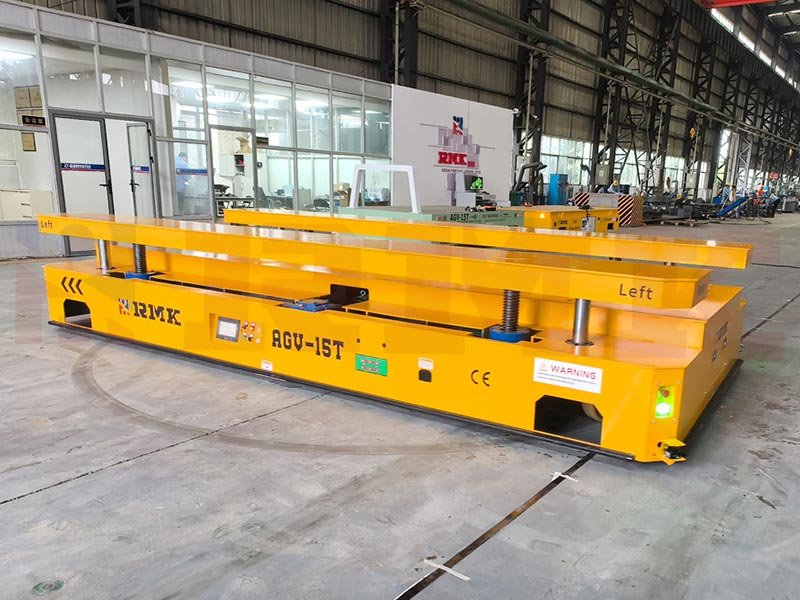
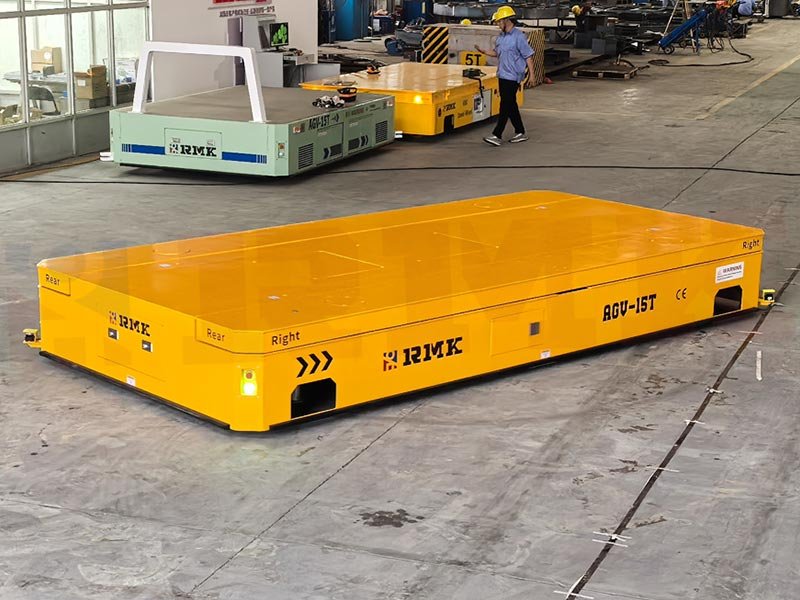
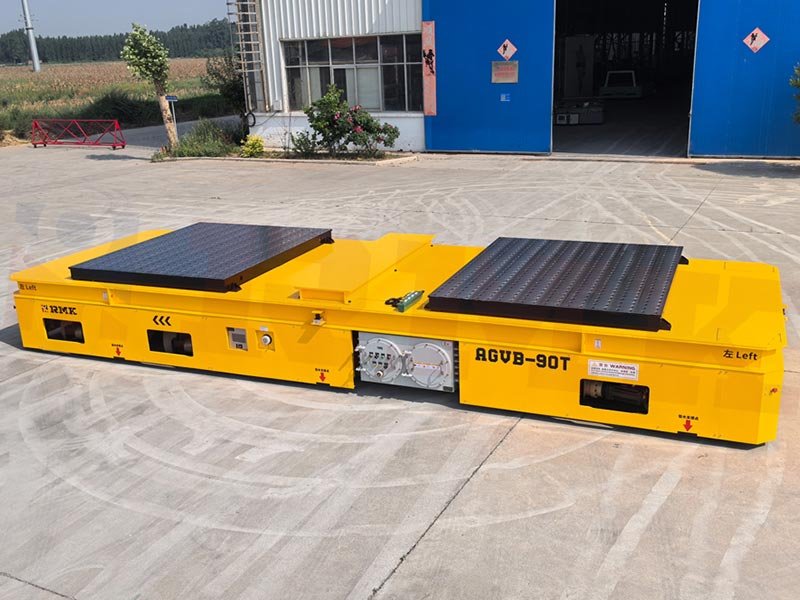
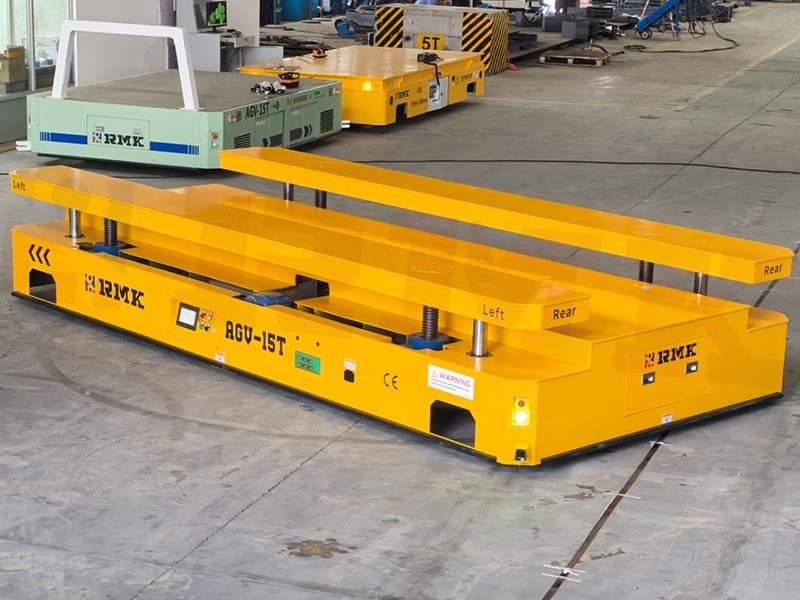
Main Disadvantages and Limitations of Automated Guided Vehicles
Limited Application Scenarios
AGVs rely on predefined travel routes, which limits route flexibility. If a factory frequently rearranges equipment, changes production line locations, or adds new routes, paths may need to be replanned. In some cases, site navigation infrastructure may need modification or guidance tracks reinstalled. This can result in high modification costs and long implementation times. AGVs are therefore more suitable for factories with stable production layouts and less suitable for environments with frequent changes in operating conditions.
Relatively High Initial Investment
The initial investment in an AGV project includes not only the vehicle itself but also supporting equipment such as navigation infrastructure, charging systems, safety protection systems, fleet management software, and communication systems. Additional costs may also arise from site modifications, system integration, equipment commissioning, and personnel training. The total investment should therefore be evaluated comprehensively, as the initial implementation cost is generally higher than that of conventional manual handling.
Strict Operating Environment Requirements
AGVs have specific requirements for floor conditions, particularly heavy-duty AGVs. The operating area must have a level surface with sufficient load-bearing capacity and no significant slopes, uneven joints, or other surface defects. The floor must also be clean and free of obstacles and meet the operating requirements related to wheel pressure and localized loading under full-load conditions. Poor site conditions can affect the stable operation of the vehicle.
Cannot Achieve Fully Unmanned Operation
AGVs can automatically perform routine material handling tasks under normal operating conditions, but manual intervention is still required when abnormalities occur. Issues such as blocked routes, improperly positioned loads, contaminated sensors, low battery levels, communication interruptions, or equipment faults require personnel to inspect and resolve them. Therefore, AGVs cannot achieve completely unmanned operation and still require basic human supervision and maintenance.
When Is an Automated Guided Vehicle More Suitable?
AGVs are more advantageous for material handling when a factory has the following characteristics:
What Is the Difference Between Heavy-Duty AGVs and Conventional Electric Transfer Carts?
Although both can be used for material transfer, they differ fundamentally in their level of automation, fleet management capabilities, and digital integration. A detailed comparison is provided in the table below:
| Project | Traditional Electric Transfer Cart | Heavy-Duty AGV |
| Driving Method | Manual operation or remote control | Automated operation |
| Route | Rail-guided or trackless | Determined by the navigation method |
| Automatic Dispatch | Generally unavailable | Can be equipped with a fleet management system |
| Positioning | Primarily manually controlled | Automatic positioning |
| Heavy-Duty Load Capacity | Excellent | Customizable |
| Level of Automation | Low | High |
| System Integration | Basic | Can be integrated with MES/WMS and other systems |
| Applicable Scenarios | Heavy-duty material handling | Heavy-duty handling + automated logistics |
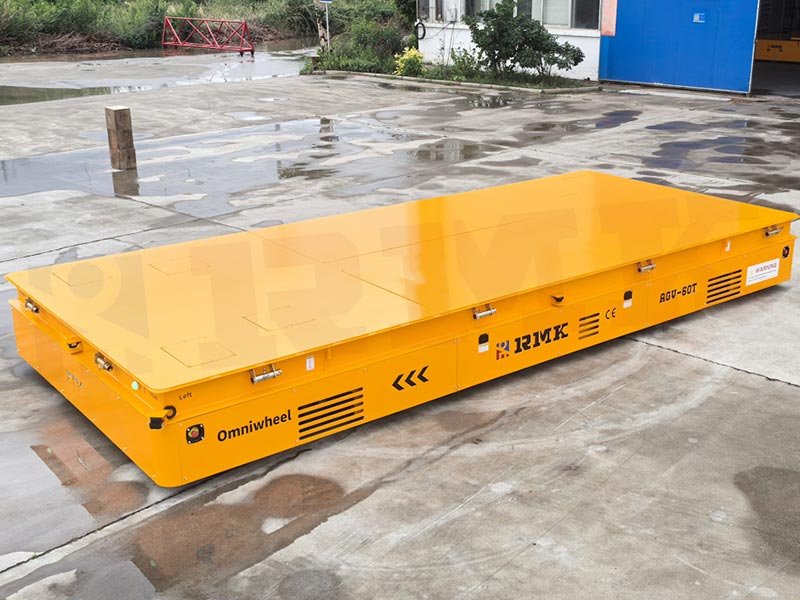
What Parameters Should Be Considered When Selecting an AGV?
When preparing to purchase an AGV Transfer car, buyers typically should not focus on price alone. The following parameters also need to be determined:
Rated Load Capacity
For example, 5 tons, 10 tons, 30 tons, 50 tons, 100 tons, or even higher.
Load Dimensions
For large equipment and extra-long workpieces, platform dimensions and load support point layout need to be determined.
Travel Distance
This includes the travel distance per trip, the number of trips per day, and the continuous operating time.
Navigation Method
Select magnetic, laser, QR code, or other navigation methods according to the operating environment.
Positioning Accuracy
For docking with production lines, equipment, or assembly stations, stopping and positioning accuracy should be clearly defined.
Floor Conditions
These include floor load-bearing capacity, flatness, slope, and the presence of obstacles.
Safety Features
Laser scanners, obstacle sensors, audible alarms, emergency stops, anti-collision devices, and braking systems should be considered.
Automatic Loading and Unloading
If an AGV automatically performs lifting, docking, towing, or load transfer, corresponding mechanical actuators must be added.
FAQ
References & Sources
1. Driverless Industrial Trucks and Their Systems-International Organization for Standardization (ISO)
2. Automated Guided Vehicle Safety-OSHA
3. Automated Guided Vehicles Ripe for Standardized Performance Tests-National Institute of Standards and Technology (NIST)