
Key Points for Accurate Selection of Rail Transfer Carts
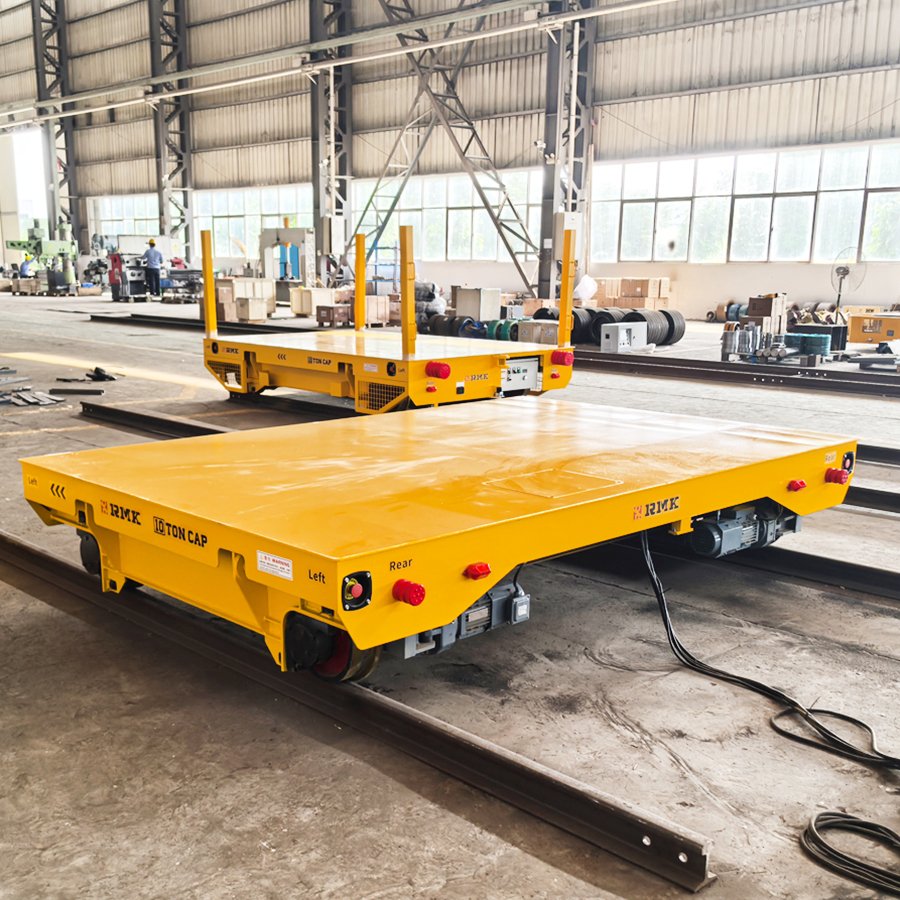
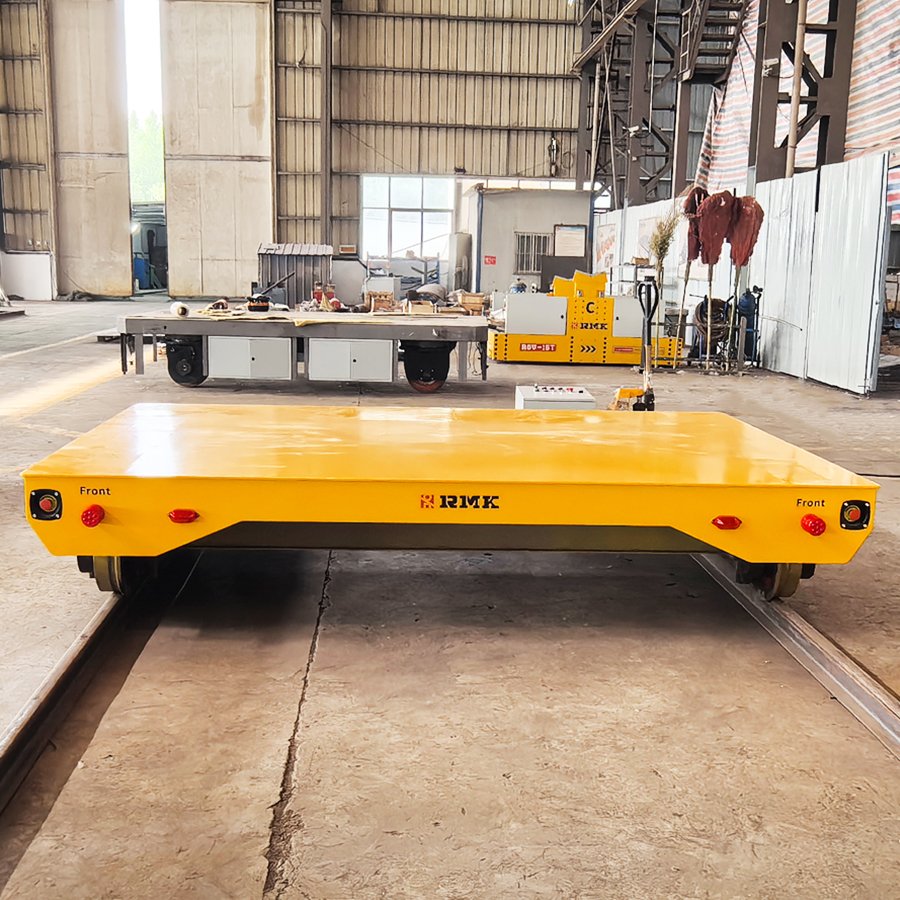
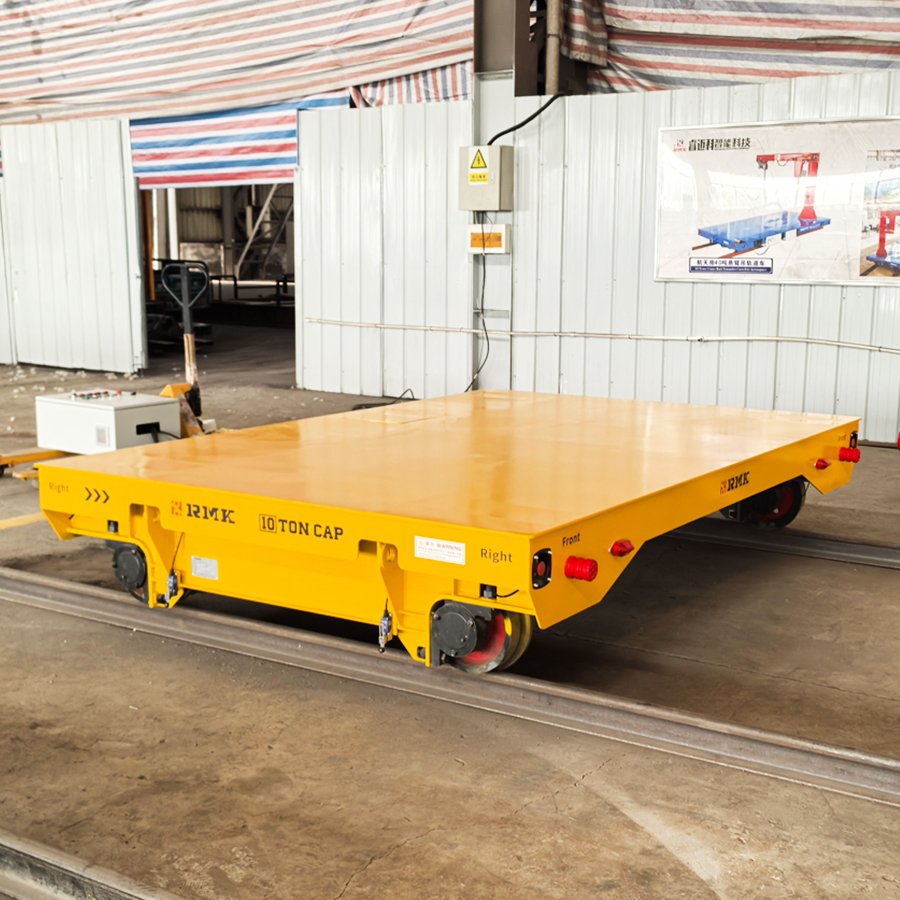
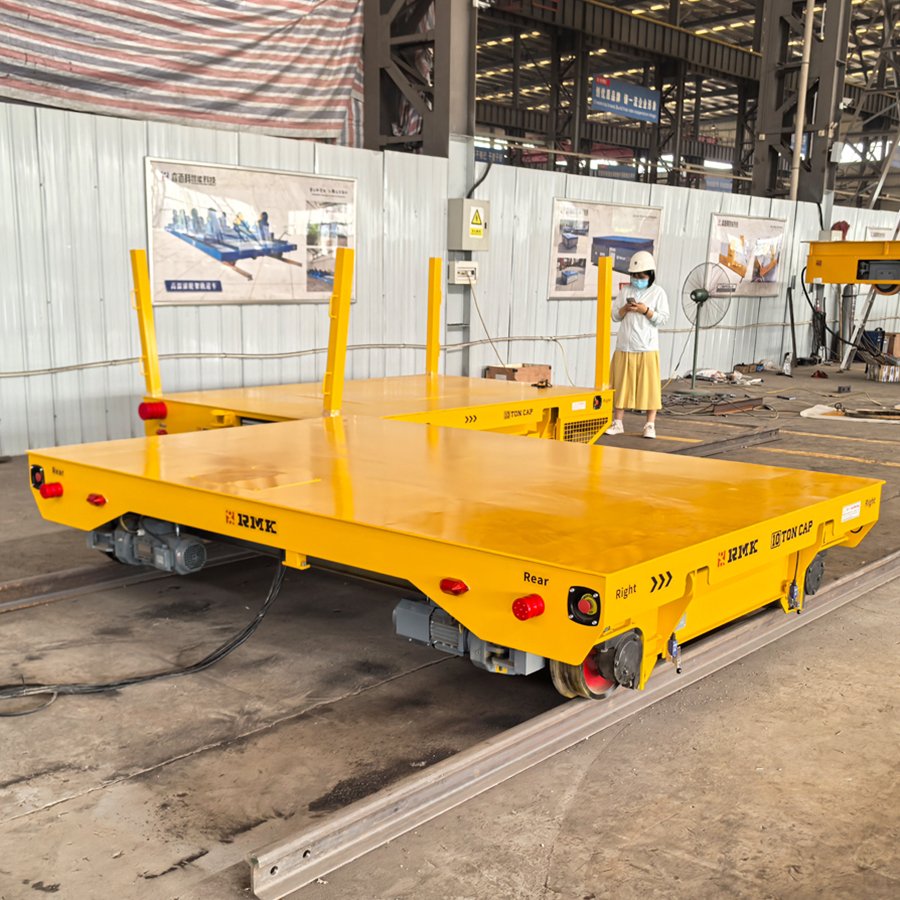
In modern industrial manufacturing, rail transfer carts serve as core equipment for heavy-load site transportation, cross-workshop material haulage, and assembly line auxiliary conveyance within factory premises. Boasting prominent strengths including high load capacity, stable operation, reliable safety performance and broad adaptability, they have become standard machinery for short-distance heavy industrial transport.
Nevertheless, during equipment selection and practical deployment, most enterprises fall into common misjudgments: prioritizing load capacity over site compatibility, and focusing solely on upfront purchase price rather than full-lifecycle costs. If rated load capacity is treated as the sole procurement benchmark, issues will likely arise—such as mismatches between equipment and factory infrastructure, inadequate suitability for on-site working conditions, and frequent breakdowns amid high-frequency operation. These problems drastically cut overall production efficiency, amplify safety risks, and drive up long-term maintenance expenses and total comprehensive investment.
Accordingly, scientific selection of rail transfer carts must center on actual production working conditions via multi-dimensional comprehensive assessment. This ensures precise integration and optimal compatibility between the transport equipment and the entire production system.
Mandatory Selection Criteria for Basic Performance of Rail Transfer Carts
Load-bearing parameters stand as the core foundational indicators of rail transfer carts, which directly determine the operational capacity and service life of the equipment, serving as the primary reference for all equipment selection procedures. A majority of enterprises make missteps during selection by fixating one-sidedly on static rated load while overlooking performance redundancies required for dynamic, eccentric and peak-load working conditions. This results in prolonged overloaded operation of the equipment, triggering malfunctions such as car frame deformation and motor burnout. The key mandatory selection benchmarks are outlined below:
01
Rated Load and Peak Load
The rated load marked on equipment only represents the nominal load capacity under static operating conditions. Extra load forces are generated in real production scenarios including eccentric loading, impact forces during start-up and braking, as well as travel on sloped tracks. A safety margin of 1.25 times is recommended to prevent full or overloaded operation and reduce failure rates.
02
Platform & Structural Compatibility
Platform dimensions shall be precisely matched to material dimensions. An undersized platform will cause unstable loads, while an oversized one risks scraping collisions. For heavy-duty material transportation, reinforced cross beams and anti-slip guard baffles need to be installed to prevent platform deformation caused by long-term heavy-load operation.
03
Travel Speed & Regulation Modes
For operations involving frequent start-stop cycles: Low, constant travel speed is suitable.
For long-distance transport tasks: High-speed mode can be adopted.
For integration with automated production lines: A stepless speed control system shall be equipped to deliver smooth start-up, braking and flexible speed adjustment, preventing cargo shifting or tipping over.
04
System Braking Performance
Three mainstream braking configurations are available for the equipment: power-off braking, electromagnetic braking and mechanical braking. When selecting models, priority must be given to verifying braking distance under full heavy-load conditions. Anti-slip braking functions are mandatory for operation on ramps and curved rails to eliminate risks of vehicle rolling backward and out-of-control movement.
Mandatory Selection Criteria for Basic Performance of Rail Transfer Carts
Load-bearing parameters stand as the core foundational indicators of rail transfer carts, which directly determine the operational capacity and service life of the equipment, serving as the primary reference for all equipment selection procedures. A majority of enterprises make missteps during selection by fixating one-sidedly on static rated load while overlooking performance redundancies required for dynamic, eccentric and peak-load working conditions. This results in prolonged overloaded operation of the equipment, triggering malfunctions such as car frame deformation and motor burnout. The key mandatory selection benchmarks are outlined below:
01
Rated Load and Peak Load
The rated load marked on equipment only represents the nominal load capacity under static operating conditions. Extra load forces are generated in real production scenarios including eccentric loading, impact forces during start-up and braking, as well as travel on sloped tracks. A safety margin of 1.25 times is recommended to prevent full or overloaded operation and reduce failure rates.
02
Platform & Structural Compatibility
Platform dimensions shall be precisely matched to material dimensions. An undersized platform will cause unstable loads, while an oversized one risks scraping collisions. For heavy-duty material transportation, reinforced cross beams and anti-slip guard baffles need to be installed to prevent platform deformation caused by long-term heavy-load operation.
03
Travel Speed & Regulation Modes
For operations involving frequent start-stop cycles: Low, constant travel speed is suitable.
For long-distance transport tasks: High-speed mode can be adopted.
For integration with automated production lines: A stepless speed control system shall be equipped to deliver smooth start-up, braking and flexible speed adjustment, preventing cargo shifting or tipping over.
04
System Braking Performance
Three mainstream braking configurations are available for the equipment: power-off braking, electromagnetic braking and mechanical braking. When selecting models, priority must be given to verifying braking distance under full heavy-load conditions. Anti-slip braking functions are mandatory for operation on ramps and curved rails to eliminate risks of vehicle rolling backward and out-of-control movement.
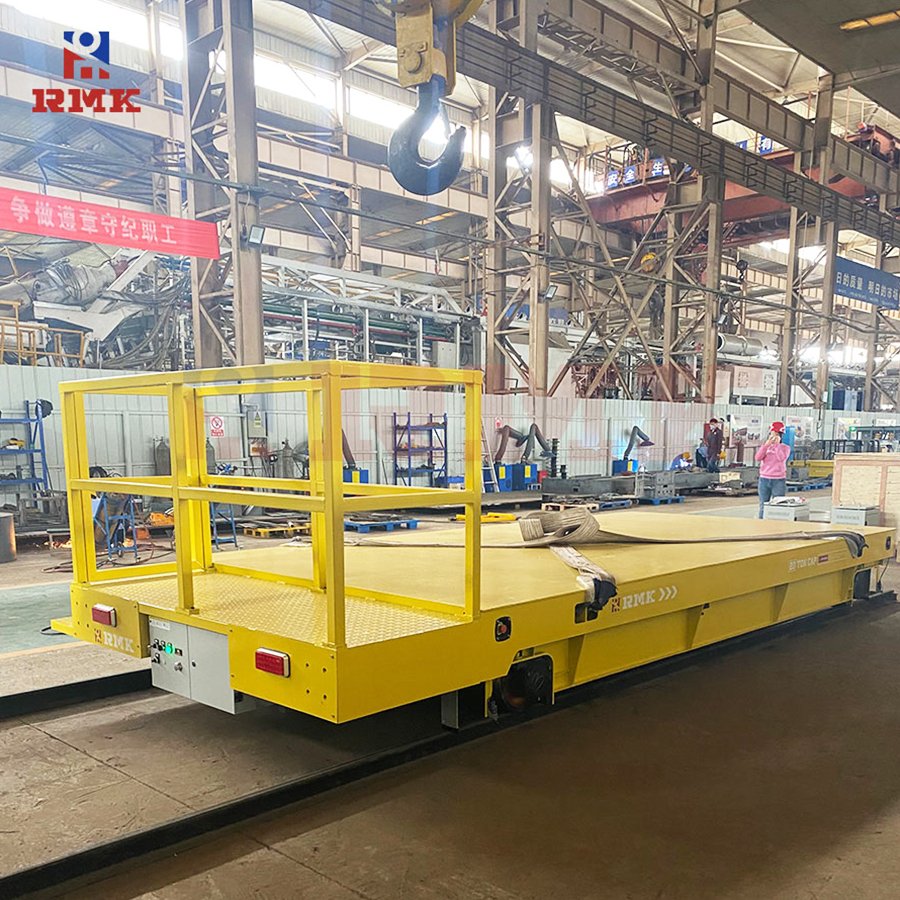
Track and Foundation Compatibility: Core Infrastructure Determining Equipment Operating Stability
Tracks and foundations form the operational foundation of rail transfer carts. Roughly 70% of issues affecting equipment stability, failure frequency and service life stem from the alignment precision between infrastructure and rails. Common operational faults including vehicle shaking, track deviation, rapid wheel set wear and abnormal running noise are usually not attributable to defective equipment quality. Instead, they arise from mismatched rail specifications, uneven foundation surfaces and excessive gauge tolerances. As such, infrastructure compatibility stands as an indispensable core factor throughout the equipment selection process.
Matching of Rail Profiles
Three types of rails are widely adopted in industrial applications: square steel rails, light rails and heavy rails, which shall be precisely selected in accordance with the cart’s load tonnage and wheel set parameters.
| Rail Type | Matched Load Capacity | Application Scenarios | Core Features |
| Square Steel Rails | 1-5t | For light-duty battery-powered transfer carts, used for infrequent, light-load material handling. | Easy installation & high cost-effectiveness |
| Light Rails | 10-30t | Used with low-voltage rail transfer carts in machining and mold manufacturing workshops | Suitable for medium-capacity transfer carts |
| Heavy Rails | 30-500t | For heavy and extra-heavy transfer carts; heavy workpiece transport & high-frequency full-load outdoor operation | Boast outstanding resistance to bending and impact loads |
Floor and Foundation Conditions
Travel Route Layout Design
Adaptability to Gradients and Elevation Differences
Power Supply System: The Power Core for Long-Term Stable Equipment Operation
The power supply system serves as the core power unit of rail transfer carts, directly determining equipment endurance, operational stability, energy consumption, and maintenance costs. Power supply modes vary drastically in applicable scenarios, requiring precise selection based on travel distance, operating frequency and production workflows. Meanwhile, drive configurations shall be matched in accordance with load-bearing working conditions.
Mainstream Power Supply Modes
Battery Power Supply
It boasts strong versatility with no wiring required, enabling independent flexible operation free from rail and factory constraints. It fits multi-station, short-distance, intermittent temporary transport and movable rail conditions. Main power sources are maintenance-free lead-acid and lithium batteries. Fast charging, long endurance, zero memory effect meet regular SME production demands. Its main flaw: no 24-hour non-stop operation due to required charging downtime.
Cable Reel Power Supply
This mode offers unlimited runtime, stable power output and low failure rates with no power drop under heavy loads. It is ideal for heavy-duty cross-area transportation requiring long-distance travel, high operation frequency and round-the-clock continuous work. Additionally, it features a simple structure and easy maintenance. The downside lies in cable pulling and abrasion risks during long-distance travel; it is only applicable to fixed routes without complicated turnouts.
Low-Voltage Rail Supply
Safe low-voltage electricity (36V/48V) transmits directly through rails. It enables 24-hour non-stop operation with powerful, consistent power, eliminating range anxiety and charging waits. It supports ultra-high load capacity, perfectly matching long-cycle transport of heavy workpieces dozens to hundreds of tons. Its disadvantage is mandatory dedicated conductive rails; layouts cannot be altered arbitrarily, contact surfaces need regular grinding and upkeep.
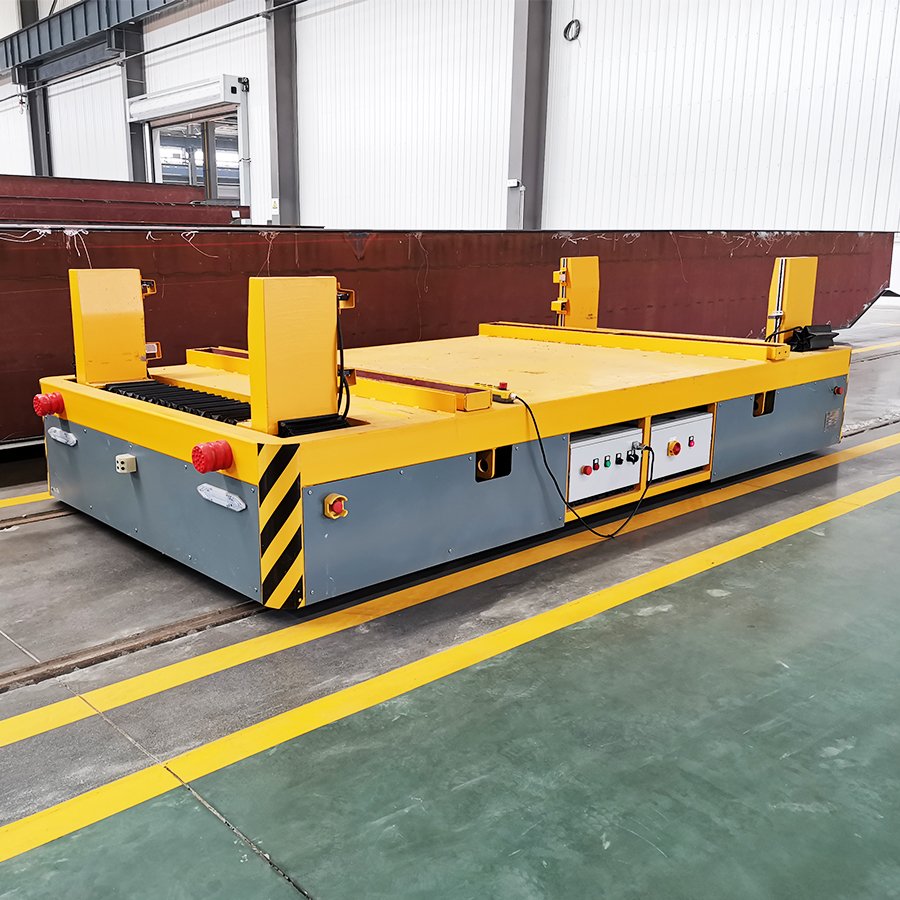
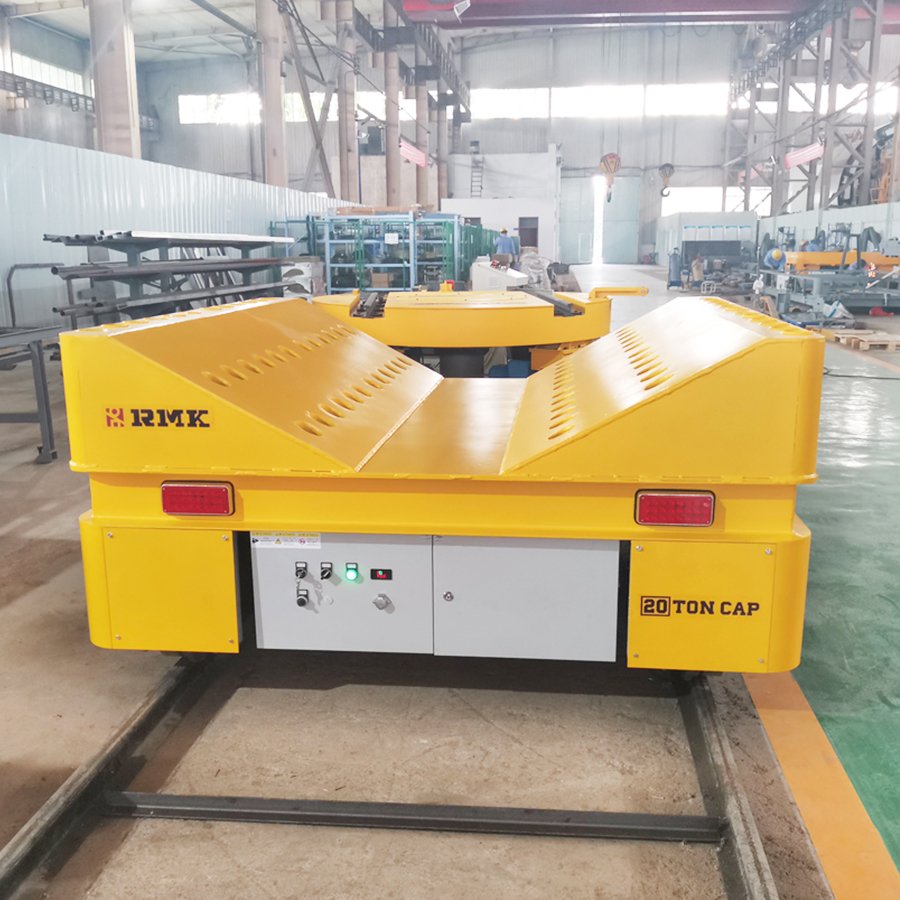
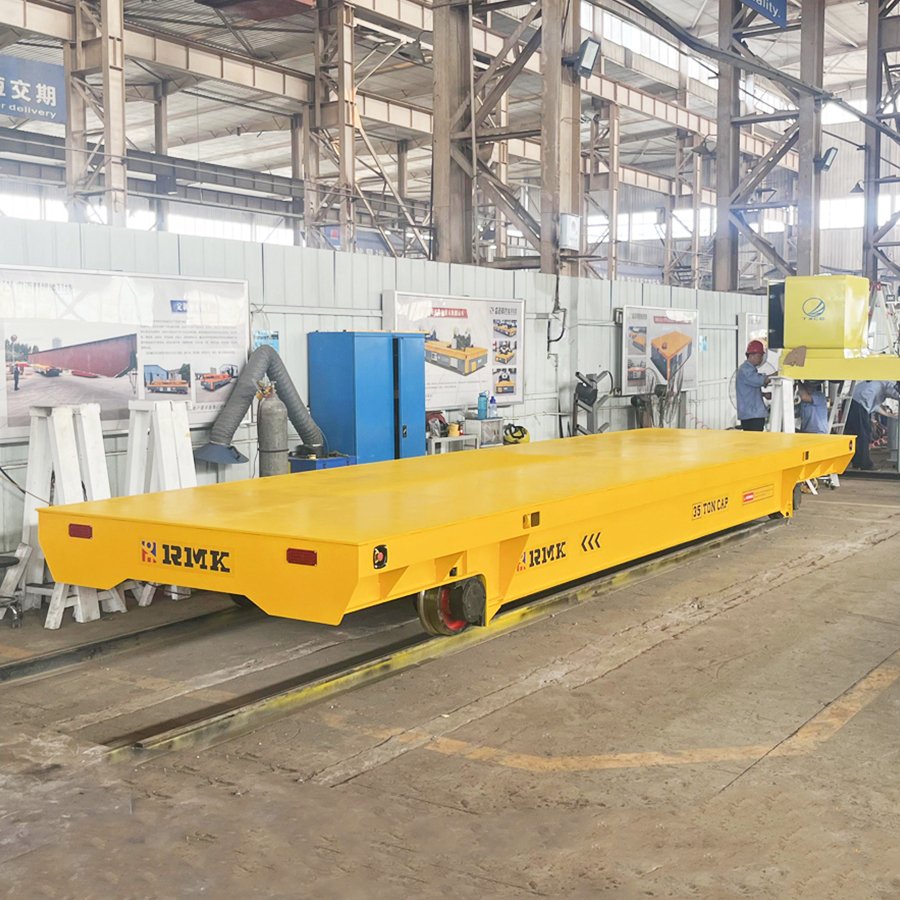
Working Environment Adaptation: Differentiated Selection Key Points for Special Scenarios
Industrial production environments are complex and diverse. Environmental factors including temperature, humidity, dust levels, corrosive substances and explosion-proof requirements exert a direct impact on transfer cart selection and service life. Hasty, unoptimized equipment selection accelerates component aging, triggers frequent malfunctions, drastically shortens equipment lifespan, and may even lead to safety incidents.
Safety Protection and Intelligent Configurations: Keys to Compliant Production and Efficient Maintenance
Rail transfer carts fall under the category of special industrial handling equipment, with safety and regulatory compliance serving as the non-negotiable bottom line for equipment selection. As industrial safety standards continue to be upgraded across the sector, basic safety protection features have become standard fittings for all units. Meanwhile, intelligent configurations act as a critical enabler for integration into automated production lines and higher material handling efficiency.
Full Lifecycle Cost: Break Free from the Low-Price Selection Misconception
Most enterprises only compare upfront purchase prices when sourcing equipment, falling into a selection trap disguised as “low price with generous specifications”, while overlooking operational, maintenance and wear-and-tear expenses over the equipment’s full service life.
Scientific equipment selection requires holistic evaluation across four core dimensions: initial procurement cost, daily energy consumption, repair and maintenance outlays, and service lifespan, so as to achieve optimal long-term total cost of ownership.
Upfront Procurement
Companies should stay alert to the trap of low-price under-specification, which includes thinner cart frame plates, falsely rated motor power, missing safety protection assemblies and other cutbacks. Such equipment carries a lower initial purchase price yet suffers an extremely high failure rate. During selection, cross-check against standardized specifications to verify the integrity of frame construction, core components and safety protections, and avoid blindly prioritizing rock-bottom pricing.
Operational Energy Consumption
Power supplied via sliding contact lines paired with energy-saving variable-frequency motors delivers far lower power consumption compared to standard battery packs and fixed-frequency motors. For facilities running high-frequency operations year-round, long-term energy savings can easily offset the price premium of higher-spec models, delivering superior long-run economic performance.
Maintenance and Repairs
Premium carts use universally available wear parts and feature low failure rates with minimal production downtime. Inferior equipment relies on non-standard proprietary spare parts that drive up repair costs and disrupt production schedules. Prioritize models with proven mature structures, interchangeable standard components and comprehensive after-sales support.
Service Life and Residual Value
Units built with thickened carbon steel frames and high-grade key components achieve an 8 to 10-year service lifespan. Poor-quality carts develop frame deformation, electrical degradation and power output decline after only 2–3 years, resulting in abysmally low overall cost-effectiveness.
Selection Summary and Core Pitfall Avoidance Guide
Selecting rail transfer carts constitutes a systematic, refined engineering decision-making process, rather than a simple comparison of isolated parameters or price tags. Every configuration choice must be tailored to a company’s actual production scenarios, built around on-demand customization to eliminate redundant features and mitigate performance weaknesses.
Drawing on frequently encountered equipment selection cases across the industry, three major critical misconceptions must be strictly avoided:
- First, buyers only reference rated load capacity while overlooking eccentric loads and dynamic impact loads, which leads to breakdowns from sustained overloading.
- Second, purchasers merely compare upfront purchase costs without accounting for infrastructure compatibility, protective fittings and component quality, resulting in sharply inflated maintenance and repair expenses down the line.
- Third, compatibility with special operating environments is disregarded; standard carts deployed in explosion-prone, high-temperature or humid conditions carry severe safety risks.
A precise selection framework aligns load specifications, power supply types, protective setups and intelligent control systems with site track infrastructure, transport distances, production operating frequencies, ambient conditions and safety standards. While guaranteeing safe production and high-efficiency material handling, this approach optimizes full-lifecycle costs. Properly specified rail transfer carts can perfectly match production line workflows and act as a vital asset for enterprises advancing smart manufacturing and streamlined internal logistics.
References & Sources
1. Explosion-proof motor-U.S. Bureau of Mines (USBM)
2. IP54-International Electrotechnical Commission
3. Explosion-proof standards-CDC
4. The effects of overloading a vehicle-British government