
What is a Rail transfer cart?
What is a Rail transfer cart?
A Rail transfer cart is a specialized heavy-duty material handling equipment used in factories and industrial facilities. It travels along fixed I-beam steel rails, is powered by an electric motor, and features a flat loading platform. It is specifically designed for transporting heavy, oversized, or irregularly shaped goods, widely replacing manual labor, forklifts, and cranes to meet heavy-duty transportation needs along fixed routes.
Common Types of Rail-mounted Transfer cart
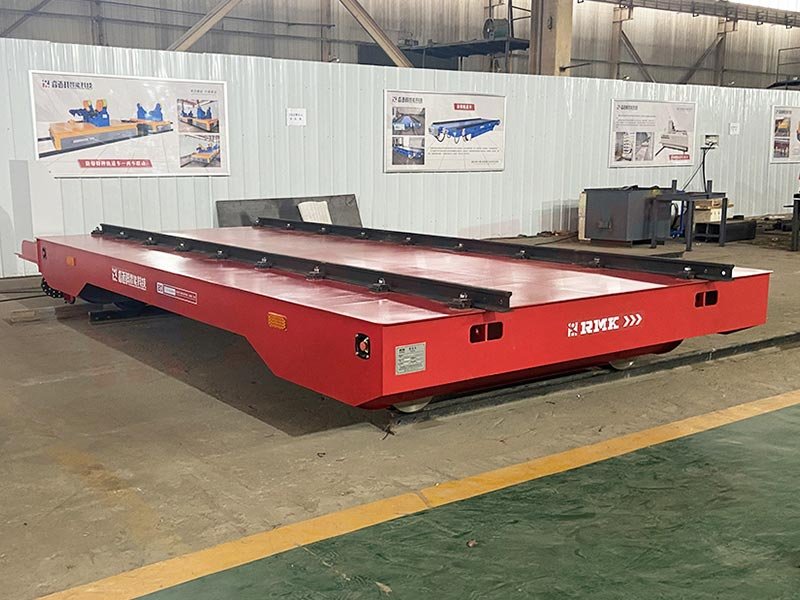
KPX Battery Powered Flat Car
No wiring required, flexible movement. Ideal for short distances, multi-station operations, and sites without rail power supply.
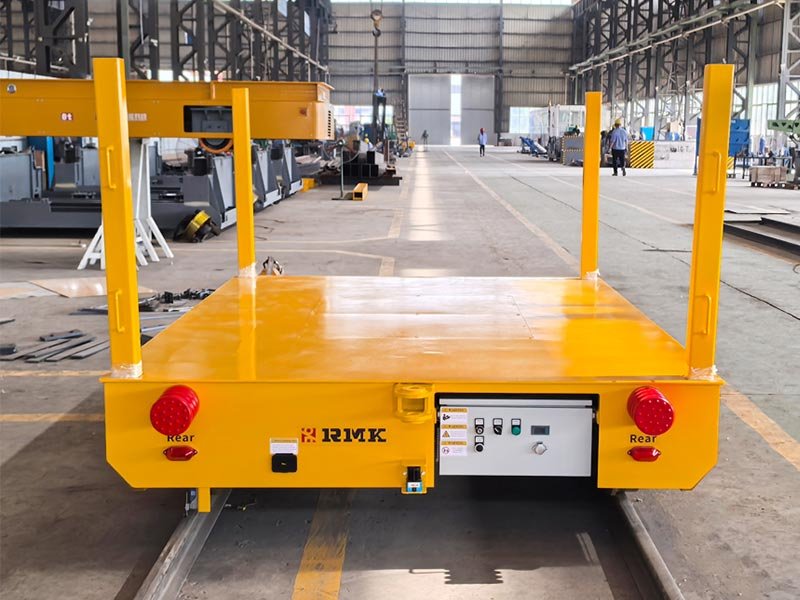
KPC Cable Reel Flat Car
Features automatic cable retraction and release. Suitable for medium-to-long fixed routes with low cost and high reliability.
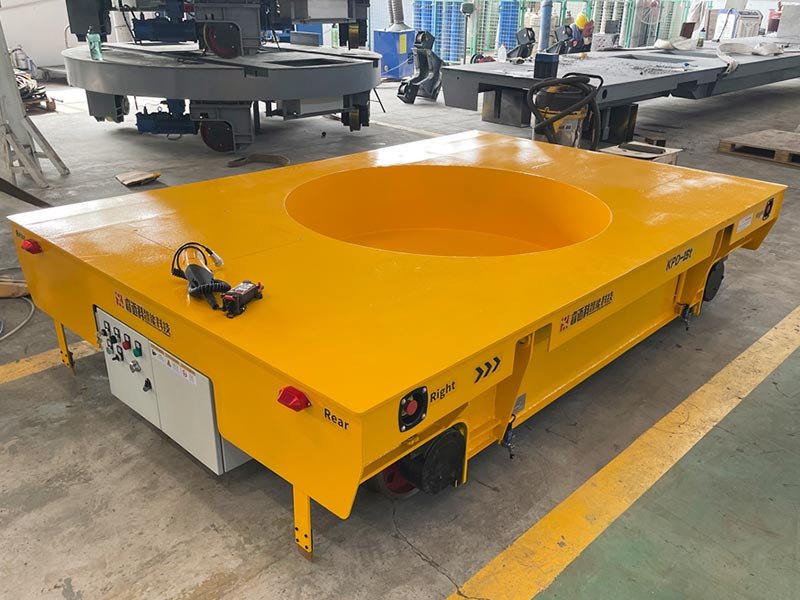
KPD Low-Voltage Rail Powered Flat Car
Direct power supply from the rails, supports 24-hour uninterrupted operation. Perfect for high-frequency heavy loads and long-distance transportation.
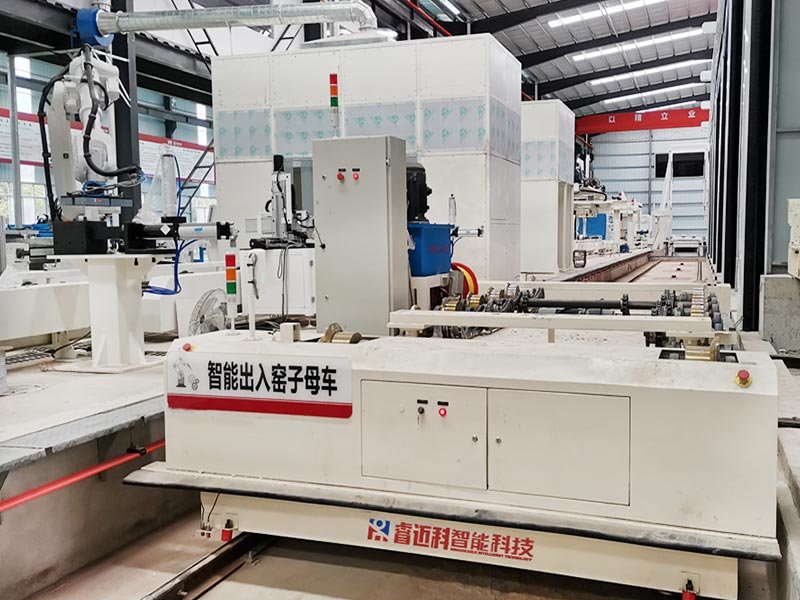
Mother-Son Shuttle Car
The mother car travels on main rails, while the son car can move transversely off-rails to realize cross-station and cross-region transfer.
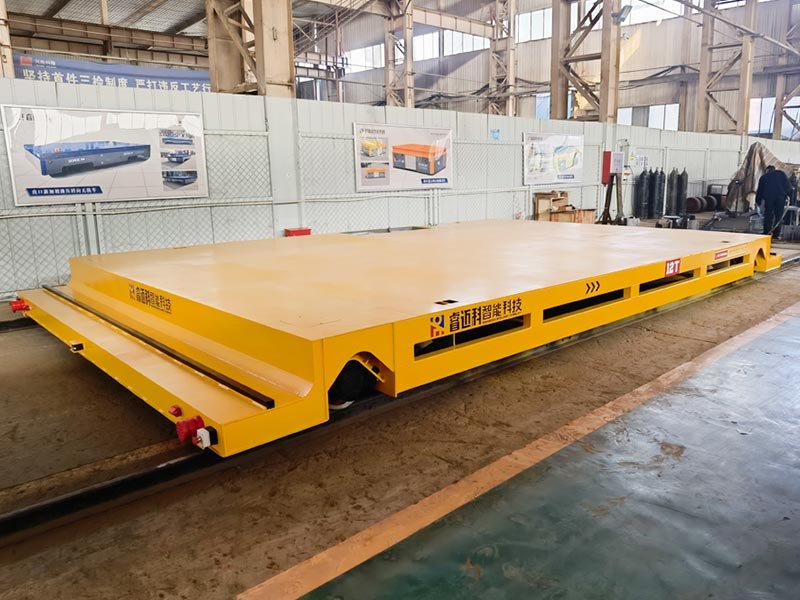
RGV (Rail Guided Vehicle)
Fully automatic operation, integrates with production lines / WMS systems, used in smart workshops and automated logistics.
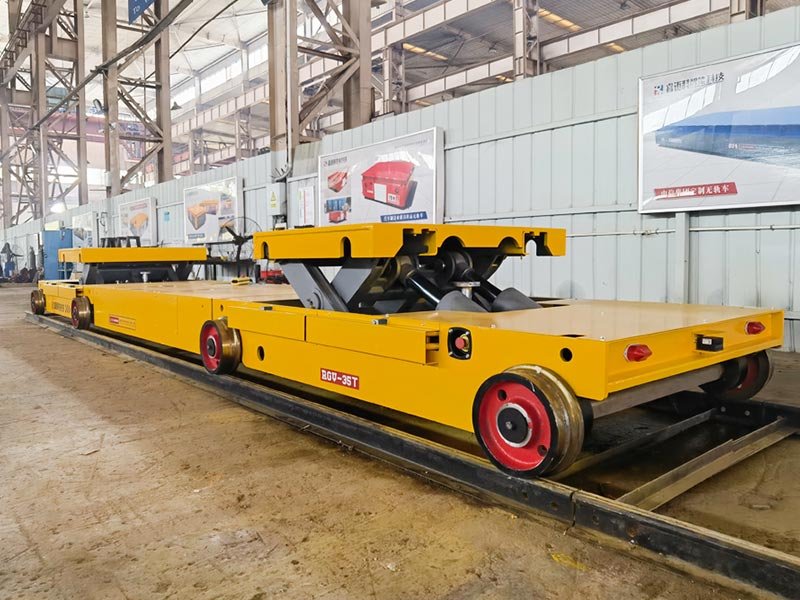
Hydraulic Lifting Rail Flat Car
Platform height adjustable for easy docking with workstations of different heights, making loading and unloading more labor-saving.
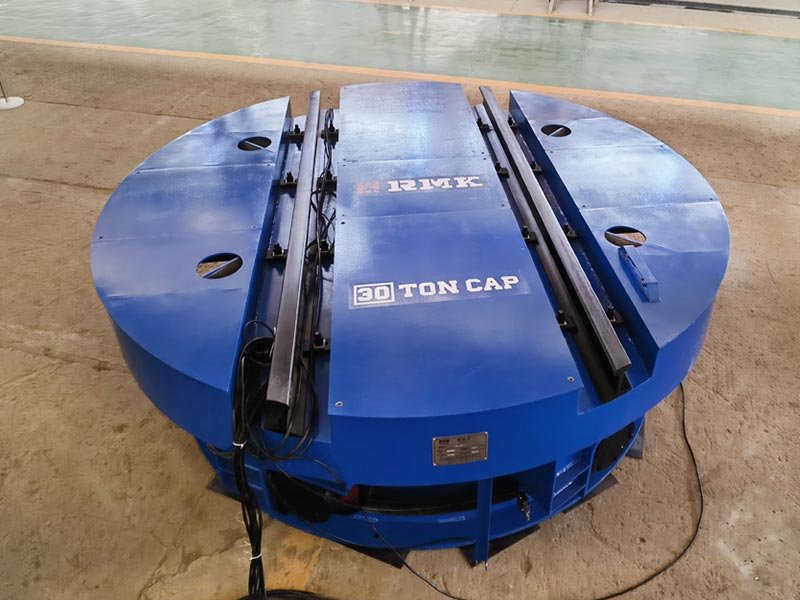
Rotary Table Rail Flat Car
360° rotating platform for convenient cargo turning and precise positioning, widely used in assembly of large workpieces.
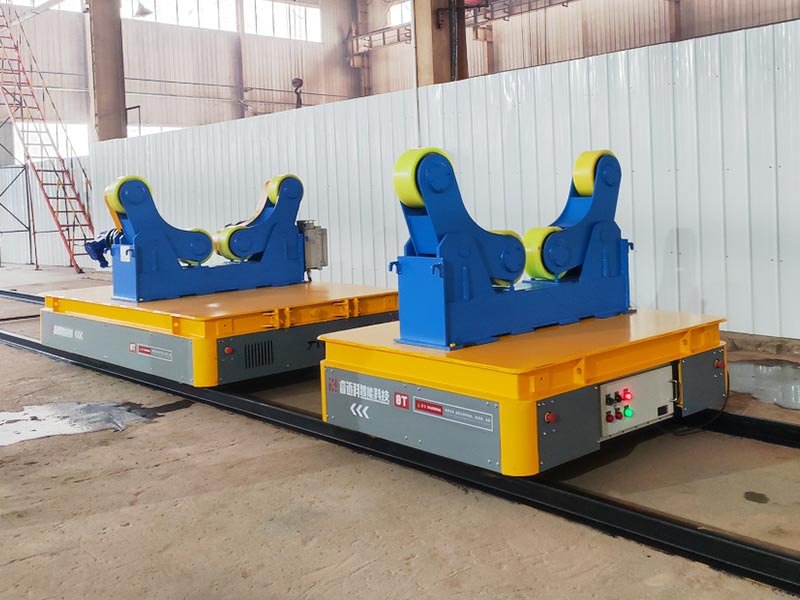
Explosion-Proof Rail-Mounted Electric Flat Car
Equipped with explosion-proof motors and electrical components, suitable for hazardous environments such as chemical, paint, and dust-explosion risk areas.
Core Advantages of Rail transfer carts
Smooth Operation
Travels along fixed rails with millimeter-level stability, ensuring no jolting or damage during the transportation of precision or fragile materials, fundamentally preventing cargo damage.
Precise Positioning
Follows preset routes with minimal positioning error, enabling seamless integration with intelligent production systems for automatic and accurate material delivery, eliminating manual errors and low efficiency.
High Safety
Confined to fixed travel paths by rails, avoiding out-of-control movement common with forklifts. Equipped with emergency stop, anti-collision, limit protection and other multiple safety devices, greatly reducing the risk of workshop transportation accidents.
Outstanding Heavy-Load Capacity
Capable of carrying dozens to hundreds of tons of cargo, far exceeding conventional forklifts. Custom models can handle even several hundred tons. Steel rails evenly distribute weight, ensuring no deformation during heavy cargo transportation.
Flexible & Diverse Power Supply
Supports low-voltage rail power (continuous power while moving for 24-hour operation), cable reel power (low cost, simple structure) and battery power (no circuit modification, flexible start/stop), adapting to various site conditions.
Simple Operation
No complicated procedures, supporting remote control or central control scheduling. The equipment features a simple and durable structure, with a service life of more than ten years. Long-term use significantly reduces manual handling costs, delivering outstanding cost-effectiveness.
Intelligent Upgradable
Can integrate with intelligent dispatch systems and MES systems to realize automatic scheduling, path optimization and status monitoring, serving as a key link in automated production lines and improving overall turnover efficiency.
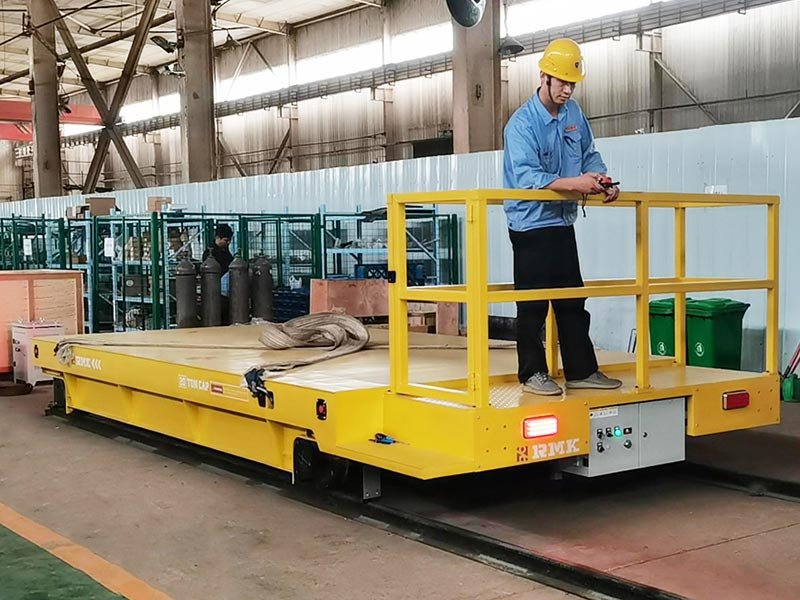
Application Scenarios & Industrial Uses
Thanks to their heavy-load capacity, stability and efficiency, Rail transfer cart are widely used in the following industries and scenarios.
Machinery Manufacturing Industry
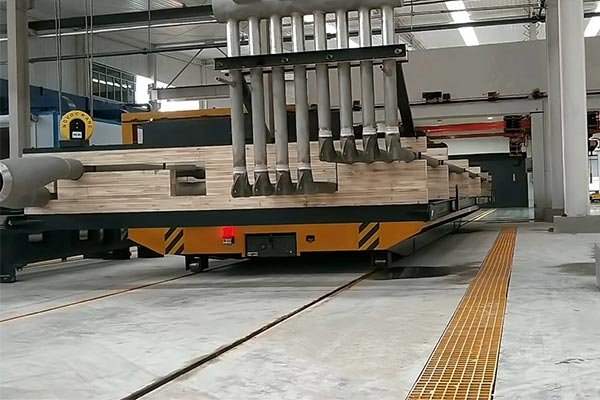
Metallurgical & Steel Industry
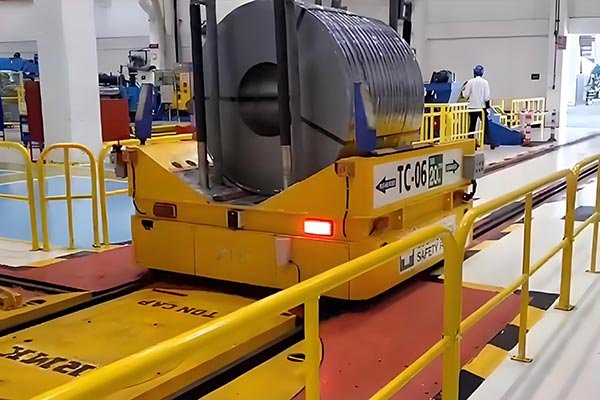
Shipbuilding & Aerospace Industry
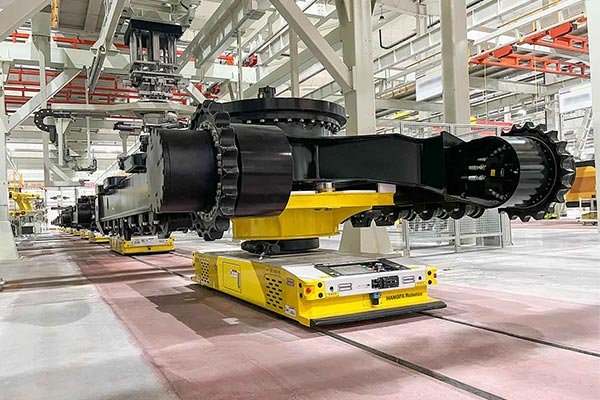
Warehousing & Logistics Industry
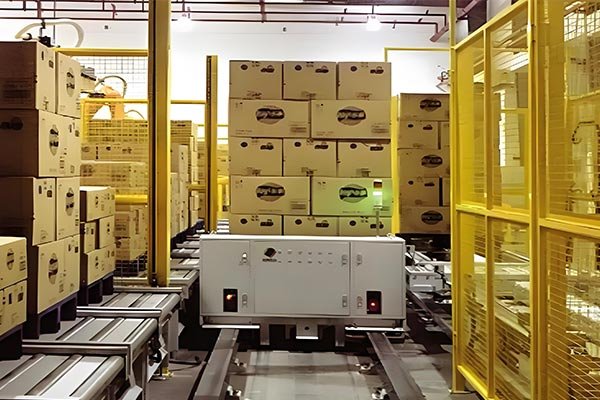
Construction & Precast Concrete Industry
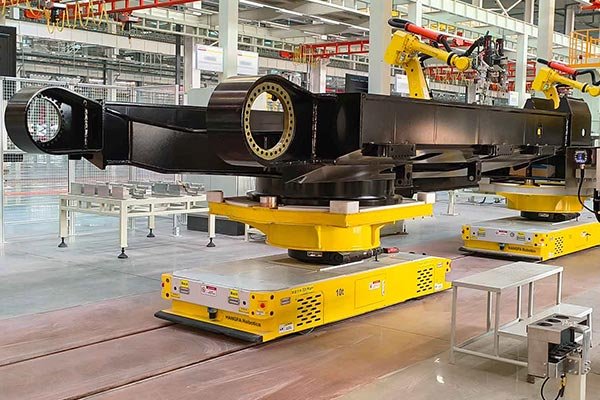
Core Parameters and Customization Solutions for Rail-Mounted Electric Flat Cars
Core Selection Parameters
The following parameters must be considered to ensure the equipment matches actual requirements:
Customization Solutions
We provide personalized customization services for special working scenarios:
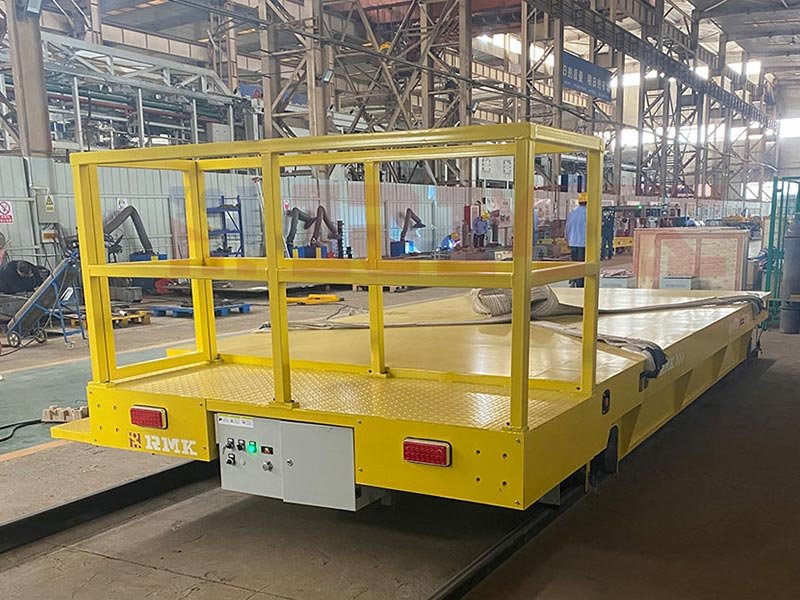
Limitations and Precautions of Railed type transfer car
Although Railed type transfer car offer significant advantages, their applicable boundaries must be clearly defined to avoid misuse in inappropriate scenarios.
Core Limitations
- Fixed Route: Relies on pre-laid rails and cannot move freely like forklifts; only suitable for transportation along fixed routes.
- Site Requirements: Requires a level, load-bearing foundation for rail installation, making it unsuitable for uneven or soft ground.
- Higher Initial Investment: Upfront costs for rail laying and equipment customization are higher than general-purpose equipment such as forklifts; ideal for long-term, high-frequency heavy-duty transfer.
- Limited Flexibility: Cannot switch tracks arbitrarily. Complex routes require mother-son shuttle or cross-rail designs, increasing upfront planning costs.
Operating Precautions
- Rail Maintenance: Regularly inspect rail flatness and fixing bolts, and promptly remove debris from rails to avoid affecting running stability. Perform rail calibration every six months.
- Power Supply Maintenance: For battery-powered models, charge in accordance with specifications and avoid over-discharging. For cable reel models, regularly check cable wear and replace aged cables in a timely manner.
- Safe Operation: Operators must receive professional training and strictly follow operating procedures. Overloading and overspeed operation are prohibited. Regularly verify the effectiveness of safety devices.
- Equipment Maintenance: Clean dust and oil from the equipment surface monthly, and check the operating status of motors and reducers. Conduct a comprehensive overhaul annually and replace worn parts.
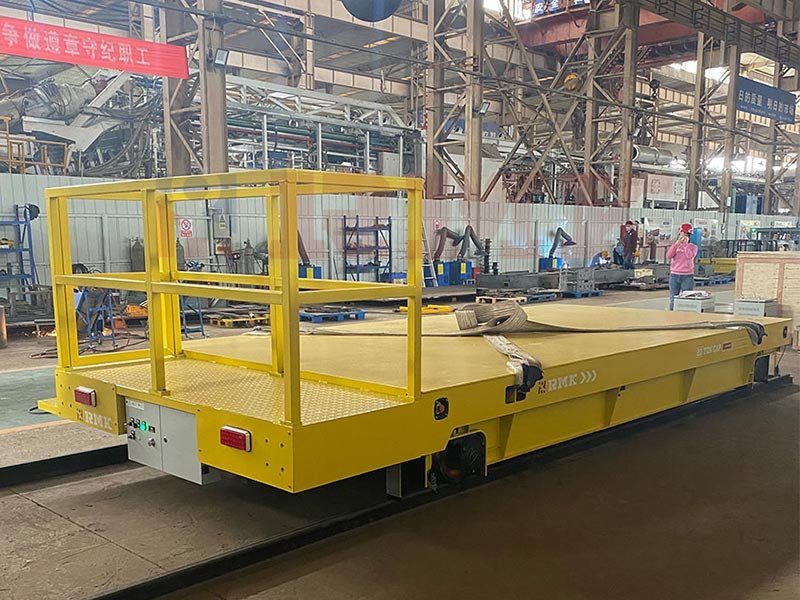
Conclusion
As an indispensable core material handling equipment in modern industrial production, rail‑mounted electric flat cars are characterized by stable heavy‑load transport, precision, efficiency, safety and durability. They have long served as critical support for connecting production links in industries including machinery manufacturing, metallurgy, steel, aerospace and others. From the transfer of heavy components within workshops to the allocation of large goods in storage areas, they operate at the forefront of industrial production, solving enterprises’ pain points in heavy‑load transportation with practical handling capabilities, making them essential equipment for ensuring continuous production and reducing operating costs.
With the continuous advancement of industrial intelligence and automation, rail‑mounted electric flat cars are constantly evolving. From integrating with WMS systems for automatic dispatching, to incorporating digital twin systems for optimized transport routes, to the iterative application of technologies such as fast‑charging lithium batteries and 5G remote monitoring, they are continuously strengthening their core role in material handling with forms better suited to modern industrial demands.
In the future, whether for the upgrading and renovation of old factories or the new layout of smart factories, rail‑mounted electric flat cars will continue to be reliable partners for enterprises to improve production efficiency and consolidate their logistics foundation. With their advantages of customization, high adaptability and long service life, they will maintain an irreplaceably important role in the process of industrial development.
FAQ
References & Sources
1. Explosion-proof motor-U.S. Bureau of Mines (USBM)
2. Lithium battery-The United States government
3. Low Voltage Distribution Equipment-National Electrical Manufacturers Association(NEMA)