
Rail transfer cart: A Highly Efficient Material Handling Solution for Modern Industry
Rail transfer cart Drive the Upgrade of Logistics Automation in Manufacturing
As an essential transport device, Rail transfer carts have become key equipment for improving material handling efficiency and logistics automation. Operating along pre-set tracks, they feature automation and high precision, making them suitable for a wide range of processing scenarios. Powered by electricity, these vehicles enable the horizontal transfer of raw materials, semi-finished products, heavy workpieces and other types of materials, reducing manual labor intensity while lowering safety risks.
With the continuous advancement of intelligent transformation in manufacturing and rising demands for in-plant logistics, higher requirements have been placed on the operational stability, ease of use and safety reliability of electric flat cars.
With professional technical capabilities and extensive manufacturing experience, Ruimike has become a trusted partner for many industrial enterprises and logistics organizations.
Advantages of Rail transfer cart
- Enable automated transportation and reduce manual handling intensity.
- Ensure high transport precision in specific working environments.
- Feature high operational stability for safe and reliable material conveyance.
- Adapt to various industrial environments, including high-temperature, dusty and other special working conditions.
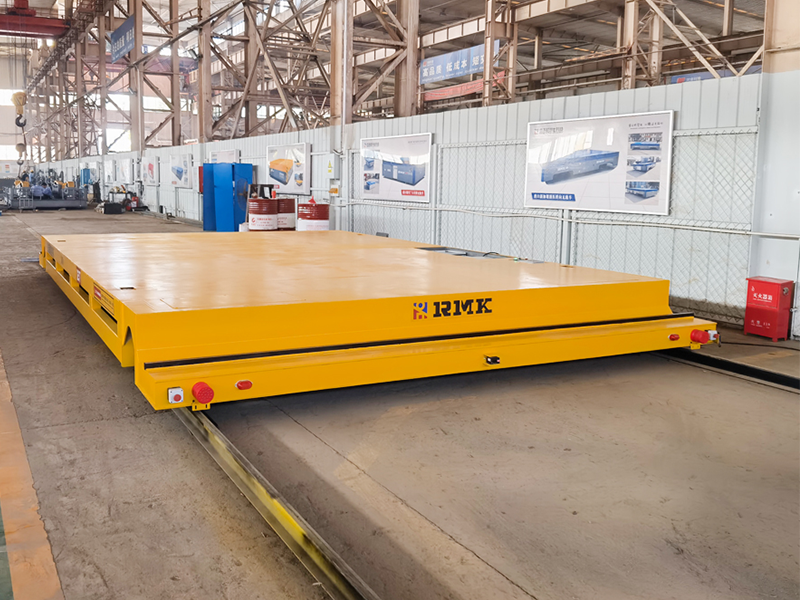
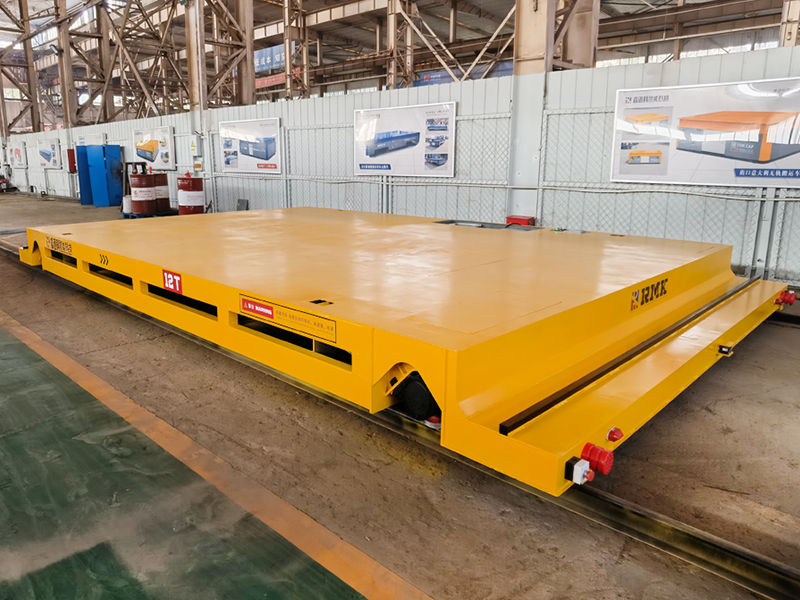
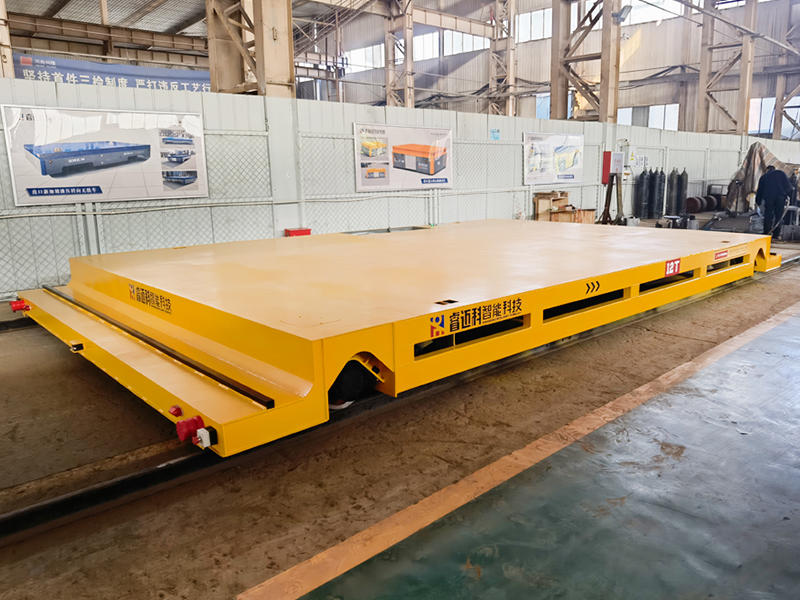
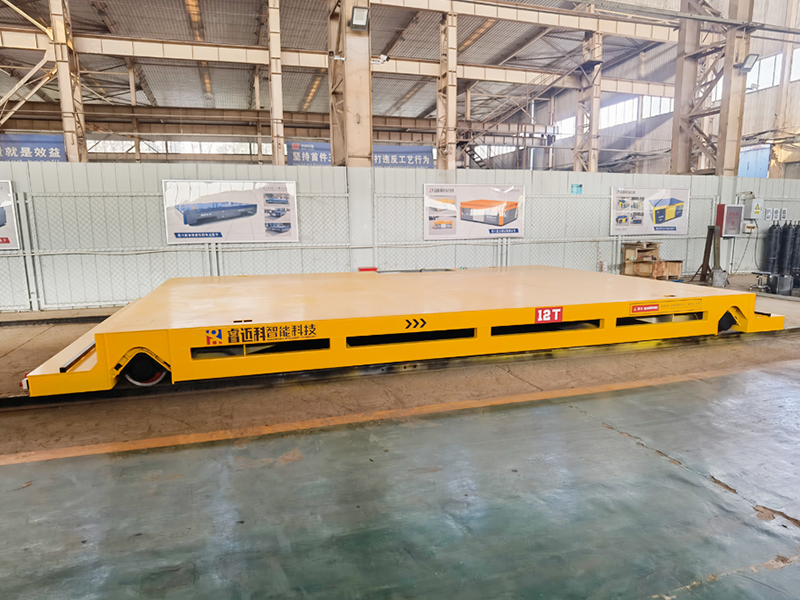
Types of Rail-mounted Transfer carts
Common types include low-voltage rail powered, cable reel powered, and battery powered electric transfer carts. Their advantages and disadvantages are as follows:
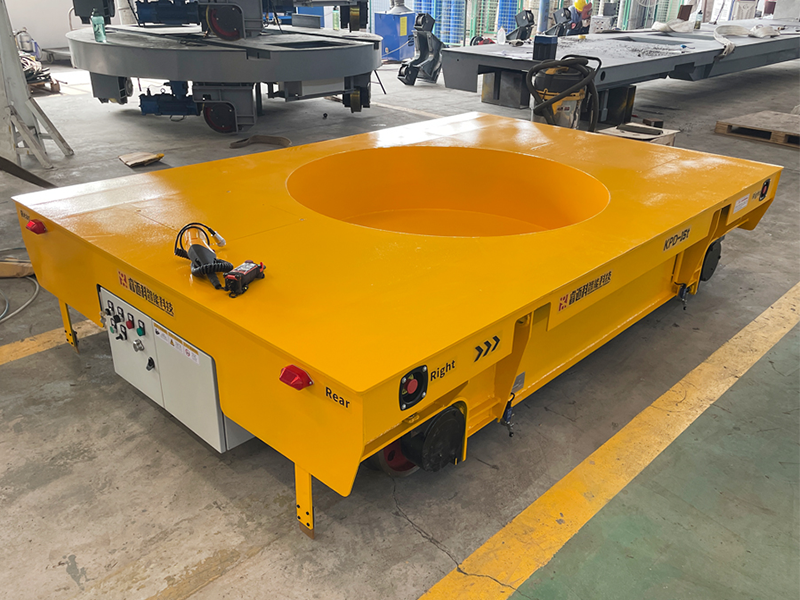
1. Low Voltage rail transfer Car
Advantages:
Disadvantages
- Limited Travel Speed: Relatively low traveling speed, making it less suitable for applications requiring high transport efficiency.
- Terrain Restrictions: Limited stability on complex terrains such as steep slopes and sharp curves, which may reduce handling efficiency.
- Limited Runtime: Restricted by battery capacity, charging must be planned for long-duration continuous operation.
2. Cable Reel Powered Rail Electric Transfer Cart
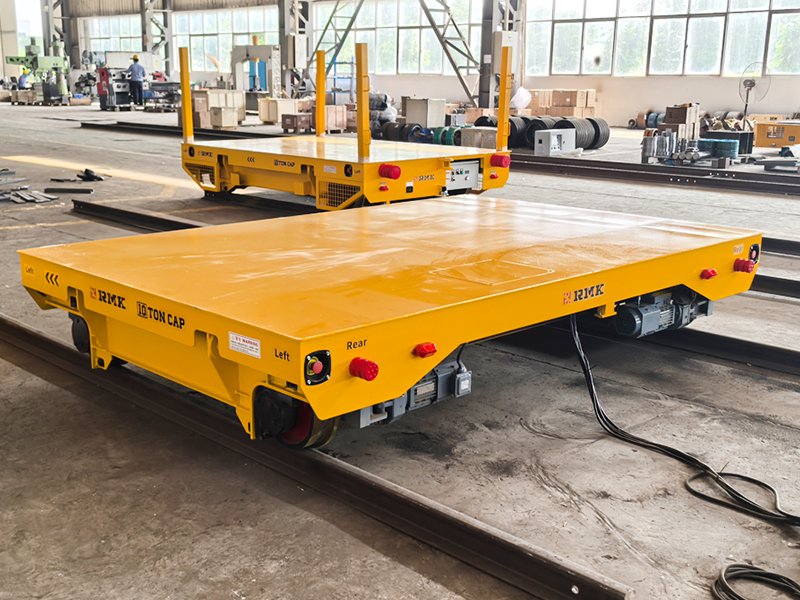
Advantages:
Disadvantages
- Limited Operating Distance: Restricted by the length of the cable on the reel, the typical travel distance is less than 200 meters, making it unsuitable for long-distance material transport.
- Cable Maintenance Issues: Cables may suffer wear, aging and other damage during long-term use, requiring regular inspection and replacement.
3. Battery Powered Rail Electric Transfer Cart
Advantages:
Disadvantages
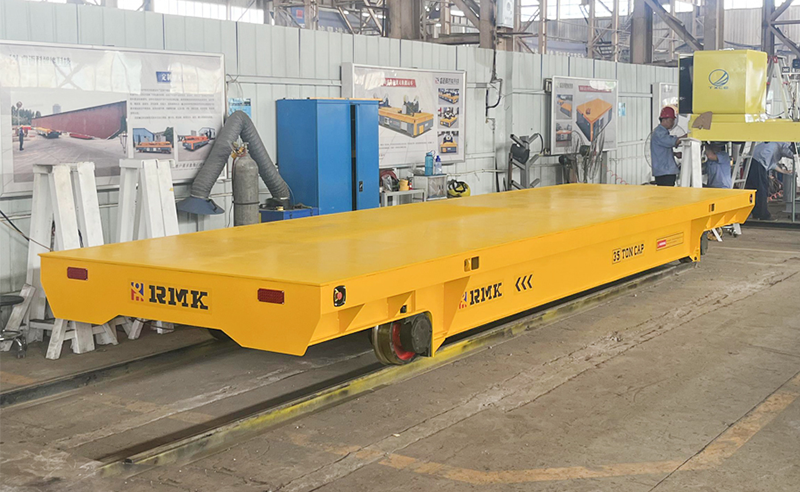
- Limited Runtime: Battery capacity is restricted, requiring timely charging or replacement. Its range may not meet the demands of long-distance transportation.
- Long Charging Time: Typically requires several hours of charging, which can reduce equipment utilization efficiency.
- Higher Initial Cost: The purchase price is relatively high compared with some conventional rail transfer carts.
- Battery-related Concerns: Batteries are heavy. Improper disposal of lead-acid batteries may cause environmental pollution. Lithium batteries are lighter but carry certain safety risks and higher costs.
Core Applications of Rail transfer carts【Industry-Specific Solutions】
Leveraging its three core functions, Rail-mounted Transfer cart have been widely adopted across numerous industrial sectors, delivering tailored solutions for diverse applications.
Machinery Manufacturing & Processing Industry
Application Scenarios:
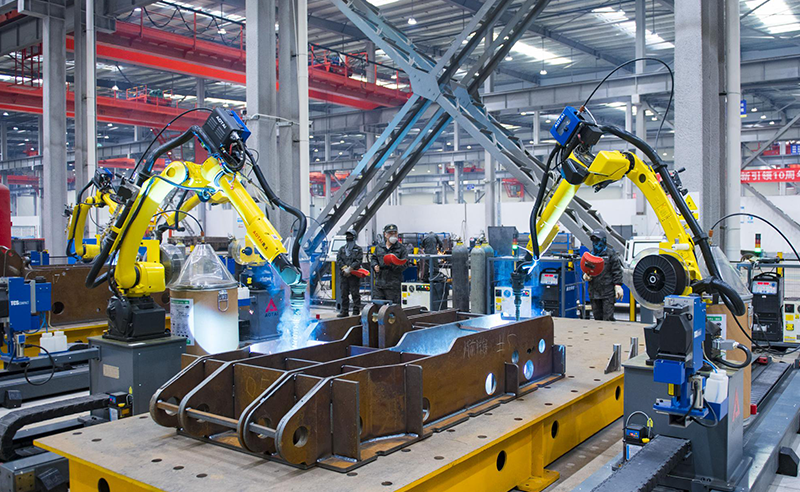
In machinery workshops and heavy equipment manufacturing plants, Rail transfer cart are used to transport large components such as machine tool bases, engine assemblies, steel structures, etc., as well as for material handling within workshops and between workshops and warehouses.
Application Advantages:
High Load Capacity: Can be designed with load capacities ranging from dozens to hundreds of tons to meet heavy workpiece transportation requirements.
Precise Positioning: Rail guidance ensures fixed travel paths, enabling accurate docking with production lines and processing equipment to improve automated production efficiency.
Multi-Cart Coordination: Multiple electric transfer carts can work together to achieve streamlined transportation in complex processes, such as the flow of components from machining areas to assembly areas and inspection areas.
Warehousing & Logistics Centers
Application Scenarios:
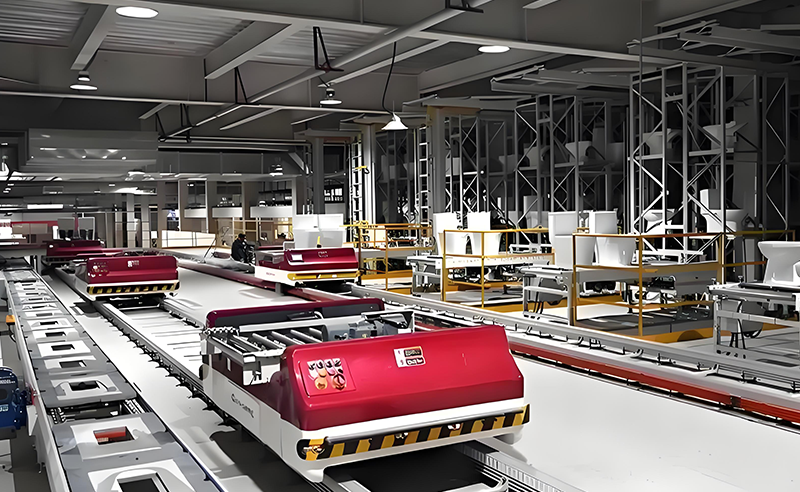
In large warehouses, logistics parks and e-commerce sorting centers, Rail transfer carts are used to handle palletized goods, containers, cartoned products and more. They are especially ideal for long-distance, high-frequency horizontal transportation.
Application Advantages:
Efficient Turnover: Electric drive enables fast response and continuous operation, reducing cargo dwell time and improving warehouse throughput efficiency.
Modular Design: Some carts can be equipped with attachments such as lifting platforms and lateral shifting devices to meet the loading and unloading needs of different cargoes, including seamless docking with racks and conveyor belts.
Automation Integration: Can be connected with WMS (Warehouse Management System) to realize automated transportation via PLC control or wireless remote control, lowering labor costs.
Railway & Rail Transit Industry
Application Scenarios:
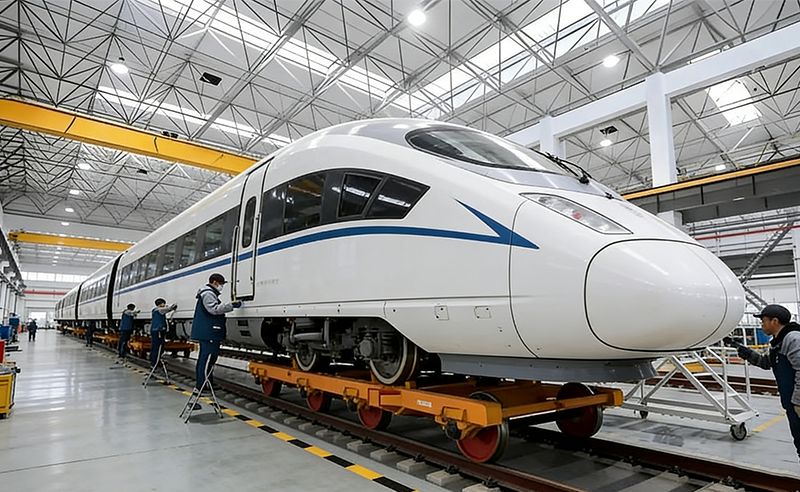
Railway Maintenance: Used in railway vehicle depots and locomotive depots for transporting rail carriages, locomotive components, as well as tools and materials during track maintenance.
Special Transportation: Some electric transfer carts are specially designed for railway use, operable on standard or narrow gauge tracks for material transport in railway construction projects.
Application Advantages:
Strong Gauge Adaptability: Gauge can be customized to meet railway standards and compatible with various lines.
Safe and Reliable: Equipped with electromagnetic braking, audible and visual alarms and other devices to meet the high safety requirements of railway operations.
Ports & Terminals
Application Scenarios:
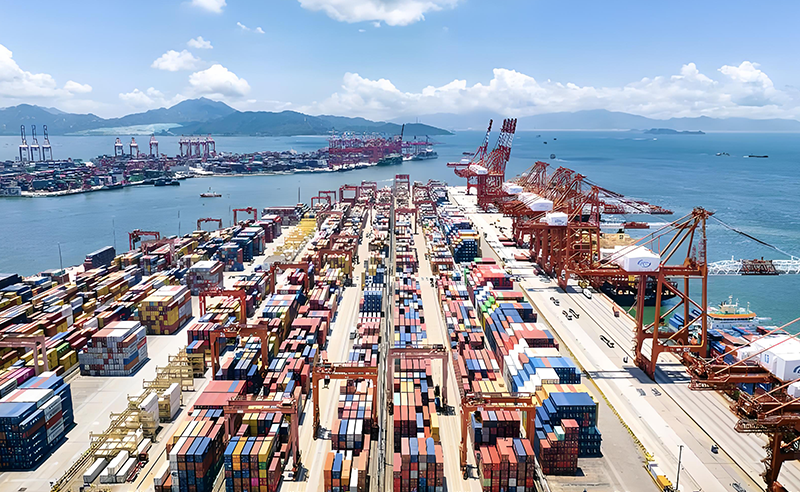
In container terminals and bulk cargo ports, Rail transfer cart connect shore cranes with storage yards to transport bulk goods such as containers, ores and coal.
Application Advantages:
Harsh Environment Resistance: Designed with waterproof, dustproof and corrosion-resistant features to adapt to complex port conditions including high humidity, salt spray and dust.
Gradeability Performance: Some models feature climbing capability for stable operation on sloped or elevated areas within terminals.
Synchronous Multi-Cart Operation: Multiple carts can be connected via towing devices to form a transport train, increasing single-trip carrying capacity.
Metallurgy & Steel Industry
Application Scenarios:
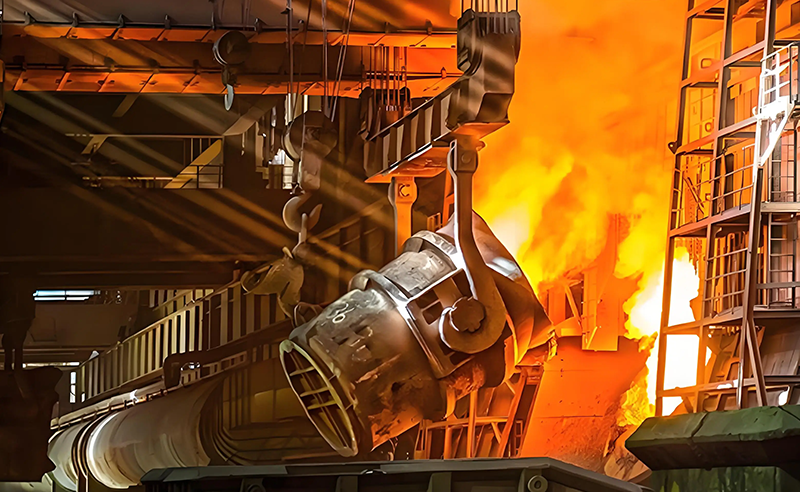
In iron and steel plants and steelmaking workshops, Rail transfer cart are used to transport high-temperature steel billets, steel ingots, hot metal ladles, as well as materials between blast furnaces and rolling mills.
Special Requirements & Design Features:
High Temperature Resistance: The cart body is equipped with thermal insulation materials such as refractory bricks and heat-resistant steel plates to protect the electrical system and structural components from high-temperature damage.
Explosion-proof Performance: For potentially flammable gas environments, explosion-proof motors and electrical components are fitted to comply with safety standards.
Heavy-duty Structure: Equipped with heavy-duty frames and wear-resistant wheels to withstand frequent heavy loads and rough surfaces such as iron slag and debris in workshops.
Other Special Applications
Aerospace Manufacturing:
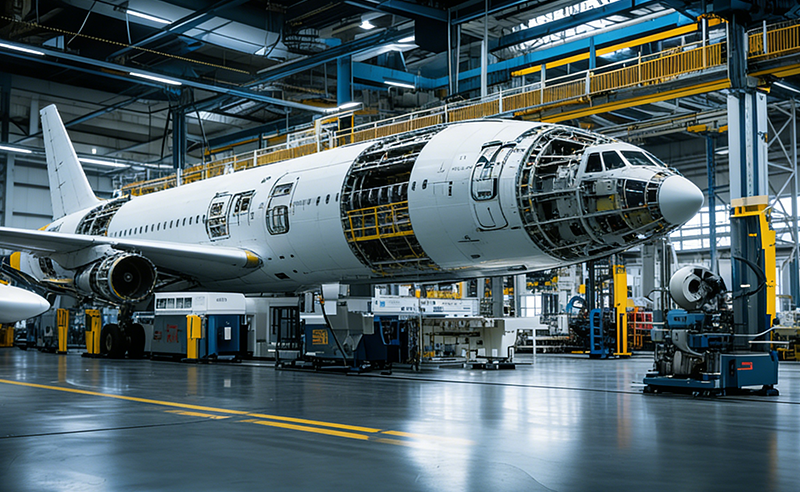
Used for transporting aircraft components such as wings and fuselage sections. These carts require stable operation and high positioning accuracy. Some models are equipped with air cushion suspension systems to minimize vibration.
Nuclear Industry & Special Material Transport:
For radioactive materials, hazardous goods and similar cargo, carts are designed with fully enclosed, leak-proof structures and support remote control to eliminate personnel exposure risks.
Shipbuilding
Used in shipyards to transport hull sections and large equipment, working with gantry cranes and other lifting equipment to complete hull assembly.
How to Choose the Right Gauge for Rail transfer cart
To ensure efficient transportation with Rail transfer cart, the track gauge is a critical factor that requires comprehensive consideration of multiple aspects:
Dimensions of the materials to be transported
For large or oversized loads, a wider track gauge is required to maintain the stability of the cart during operation.
Workshop layout and space constraints
Narrow workshop space may lead to collisions with equipment or walls if the gauge is too wide. Conversely, an overly narrow gauge can waste available space and reduce handling efficiency.
Load capacity of the transfer cart
Heavier loads typically require a wider gauge to better distribute weight and reduce pressure on the tracks and wheels. A wider gauge lowers the center of gravity, distributes load more evenly across the rails, reduces unit pressure on the track, and extends service life.
Track type and installation conditions
If special-profile rails are used or the track installation accuracy is relatively low, corresponding adjustments should be made when selecting the track gauge.
Conclusion
From machinery manufacturing and metallurgical heavy industry to warehousing, logistics, chemical and building materials industries, Rail transfer cart address key pain points in material handling across six core industrial sectors. Thanks to their core strengths — automated operation, high environmental adaptability, and exceptional stability and reliability — these carts deliver tailored, integrated solutions for heavy-duty long-distance transport, harsh environment operation, complex path travel, non-standard material conveyance, automated production line docking, and continuous production.
They effectively overcome the limitations of traditional forklifts and manual handling in terms of efficiency, safety and flexibility. As critical core equipment for modern workshop and plant intralogistics, they significantly improve material flow efficiency, reduce labor and maintenance costs, and ensure production continuity and operational safety. In doing so, they provide strong momentum for the intelligent and high-efficiency upgrading of various industries.
FAQ
References & Sources
1. Battery– the United States government
2. Explosion-proof standards-CDC
3. Refractory bricks-the United States government
4. High-strength steel-the United States government