
Applications and Solutions for Industrial Material Transfer Carts in Bulk Material Handling
In modern industrial production, efficient material handling plays an important role in maintaining production flow, improving operational efficiency, and ensuring workplace safety. From steel coils and castings to large industrial components, companies need to select suitable in-plant transport equipment based on material weight, dimensions, and transportation routes.
An Material transfer cart is designed to transport materials within production workshops, warehouses, and industrial facilities. Compared with fixed conveyor systems, transfer carts can operate on rails or without tracks, depending on site requirements, providing flexible material transportation solutions between different production areas.
What Is Bulk Material Handling?
Bulk material handling refers to the process of transporting, transferring, and managing large quantities of raw materials, semi-finished products, or other industrial materials during manufacturing and logistics operations.
In industrial material handling applications, transported materials include not only bulk materials such as sand, gravel, and mineral raw materials, but also steel coils, castings, heavy components, and other materials transported in large quantities or at high loads.
Industries such as steel manufacturing, automotive manufacturing, and heavy machinery rely on reliable material handling equipment to move materials from one workstation to another, supporting continuous production or batch processing requirements.
Depending on material type, transportation distance, and facility layout, companies can choose from various types of equipment, including forklifts, lifting equipment, and industrial Material transfer carts. Heavy-duty electric transfer carts are particularly suitable for horizontal transportation between different production areas.
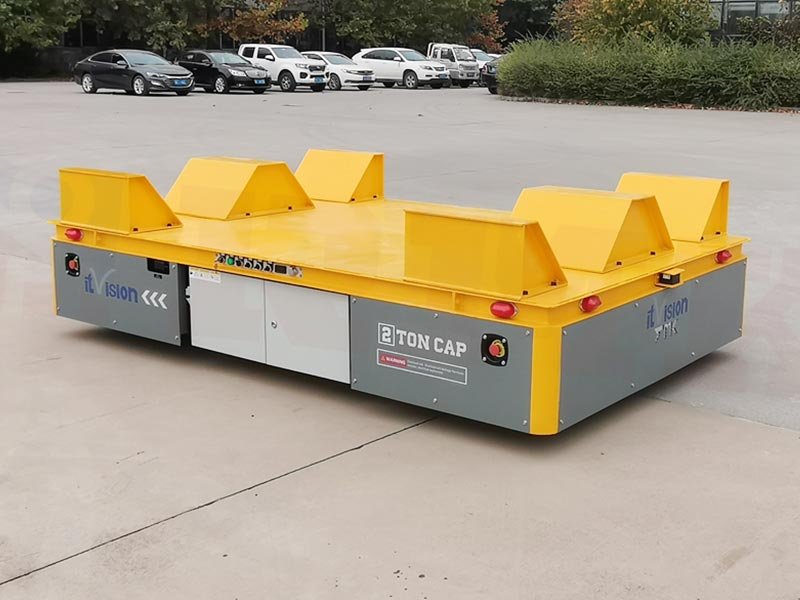
The Role of Material Transfer Carts in Bulk Material Handling
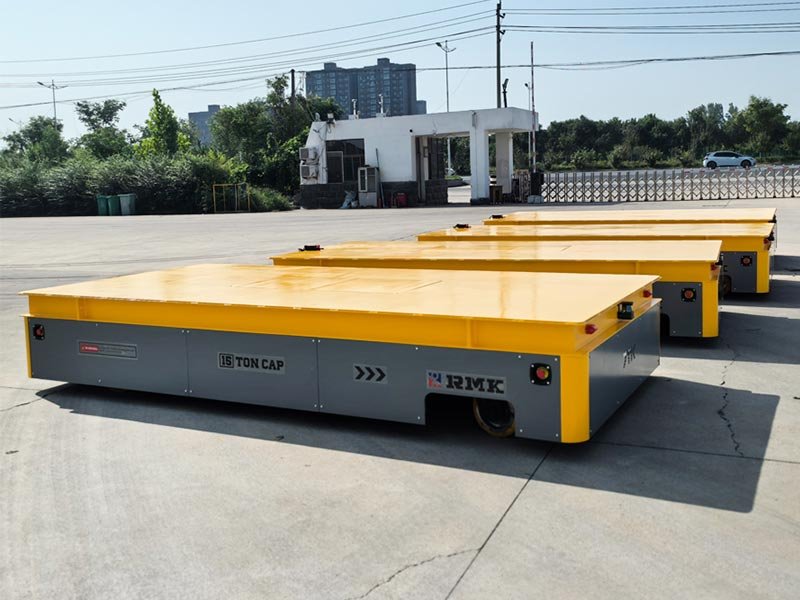
Key Advantages of Material Transfer Carts in Bulk Material Handling
High Load Capacity
Material Transfer carts can be designed with different rated load capacities to meet project requirements, from general industrial materials to large, heavy components. For heavy or unusually shaped loads, the vehicle structure, wheel arrangement, drive system, and load platform must be designed according to actual operating conditions. Proper load distribution helps maintain vehicle stability and supports long-term operation.
Improved Transportation Safety
During industrial material handling, load slippage, intersecting travel routes, insufficient braking distances, and improper operation can all increase safety risks. Industrial Material transfer carts can be equipped with braking systems, safety interlocks, emergency stop buttons, audible and visual alarms, and suitable safety sensors according to specific application requirements. For unusually shaped loads or those with uneven weight distribution, dedicated supports and securing devices can also be used to reduce the risk of load shifting during transportation.
Flexible In-Plant Logistics
Production layouts, transportation routes, and workstation requirements may change with production needs. Transfer carts can operate in different configurations to suit site conditions.
For production lines requiring automated transportation, automatic navigation, precision positioning and stopping, and vehicle dispatching functions can also be evaluated according to project requirements.
These solutions help companies organize material transportation around their production processes without restricting all logistics activities to a single handling method.
Energy-Efficient Transportation
Electric transfer carts are powered by electricity, reducing reliance on conventional fuel-powered handling equipment and making them suitable for material transportation in indoor production environments.
In practice, transportation efficiency depends not only on vehicle speed but also on loading and unloading times, travel distances, trip frequency, and dispatching methods.
Optimizing transportation routes, reducing empty runs, and improving loading and unloading processes can increase vehicle utilization. For projects involving frequent transportation or multi-shift operation, a suitable power supply method can also be selected based on the operating cycle.
Applications of Bulk Material Handling Across Different Industries
Material Transfer carts are used in a wide range of manufacturing and industrial logistics applications. Their specific designs and configurations depend on industry requirements and the materials being transported.
Steel and Metal Processing
Used to transport steel coils, billets, castings, and metals between production stations, processing areas, and temporary storage areas. For cylindrical or easily rolled loads, V-shaped supports or specialized load structures can be fitted as required.
Heavy Machinery Manufacturing
Used for in-plant transportation of large machinery components, molds, and heavy tooling. The platform dimensions, rated load capacity, and positioning accuracy must match the load configuration and production workstation requirements.
Energy and Power Equipment
Used to move transformers and other large power equipment between manufacturing, assembly, and testing areas. For high-value equipment or loads with a high center of gravity, particular attention must be paid to load support, operational stability, and precise positioning.
Automotive Manufacturing
Used to transport molds, tooling, and production components between workstations. Depending on production cycle times and workstation layouts, rail-guided, trackless, or automated transfer solutions can be evaluated to improve material delivery efficiency.
Foundries and Heavy Industry
Used to handle castings, molds, and other heavy industrial materials. Where operations involve high-temperature materials, molten metal, or hazardous environments, heat-resistant design, electrical protection, and relevant safety requirements must be specifically evaluated.
Different applications have different requirements for vehicle structure, operating speed, positioning methods, and safety devices. Therefore, equipment selection should be based on the actual materials being transported and the on-site production processes, rather than on industry classification alone.
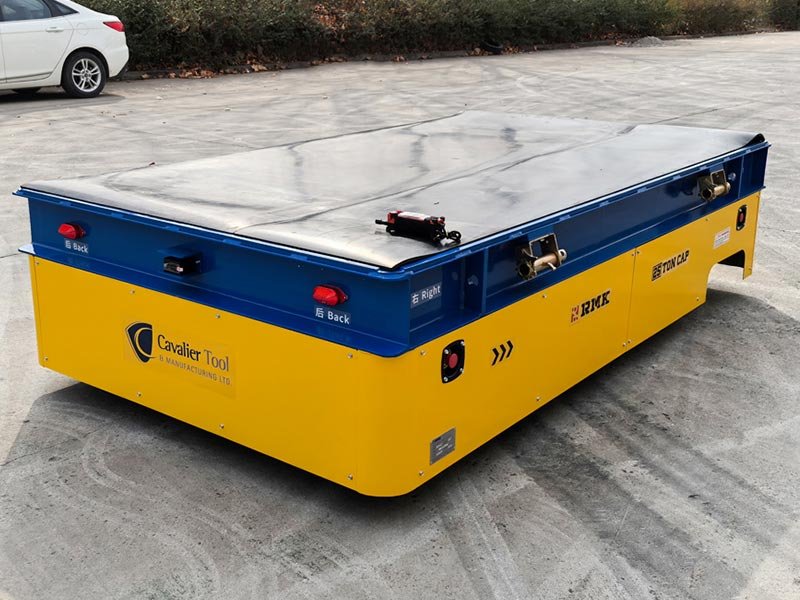
Customized Engineering Solutions for Bulk Material Handling Projects
Every industrial material handling project has different technical requirements. Load weight, cargo dimensions, transportation distance, floor conditions, and production cycle times all affect transfer cart design and configuration.
Therefore, customized engineering solutions typically require careful evaluation of the following aspects:
Load and Supporting Structure
Determine the rated load capacity and platform structure based on material weight, dimensions, center of gravity, and load distribution.
Travel Routes
Select a rail-guided, trackless, or omnidirectional configuration based on fixed-route requirements or the need for flexible movement.
Power Supply and Drive System
Determine the appropriate power supply method based on transportation distance, operating frequency, and work shifts.
Control and Safety Configuration
Configure braking systems, limit switches, alarms, and necessary safety sensors according to the operating mode and on-site risks.
Production System Integration
For automated projects, evaluate how the Material transfer cart will coordinate with loading and unloading equipment, production workstations, and higher-level control systems.
For projects that need to integrate with existing production processes, the design phase should also consider loading and unloading positions, clearance for vehicle movement, stopping accuracy, and maintenance requirements to ensure that the equipment meets actual operating conditions.
Conclusion
A suitable industrial transfer cart solution involves more than simply providing a vehicle with the required load capacity. It ensures that the equipment structure, operating method, and production workflow are properly aligned.
If you are planning an industrial material handling project, you can provide details such as material type, rated load capacity, platform dimensions, transportation routes, and operating frequency to facilitate further evaluation of a suitable electric transfer cart configuration.
FAQ
References & Sources
1. Material Handling and Storage Requirements-Occupational Safety and Health Administration (OSHA)
2. Safety Requirements for Driverless Industrial Trucks-International Organization for Standardization (ISO)
3. Standards and Specifications for Material Handling Equipment-MHI