
How to Choose a Ladle Transfer Cart for Steel Plants?
A ladle transfer cart is a specialized heavy-duty material handling vehicle used in metallurgical, steelmaking, and foundry production lines. It is primarily responsible for the short-distance transfer of ladles between steelmaking, refining, and continuous casting processes. Compared with standard electric transfer carts, ladle transfer carts are designed for high-temperature, heavy-load, and high-risk operating conditions, requiring higher standards for load-bearing structures, heat resistance, and safety features. Therefore, selection should not be based on load capacity alone.
When purchasing, companies should consider ladle dimensions, transport routes, power supply conditions, operating frequency, safety standards, and automation requirements to ensure the cart is properly matched to the actual working conditions. Common problems such as excessive swaying, insufficient load capacity, incompatible power supply, restricted movement, and high maintenance costs are often caused by improper equipment selection during the initial planning stage. Systematic selection based on actual site parameters can effectively reduce failure rates and ensure long-term, stable operation of the production line.
What Is a Ladle Transfer Cart?
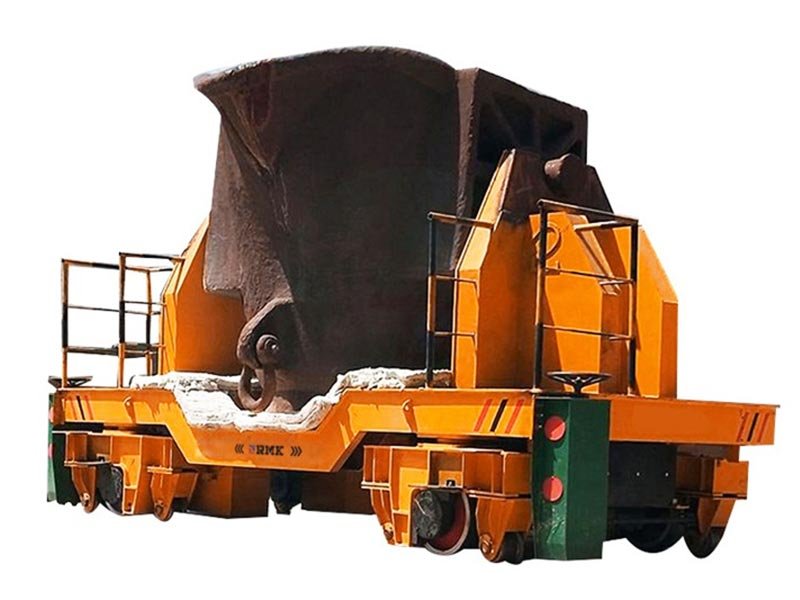
A ladle transfer cart is a heavy-duty electric transfer vehicle specially designed for the metallurgical industry. The cart is equipped with a dedicated ladle saddle and support structure to secure the ladle and ensure stable, vibration-free transfer of molten steel at high temperatures. Based on differences in site conditions and operating environments at steel mills and foundries, Casting transfer carts can be divided into two main types: rail-guided and trackless. The appropriate power supply and control systems can also be flexibly configured according to transfer distances within the workshop, daily operating frequency, and the level of production line automation to meet the operational requirements of different plants.
The equipment is widely used in various metallurgical production applications. Key applications include:
Many customers mistakenly assume that a ladle transfer cart is simply a standard electric transfer cart with a higher load capacity. In fact, this is not the case. For a professionally designed ladle transfer cart for steel mills, the core focus is the adaptability of the entire cart to the operating conditions. From the cart structure, heavy-load capacity, and drive system to the power supply system, dedicated ladle support structure, and comprehensive safety protection, every configuration is specifically matched to the high-temperature, heavy-load, high-frequency, and high-risk operating conditions of steel mills, ensuring long-term, stable, and safe operation of the equipment.
What Factors Should You Consider When Choosing a Ladle Transfer Cart?
When selecting a ladle transfer cart, load capacity should not be the only consideration. To ensure the equipment is suitable for long-term steel mill operations while reducing failures and maintenance costs, the selection should be based on actual site conditions and comprehensively matched across several key factors, including load capacity, ladle dimensions, power supply method, transport route, operating environment, safety features, and control system.
Determine the Required Load Capacity
Load capacity is the most critical parameter when selecting a ladle transfer cart and is also one of the areas most prone to errors. Many companies select equipment based directly on the ladle’s rated capacity, but this approach is not safe.
The actual load should be calculated based on the total weight of the fully loaded ladle, including the ladle’s tare weight, molten steel weight, refractory lining, and auxiliary components. Since the ladle applies a concentrated load at the center, the requirements for the load-bearing capacity of the cart frame, wheel assemblies, and drive system are much higher than those of standard electric transfer carts.
Considering the frequent starting and stopping and high impact loads in steel mill operations, sufficient safety margins must be reserved when selecting a ladle transfer cart to prevent deformation, excessive wear, or overload damage caused by long-term operation at full capacity.
When making an inquiry, it is recommended to provide the ladle tare weight, maximum loaded weight, ladle bottom dimensions, center of gravity position, average daily transfer frequency, and travel distance. This allows the manufacturer to accurately match the cart structure and drive configuration.
Consider Ladle Dimensions and Cart Size
The deck and support structure of the Hot metal transfer car must be precisely matched to the ladle specifications at the site.
Selection should focus on the ladle bottom structure, support points, and center-of-gravity height rather than simply its overall length, width, and height. An undersized deck may provide insufficient support and cause swaying during transfer, creating safety risks. An oversized deck increases equipment costs and takes up additional space in the workshop.
During selection, the ladle outer diameter, base dimensions, and center-of-gravity position should be verified, while the workshop aisle, rail gauge, and available operating space should also be considered in the overall design. For applications involving multiple ladle sizes, the cart should be designed based on the largest-capacity and largest-size ladle used on site, with sufficient adjustment allowance. For non-standard or irregularly shaped ladles, dedicated saddles and positioning structures can be customized to ensure stable transfer and prevent shifting.
Choose the Right Power Supply for Your Steel Plant
The power supply method directly affects the equipment’s continuous operating capability and maintenance costs. Steel mills commonly use three main power supply options, which can be selected according to the specific operating conditions:
Power supply selection should not be based solely on the initial equipment price. The key is to match the power supply method with the operating frequency, route length, and site installation conditions to meet long-term production requirements.
Consider the Transport Route and Working Conditions
The complex operating conditions in steel mills, including high temperatures, dust, and molten steel splashes, as well as site and route conditions, directly determine the required equipment configuration.
Before selection, confirm key parameters such as transfer distance, operating frequency, ground/rail conditions, surface flatness, slope, and available turning space. For rail-guided equipment, the rail gauge and installation accuracy must be verified to prevent jamming or derailment. For trackless equipment, the ground load-bearing capacity and available travel space must be sufficient.
For the harsh, high-temperature environment of steel mills, the motor, electrical control system, wiring, and cart frame should be equipped with heat insulation, dust protection, and high-temperature aging protection to withstand the intense thermal radiation around furnace openings and high-frequency, heavy-duty operating conditions.
Check Safety Features for Ladle Transfer Carts
Molten steel transfer is a high-risk operation, making safety protection a core standard feature of ladle transfer carts. The safety standards for standard electric transfer carts must not be applied directly.
Standard equipment is equipped with essential safety features, including emergency stop buttons, audible and visual alarms, anti-collision buffers, travel limit switches, overload protection, leakage and phase-loss protection, and fault alarms. Automated models can additionally be equipped with personnel-vehicle avoidance, area detection, and automatic deceleration and shutdown functions to reduce risks during personnel operations.
In addition, dedicated ladle saddles and positioning and restraint structures securely hold the ladle in place, preventing ladle displacement and molten steel spillage during starting, stopping, and turning operations, thereby providing comprehensive protection for safe operation.
Choose the Right Control and Automation System
The control system of a ladle transfer cart should be selected according to actual requirements. There is no need to over-specify the system; the optimal solution is the one that matches the production line’s operating rhythm.
For conventional manual operations, wireless remote control is recommended, allowing operators to control the cart from a safe distance away from high-temperature areas, providing a good balance of safety and cost-effectiveness. For intelligent production lines, the cart can be upgraded with a PLC control system and automatic positioning functions. Combined with magnetic navigation, QR code, or laser SLAM autonomous navigation, it can interface with plant management systems such as MES and WMS to enable automated, coordinated material transfer.
For fixed, high-frequency cyclic routes, fully automatic operation is preferred. For transfer operations involving multiple and changing workstations, a flexible and adjustable intelligent navigation system is recommended to support flexible production.
What Customization Options Are Available for Ladle Transfer Carts?
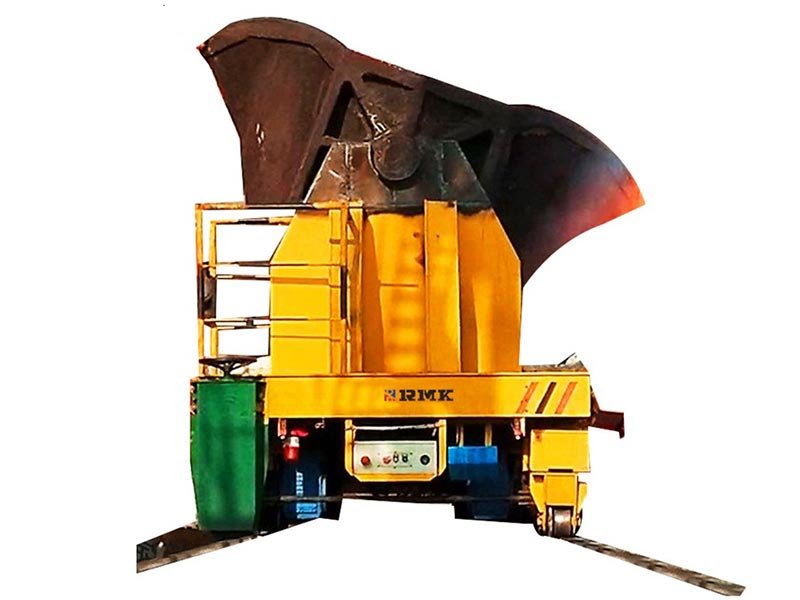
There are almost no universal standard models of ladle transfer carts on the market. Because workshop layouts, ladle specifications, production cycles, and operating conditions vary significantly from one steel mill to another, most ladle transfer carts need to be customized and individually matched to ensure long-term stable operation, meet safety requirements, and align with production line needs.
The main types of customization in the industry include the following:
Load Capacity Customization
Based on the ladle tare weight, refractory material weight, and total weight of the fully loaded molten steel, the actual load is accurately calculated to determine the required cart load capacity. For applications involving concentrated heavy loads and high impact loads, the cart frame can be reinforced, main beams can be strengthened, and the wheel arrangement and drive configuration can be optimized to prevent deformation and failures during long-term heavy-load operation.
Overall Cart Dimensions Customization
The cart length and width, deck height, wheel track, and wheelbase can all be flexibly adjusted according to site conditions. Based on the actual ladle outer diameter, workshop aisle width, turning radius, and rail layout, the cart dimensions can be customized to suit the application, addressing issues such as limited workshop space, restricted access, and inaccurate positioning.
Ladle Support Structure Customization
The bottom structure, support points, and center-of-gravity height of ladles vary among manufacturers. Based on the actual site parameters, we can customize dedicated ladle saddles, support brackets, retaining blocks, and positioning structures to ensure a secure fit, even load distribution, and stable operation without swaying during starting and stopping. This structural design helps prevent transfer deviation and molten steel spillage caused by ladle movement.
Power Supply Customization
There is no fixed standard configuration; the power supply method is selected entirely according to the production schedule. Based on whether the transfer route is fixed, daily operating hours, and operating frequency, users can choose from low-voltage rail power supply, battery power supply, or cable reel power supply to meet continuous production requirements while considering site installation conditions.
Control System Customization
The control mode can be flexibly upgraded and configured according to operational requirements. Wireless remote control is suitable for basic operating conditions. For high-frequency production line operations, a PLC-based semi-automatic control system can be configured. For intelligent workshops, the system can be upgraded with automatic positioning, intelligent navigation, and unmanned cyclic operation, while also supporting integration with plant-level MES and WMS systems to meet the management requirements of intelligent production lines.
Safety Configuration Customization
Based on complex operating conditions involving high temperatures, heavy dust, and the interaction of personnel and vehicles on site, safety protection solutions can be configured according to specific requirements. The safety configuration can include emergency stop systems, audible and visual alarms, anti-collision buffers, obstacle detection, travel limit switches, dual braking systems, and electrical overload and leakage protection, providing comprehensive safety protection in line with the high-risk operating requirements of steel mills.
High-Temperature Protection Customization
For transfer operations near furnace openings and applications involving prolonged exposure to high-temperature thermal radiation, dedicated thermal insulation protection can be added. By installing thermal insulation layers, high-temperature flame-retardant cables, and protective covers for electrical controls, the electrical control system, motor, and wiring can be protected from heat damage, improving the equipment’s high-temperature resistance and service life.
Overall, ladle transfer carts are non-standard customized equipment. Simply requesting a quotation for a 100-ton ladle transfer cart is not enough to provide an accurate price or equipment selection. Providing complete information on the ladle weight, overall dimensions, site route, operating frequency, and environmental conditions enables the manufacturer to develop an equipment solution that is fully matched to the operating conditions, avoiding selection errors, unnecessary budget expenditure, and reduced production capacity.
How to Select the Right Ladle Transfer Cart Manufacturer?
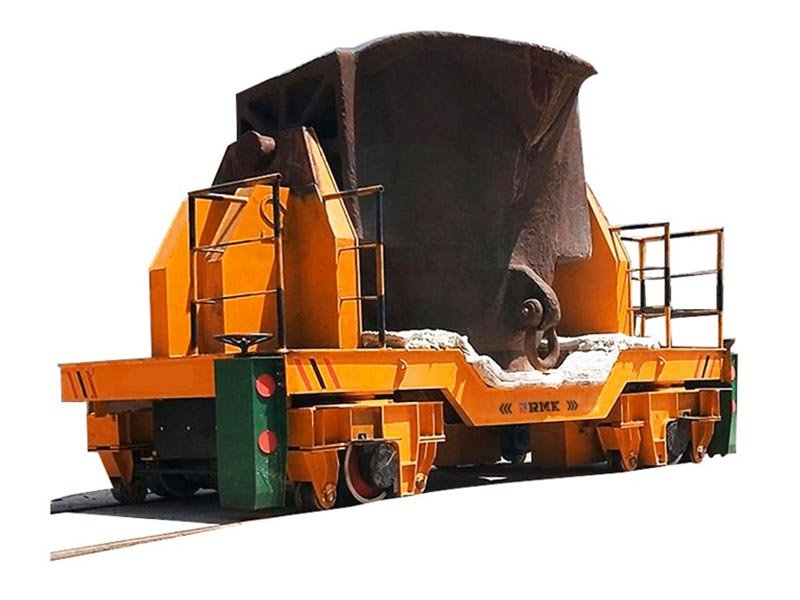
Ladle transfer carts are non-standard heavy-duty equipment for the metallurgical industry, with no standardized mass-produced models. When selecting a manufacturer, focus on three key capabilities: understanding of operating conditions, custom manufacturing, and project services. These capabilities directly affect the equipment’s service life, failure rate, and operation and maintenance costs.
Heavy-Duty Metallurgical Experience
Molten steel transfer involves harsh conditions, including high temperatures, heavy loads, frequent starting and stopping, and impact loads. Priority should be given to manufacturers with extensive steel, metallurgical, and foundry experience rather than standard light-duty transfer cart manufacturers. Experienced manufacturers can address heavy-load impact, thermal radiation, and continuous production challenges, ensuring equipment stability and safety.
Confirm Custom Design Capabilities
Ladle specifications, site conditions, rail layouts, and production cycles vary from one steel mill to another, making it difficult for standard equipment to meet specific requirements. Before cooperation, confirm that the manufacturer has in-house design capabilities and can customize the cart structure, wheel and drive system, ladle saddle, power supply, control system, and safety system, rather than simply adapting an existing standard design.
Review Relevant Industry Applications
Completed projects in similar applications are direct indicators of a manufacturer’s capabilities. Focus on actual ladle transfer cart projects in steel mills and foundries. Review the load capacity, power supply, operating intensity, and automation configuration, and compare them with your operating conditions to identify potential mismatches between equipment design and application requirements.
Verify After-Sales Capabilities
Ladle transfer carts are critical heavy-duty equipment in production lines, and inadequate after-sales support can easily lead to production downtime. Before purchasing, confirm the scope of services provided, including installation and commissioning, operator training, original spare parts supply, rapid fault response, remote technical support, and maintenance inspections.
Priority should be given to manufacturers that can provide full-process services, from initial solution consultation and customized manufacturing to on-site commissioning and long-term operation and maintenance support. This can significantly reduce the risk of equipment failures and maintenance costs while ensuring the long-term stable operation of the production line.
Conclusion
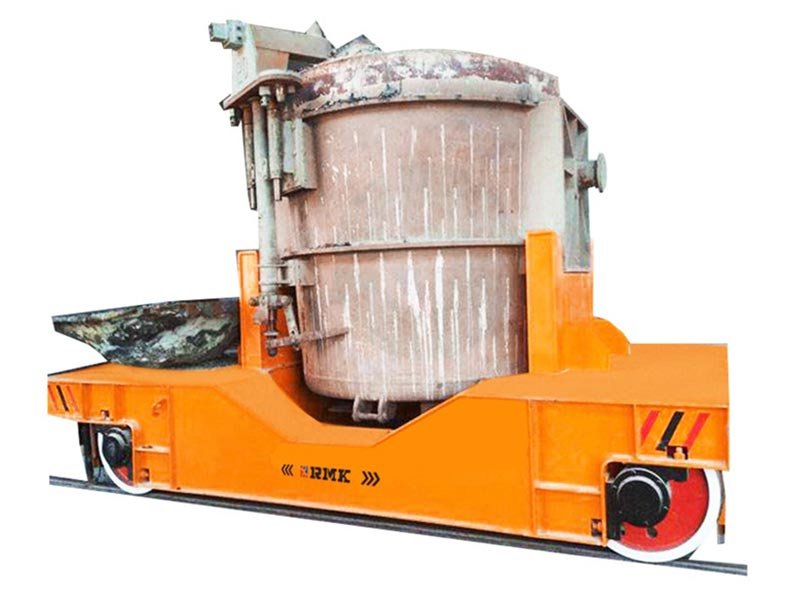
When selecting a ladle transfer cart, the key is not simply choosing the load capacity or comparing the lowest price, but ensuring that the equipment is highly matched to the operating conditions of the steel mill.
Before purchasing, comprehensively evaluate the fully loaded weight, ladle specifications, cart dimensions, transfer route, power supply method, operating environment, safety features, and automation requirements. For the demanding conditions of steel mills, including high temperatures, heavy loads, and frequent starting and stopping, particular attention should be paid to the cart frame structure, drive configuration, ladle support system, and multiple safety protection features, as these are essential to ensuring long-term, stable equipment operation.
A properly selected ladle transfer cart can not only meet current production and transfer requirements but also provide room for future capacity expansion, ladle size changes, and production line automation upgrades.
By providing basic site operating parameters, including ladle weight and dimensions, transfer distance, site conditions, and operating frequency, we can develop a suitable and cost-effective customized ladle transfer cart solution based on your specific requirements.
FAQ
References & Sources
1. Foundry and molten metal safety-U.S. Occupational Safety and Health Administration (OSHA)
2. Materials handling and storage safety-U.S. Occupational Safety and Health Administration (OSHA)
3. Driverless industrial trucks and their systems-International Organization for Standardization (ISO)