
What Is a Mold Transfer Cart? How to Choose the Right Mold Transfer Cart?
In injection molding, die casting, automotive parts, and machining workshops, molds are usually heavy, large-sized, and require frequent replacement. Relying on forklifts or overhead cranes for mold handling is not only slow but also increases the risk of collision and falling, creating potential safety hazards.
A mold transfer cart is an electric handling device specially designed for mold transportation. It is available in two types: rail transfer carts and trackless transfer carts. The cart can be customized according to mold weight, transfer distance, and workshop layout. Driven by electric motors, it transfers molds between machine stations and storage areas, reducing handling risks and improving internal workshop logistics efficiency. Today, smart factories and automated production lines widely use Die transfer cart as a key handling solution for mold movement.
Why Use a Mold Transfer Cart in Injection Molding Workshops?
During the injection molding process, molds need to be replaced frequently. A single mold usually weighs from several hundred kilograms to dozens of tons. Relying only on manual handling or standard forklifts is not only inefficient but also increases the risk of mold scratches and damage to injection molding machines.
A mold transfer cart can solve these common handling challenges in workshops:
Improve mold change efficiency
A mold transfer cart can move molds from the storage area to the injection molding station, eliminating transfers, reducing mold change time, and improving production capacity.
Reduce handling safety risks
Due to the heavy weight of molds, forklift operations may cause collision or tipping risks. A mold transfer cart operates smoothly and safely, helping reduce handling accidents.
Support fixed mold transfer routes
For workshops with fixed mold paths, rail carts provide stable and frequent mold transportation, ensuring continuous production operation.
Reduce equipment space requirements
Compared with large forklifts, mold transfer carts require less operating space, making them more suitable for production workshops with limited space.
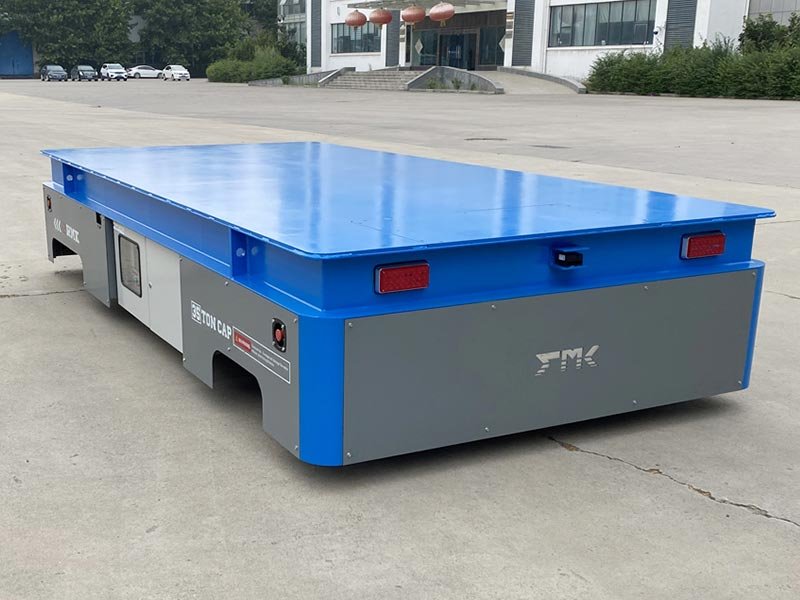
What Types of Mold Transfer Carts Are Available?
Based on the operating method, power supply system, and working conditions, Mold cart can be divided into the following types:
Rail Mold Transfer Cart
Running along fixed rails, it is suitable for production environments with fixed transportation routes and high transfer frequency.
Features:
It is commonly used in injection molding workshops, mold manufacturing plants, steel plants, and other industrial applications.
Trackless Mold Transfer Cart
Equipped with rubber or polyurethane wheels, it requires no rail installation and can travel freely on the workshop floor.
Features:
Suitable for factories where production line stations are frequently rearranged.
Battery-Powered Mold Transfer Cart
Battery power is one of the most widely used power supply methods. The battery provides power to the drive motor for cart operation.
Features:
It is mainly used for short-distance mold transportation within workshops.
AGV Intelligent Mold Transfer Cart
Based on the electric transfer cart platform, it is equipped with an automatic navigation system to achieve automatic mold transportation.
Features:
It is suitable for highly automated smart factories.
Advantages of Mold Electric Transfer Carts
Remarkable delivers full-cycle services covering pre-sales consultation, solution design, manufacturing, installation and commissioning, as well as after-sales maintenance, ensuring the precise implementation of transfer cart solutions and long-term stable operation of equipment.
01——
Integrated Mold Positioning Design
The mold transfer cart platform has positioning structures. Once the mold is placed, it can be locked in position, eliminating alignment during transfer and pushing. It connects to the injection molding machine, providing a solution for mold changes.
02——
Precise Short-Distance Positioning
The mold electric transfer cart uses low-speed inching control, allowing fine adjustments in forward and backward directions. It accurately moves the mold to the injection molding machine opening position and completes the mold change connection directly.
03——
Flat and Evenly Loaded Platform
The mold transfer cart platform provides a load surface. Unlike forklift forks applying concentrated loads, it prevents deformation, warping, and parting damage. Compared with crane lifting points causing stress, cart provides support.
04——
Suitable for Frequent Mold Change Operations
The mold transfer cart features a reinforced frame, heavy-duty load wheels, and reliable braking systems, allowing it to handle dozens of mold changes per day and continuous heavy-duty mold transfer between mold storage areas and injection molding machines.
05——
Integrated Mold Change Assistance Functions
The mold electric transfer cart can be equipped with hydraulic lifting and sliding platforms to move molds directly from the cart into the injection molding machine, eliminating the need for lifting tools. Forklifts and transfer carts cannot support sliding mold change operations.
06——
Low Center-of-Gravity Design
Most molds have a high center of gravity. When lifted by forklifts, raised positions increase instability risk. A mold transfer cart features a low-profile structure and low center of gravity, allowing molds to be placed on the platform. This improves transport stability and suits high-center-of-gravity molds.
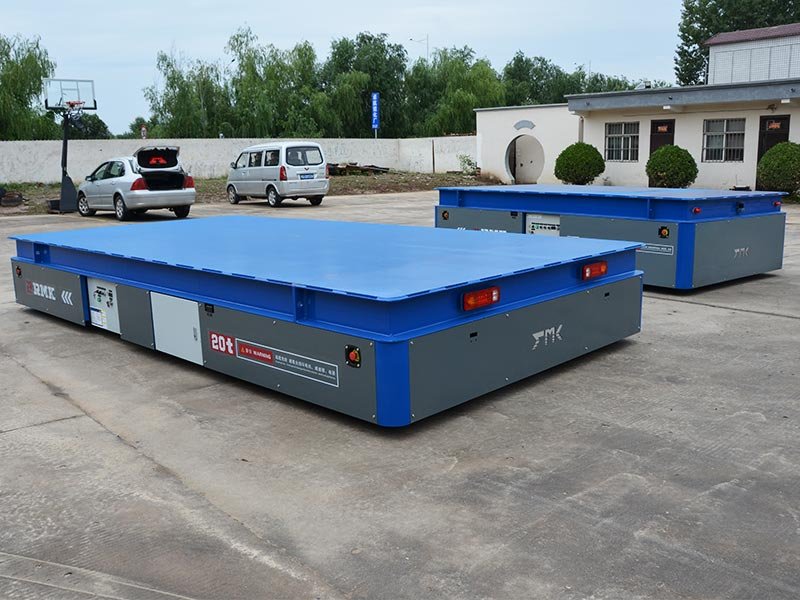
Why Are More Factories Using Mold Transfer Carts?
As the manufacturing industry moves toward automation and intelligent production, relying only on forklifts for mold handling can no longer meet the requirements of modern injection molding and die casting workshops. More factories are adopting mold transfer carts for the following key reasons:
Improve Workshop Automation Capabilities
Mold transfer carts can be integrated with production equipment and automation systems to achieve automatic mold transfer between mold storage areas and injection molding machines, supporting automated mold change solutions.
Handle Heavy-Duty Large-Tonnage Molds
In industries such as automotive parts, home appliances, and electronics, molds are becoming larger and heavier. A mold may weigh several tons to dozens of tons, requiring stable specialized equipment for transportation.
Optimize Workshop Layout
Mold electric transfer carts can be customized according to workshop conditions. They do not require wide aisles reserved for forklifts, helping save space and improve factory space utilization.
Improve Workshop Safety
By reducing forklift operations and overhead crane lifting in production areas, mold transfer carts help avoid risks such as mold swinging during lifting and forklift collisions, improving workshop safety.
How to Choose the Right Mold Transfer Cart?
When selecting a Mold Plant transfer trolley, priority should be given to the actual workshop conditions, mold parameters, and production line requirements. Instead of simply pursuing higher load capacity or more advanced configurations, it is important to balance practicality and purchase cost. The following are key selection factors:
Select According to Workshop Layout Conditions
For workshops with narrow aisles, frequently changing workstations, or no requirement for ground rail installation, a trackless mold transfer cart is the preferred choice. For workshops with fixed layouts, unchanged transfer routes, and frequent mold changes, a rail transfer cart is more suitable. If the application requires direct connection with injection molding machines and precise mold positioning, a hydraulic lifting model can be selected.
Determine the Cart Capacity Based on Mold Weight
Calculate the weight of the heaviest mold in the workshop and select a cart with approximately 20% additional load capacity. Long-term operation under full load or overload conditions will accelerate equipment wear. Sufficient load margin ensures stable transportation and extends service life.
Determine the Automation Level Based on Production Requirements
For standard workshops with manual mold change operations, a basic manual-control model is usually sufficient. Factories with automated production lines or plans for unmanned workshops can choose automated guided transfer carts with navigation systems to match the production rhythm of the entire line.
Select Hardware Configurations Based on Operating Frequency
For applications requiring long-term, high-frequency continuous mold changes, it is recommended to equip the cart with a large-capacity battery, wear-resistant wheel assemblies, and a reinforced load platform. For occasional backup use or low-frequency operations, a standard configuration model can help reduce equipment investment costs.
What Parameters Should Be Considered When Purchasing a Mold Transfer Cart?
When purchasing a Injection Mold Tools transfer cart, it is important to check the following key parameters to ensure the equipment matches the actual working conditions of the workshop.
Rated Load Capacity
Key parameter: Available capacities include 5 tons, 10 tons, 20 tons, 30 tons, and customized options. The rated load capacity must exceed the weight of the heaviest mold in the workshop with sufficient safety margin.
Platform Size
The platform size should be customized according to the mold dimensions to ensure stable placement without overhang or excessive width, preventing mold shifting or falling during transportation.
Operating Parameters
These include travel speed, minimum turning radius, and maximum climbing angle. The specifications should match the workshop aisle width and floor slope conditions to ensure smooth operation.
Power and Operating Time Parameters
Battery capacity, runtime and charging method need consideration. For frequent use, large lead-acid or lithium batteries suit all-day continuous operation.
Structural Configuration Parameters
Platform thickness, wheel material, lifting stroke, anti-collision devices, and braking systems directly affect equipment stability and operational safety.
Control Methods
Available controls include handheld controllers, wireless remote control, and automatic intelligent control. The suitable method can be selected based on workshop habits and automation plans.
Conclusion
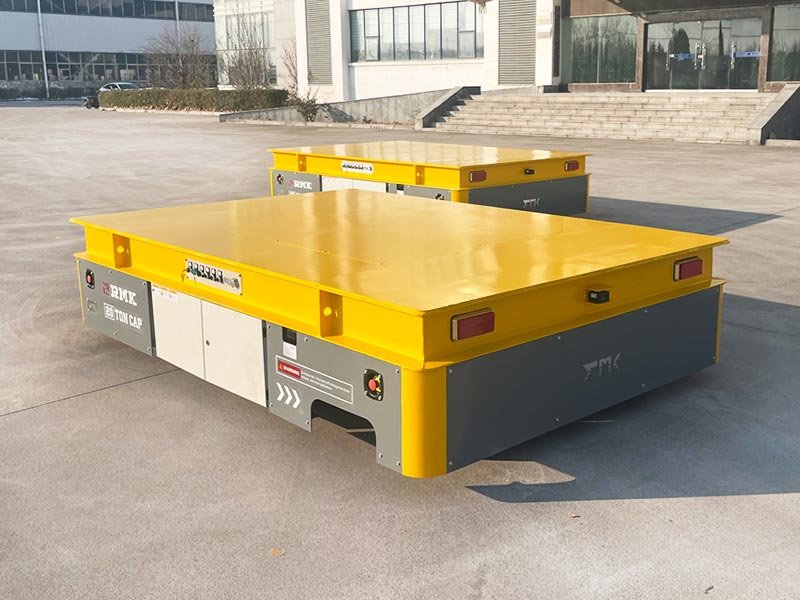
Mold transfer carts are essential heavy-duty handling equipment for injection molding, die casting, and stamping workshops. Compared with traditional forklifts and overhead crane lifting methods, they offer better safety performance, smoother transportation, and improved mold protection. They effectively address common challenges in workshops, including complicated mold changeover processes, high handling risks, mold damage, and heavy reliance on manual labor.
Different types of mold transfer carts are designed for different workshop conditions. Whether it is a rail transfer cart for fixed routes, a trackless transfer cart for flexible operation, or a lifting transfer cart and automated AGV model with intelligent functions, the right solution can be selected based on workshop layout, mold weight, and operating frequency. By selecting the equipment according to actual production requirements and using it properly, factories can significantly improve mold change efficiency, reduce equipment wear and safety risks, and achieve more standardized and efficient production management.
FAQ
References & Sources
1. Powered Industrial Trucks-OSHA
2. Forklift Safety Requirements-OSHA